The tools that taught me to tell stories before I knew I was a storyteller.
I grew up in Ushuaia, Argentina, the southernmost city in the world, in a house where books, music, cables, and software were treated like doors.
For a kid growing up far from the places where things seemed to happen, those doors mattered. They gave me permission to participate before I had the words, the money, or the confidence to call myself a creative.
Many of the doors I walked through would end up having the same name on them: Adobe.
As a kid, I could spend hours painting, drawing, trying to play an instrument, dancing, or making up some new project for myself. My parents worked hard, so I often had to entertain myself at home for long stretches of time. Creating became the best way I knew to keep myself company.
Even with friends, I was usually trying to make something or teach them how to make something. I was not naturally gifted at any of it. But I learned early that patience and repetition could take you surprisingly far.
My parents had me when they were 20. They came from humble families, and money was never abundant. But they always seemed to understand which things could change our future. Whenever they could, they invested in those things: encyclopedias, magazines, books, a computer, an internet connection.
My father is an electrical engineer from a deeply musical family. My mother is a teacher. Between the two of them, education and tools were never treated as luxuries. They were treated as a way forward.
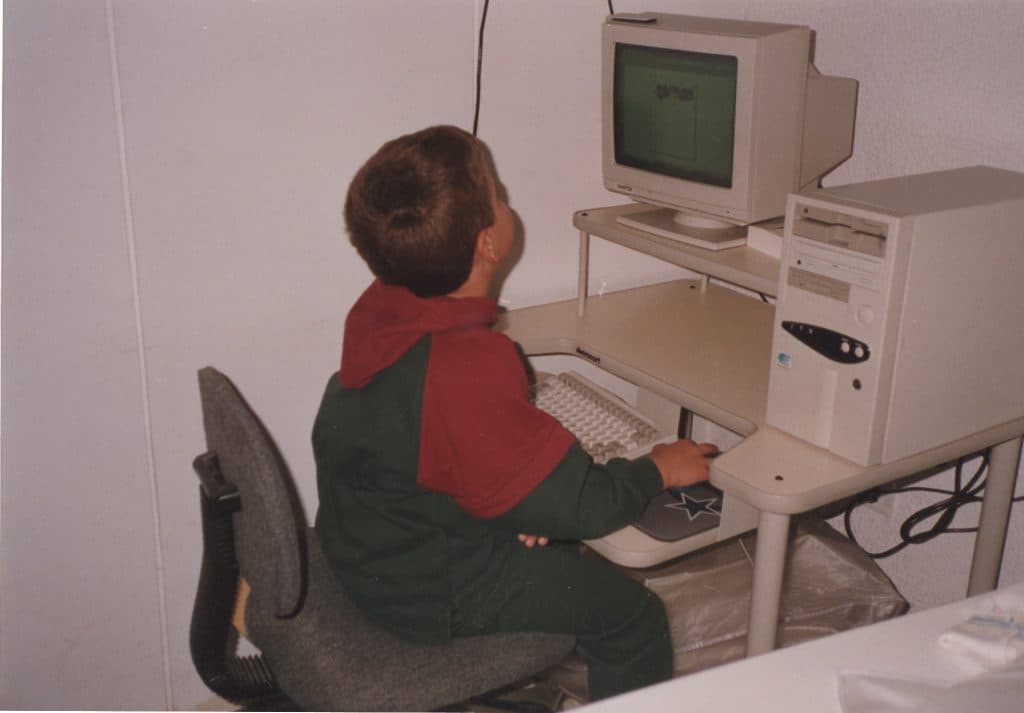
For most of my childhood, I watched my parents spend hours at the computer, sometimes for work, sometimes for their own projects. I learned MS Paint and Word before I was 7.
That was the starting point.
Cool Edit
When I was 10, most of my father’s free time went into designing and coding audio effects for a program called Cool Edit. He started sharing them with people online, and what began as a personal project quickly became a side hustle.
Those summers are still fresh in my mind. My father would be “on vacation” from his regular 9-to-5, but still working hard on Cool Edit while I spent the days with my grandparents.
A few years later, those Cool Edit plugins became rgc:audio software, his own company. It went on to release some of the most respected software synthesizers and virtual instruments of its time.
Musicians and composers like Hans Zimmer, Jean-Michel Jarre, Avicii, and Armin van Buuren, among many others, were using software my father had built from a small computer in the southernmost city in the world.
I was fascinated by how quickly everything progressed. Soon, my father hit a new wall: his software needed better interfaces. Operating systems were becoming more visual, GPUs were improving, and users were starting to expect more than functional windows and gray buttons.
A Book Called Inside Adobe Photoshop 6
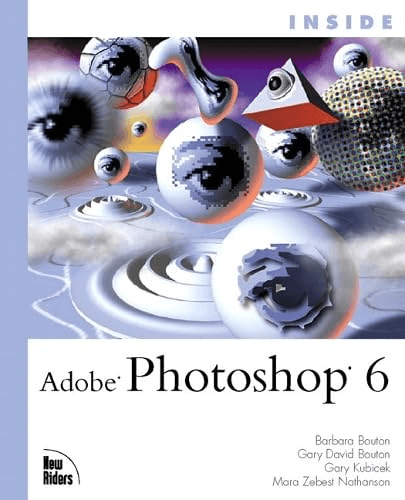
So he added another tool to his life: Photoshop, the state-of-the-art design tool at the time. I remember going with him to Cuspide bookstore in the summer of 2000 to buy a copy of Inside Adobe Photoshop 6, along with other thick books like it. Living in Argentina, that was still one of the few ways to learn. This was the dial-up era, long before YouTube, when online video courses were not even part of the imagination.
My first contact with Photoshop came through that book, and through watching my father make unbelievable things on screen. I remember a simple knob design, with highlights and transparency that made it look as if it could move in real life. I wanted to learn how to do that too.
Soon after, my father started working with an incredible team of designers from Germany, bitplant, who would design his product lineup for years to come.
By the time I was 12, I had my own computer. I still remember downloading a pirated version of Photoshop 6. Sorry, Adobe. I did not have the money yet.
I followed the book’s tutorials and learned to create layers of text with shadows, bevels, and other effects. I was obsessed with Bevel and Emboss. I still have muscle memory for one trick from that book: adding noise and then Motion Blur to create a brushed-metal finish. At 12, this felt like magic.
So I practiced for hours. I imagined product lines for my father’s company that did not exist. I created fake 3D boxes, promotional materials, business cards, and even assets for his website.
How Did This Win?
In 2002, when I was 12 and in my first year of high school, my school was celebrating its 10th anniversary. They launched a design contest open to every student. The assignment was to create promotional material and ads for the celebration.
This felt like my first real chance.
I started working on a design built around the school emblem and a watch pointing to the number 10. I searched online for images I could use, then spent hours rotating, scaling, adjusting opacity, and adding text. They also asked for many variations: different angles, different sizes, print versions, digital exports.
After several afternoons of work, I spent almost all my savings on professional prints and envelopes. My mom took me to school so I could officially submit the project.
A month later, I found out that my work had won its category. Then I learned it had also been chosen as the best work in the entire school, out of more than 100 submissions.
Today, years later, I am thankful for my old habit of keeping backups, because I found the folder with all those original assets.
I opened it expecting to feel proud. Instead, my first reaction was not exactly generous: How did this win?
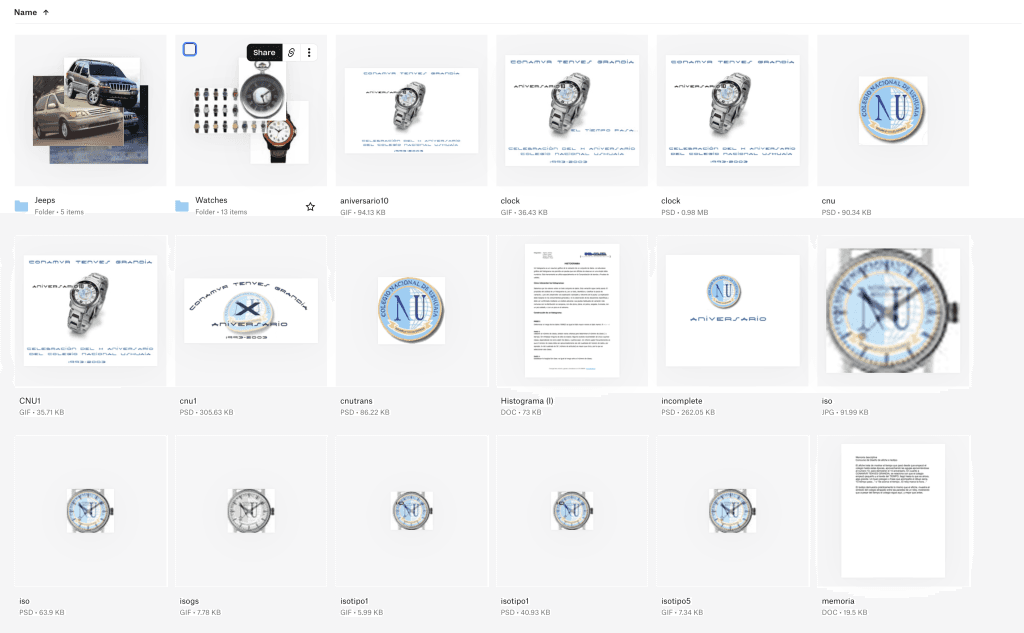
The design looked rough to me now. The watch, the emblem, the effects, all the choices I had worked so hard on. For a moment, I saw only the flaws.
But after looking longer, I stopped judging the design and started seeing the kid behind it. I saw the nerves, the discipline, the folders, the exports, the afternoons spent trying to make something real. I saw the savings spent on prints, my mom taking me to school, the adrenaline of submitting work to be seen by other people.
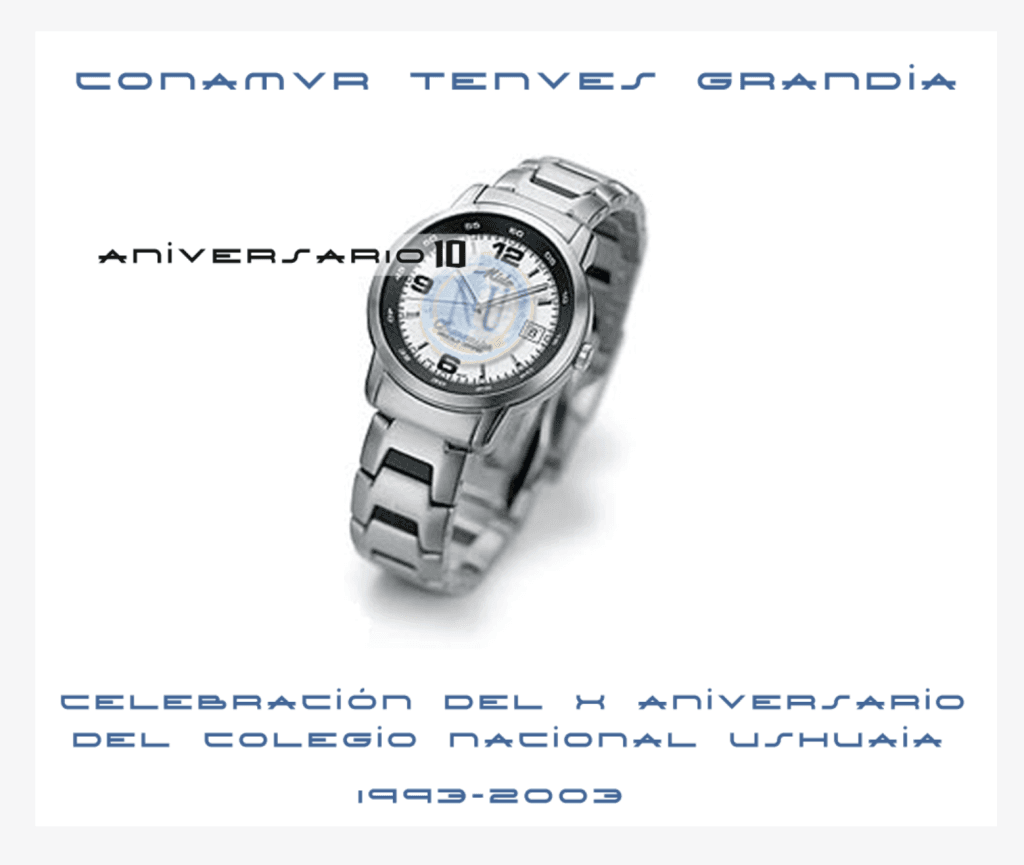
I saw a 12-year-old using Photoshop for the first time and finding a way to participate.
He did not know it yet, but he was planting seeds that would grow strong.
The award was not the real point.
The real point was that, for the first time, I had taken something from my head, shaped it with an Adobe tool, and sent it into the world.
And it was just the beginning.
Soon after that, family and friends started asking me for help with design: print materials for my uncle’s Marta Harff store, small projects for a local language school and a golf club, image edits for photographers working during the ski season at Cerro Castor.
One of those edits was later used in an article in La Nación, one of Argentina’s biggest newspapers. I was happy because I could keep practicing. Each request gave me a new use case, a new problem, and a new reason to learn.
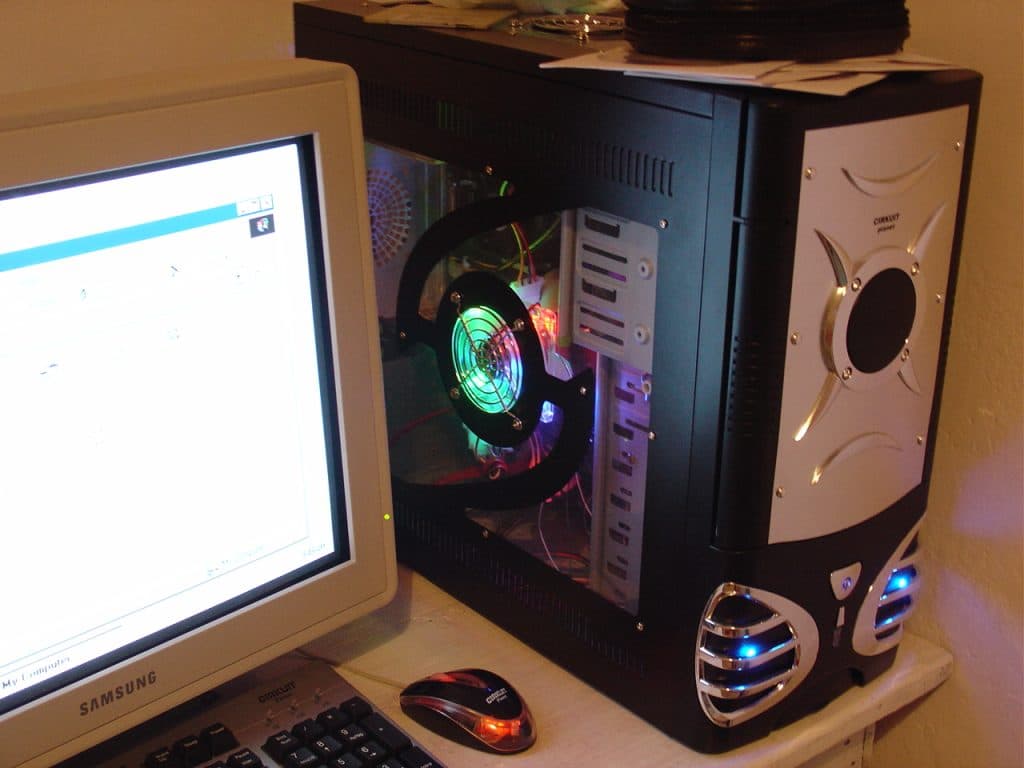
A few years later, in 2005, one of my school courses required us to design a website. The point was simple: learn how hyperlinks worked. Most students used PowerPoint to build an interactive presentation and export it as HTML. I decided this was my excuse to explore Macromedia Dreamweaver.
I knew some HTML from my father’s books, but I had never really sat down to write it. In a couple of weeks, I built something that surprised my teacher. That reaction gave me the confidence to keep building websites.
Eventually, websites became my first real side hustle. I learned Flash and started offering new sites to local shops and institutions, including the Consulate of Chile in Ushuaia. Some projects grew more advanced, with authentication, user profiles, photo uploads, and basic databases.
That extra money helped me save for gear and travel.
Pieces of the Future
Even though I was growing up in the southernmost city in the world, a remote place by almost any measure, I was lucky to be exposed to technology that was not yet common in Argentina. My father traveled often for work. I missed him when he was away, but he often came back with tools that opened new doors: a digital video recorder, digital cameras, little pieces of the future, at least to me.
My parents were not precious about those things. They let me use them whenever I wanted, as long as I was careful.
With those tools, I learned to take pictures and record video. Naturally, that escalated. I wanted to capture everything, edit everything, push the limits of whatever I had.
As soon as I saved enough money, I bought a Pinnacle Studio AV/DV capture device. It let me capture footage from our tapes, old VHS recordings, and FireWire cameras. I tried a few editing programs, including Windows Movie Maker, before landing on Adobe Premiere Pro 2.0.
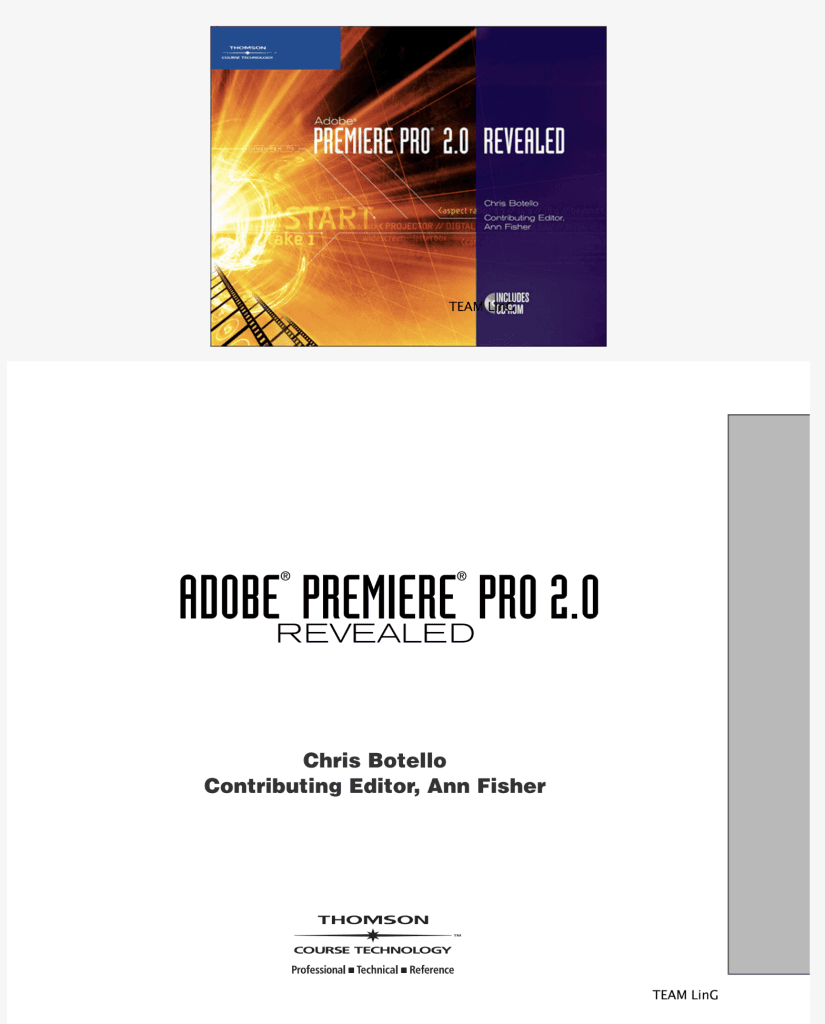
By then, I had become good at learning from thick books, and at finding those books as PDFs online. The pattern repeated itself: afternoons and weekends spent making rough little movies that later paid off.
My first big video project was also for high school. We created a parody of Disney’s “A Whole New World” from Aladdin. I found those files too, and now I can see that the project was a beast: hundreds of takes, organized by scene, transitions, text, music, and sound effects.
Premiere Pro opened another kind of work for me. I started getting hired to film quinceañeras, the 15th birthday celebrations that are such a big tradition at home, and produce the event videos.
The stakes felt high, which made me even more nervous. Families wanted beautiful memories of their daughters, and they wanted everyone to look good on camera. I was afraid, but I went anyway. Each time, it made me a little braver.
I also learned to design interactive DVD menus so they could choose the main footage, jump directly to chapters, or watch backstage takes. Then I burned the DVDs with the legendary Nero Burning ROM.
Those years became a foundation for me. Without realizing it, I was building a strange but useful set of skills: design, photo editing, video, audio, websites.
At the time, none of it felt like it was adding up to anything. I was just enjoying the process. I had more free time than I understood, and looking back, I think I used it well.
In 2008, I moved north to study computer science at university. During the next five years, I kept using those tools, following updates, learning new versions, and relying on Photoshop for small software projects.
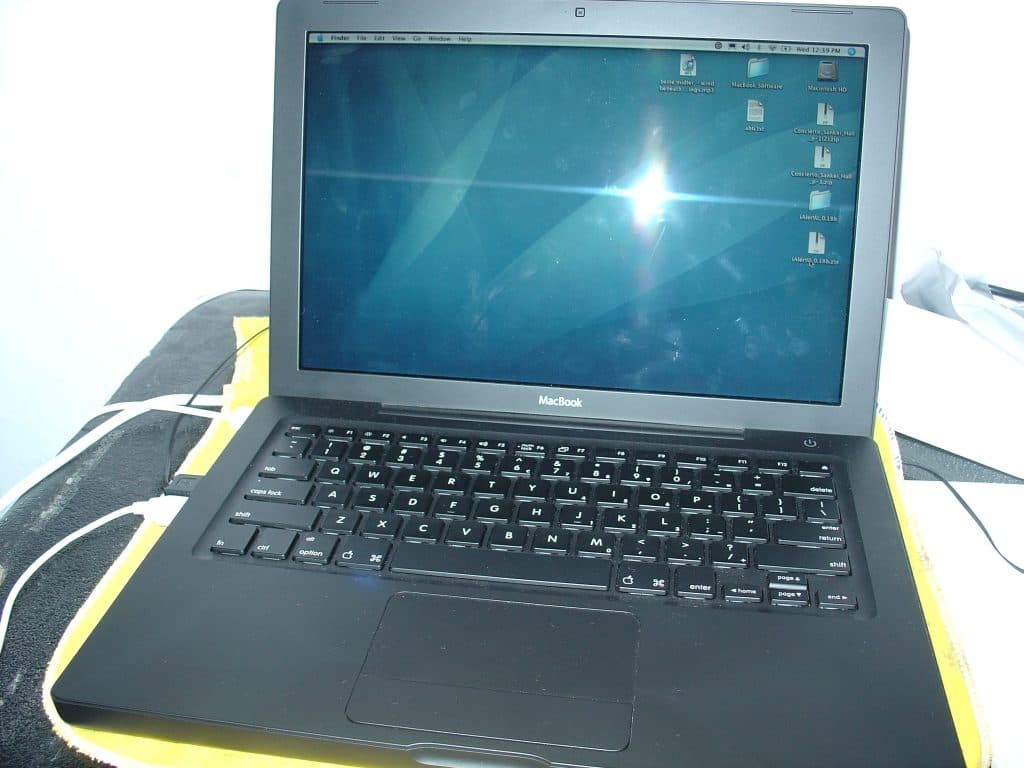
I also got my first Mac and moved fully into that ecosystem.
A Loop Closes
In 2013, I moved to Sweden to start a PhD in computer architecture at Uppsala University. The work was deeply technical, and I needed another outlet for my creative energy.
My partner, Tharyk, is a full-time singer, and with the influence of my father always somewhere in the background, we decided to start an independent record label and platform to help him publish and promote his music. We called it ginTONIC Records. It is now home to more than 250 releases, has passed 100 million streams, and has worked with more than 20 artists.
For ginTONIC, I became involved in writing, composing, and producing many of the songs. But I hit a wall quickly. The songs had a vision, but they were not radio-ready. They did not yet sound competitive with the tracks we admired.
So I went deep into mixing and mastering. One of the tools I kept returning to was Adobe Audition.
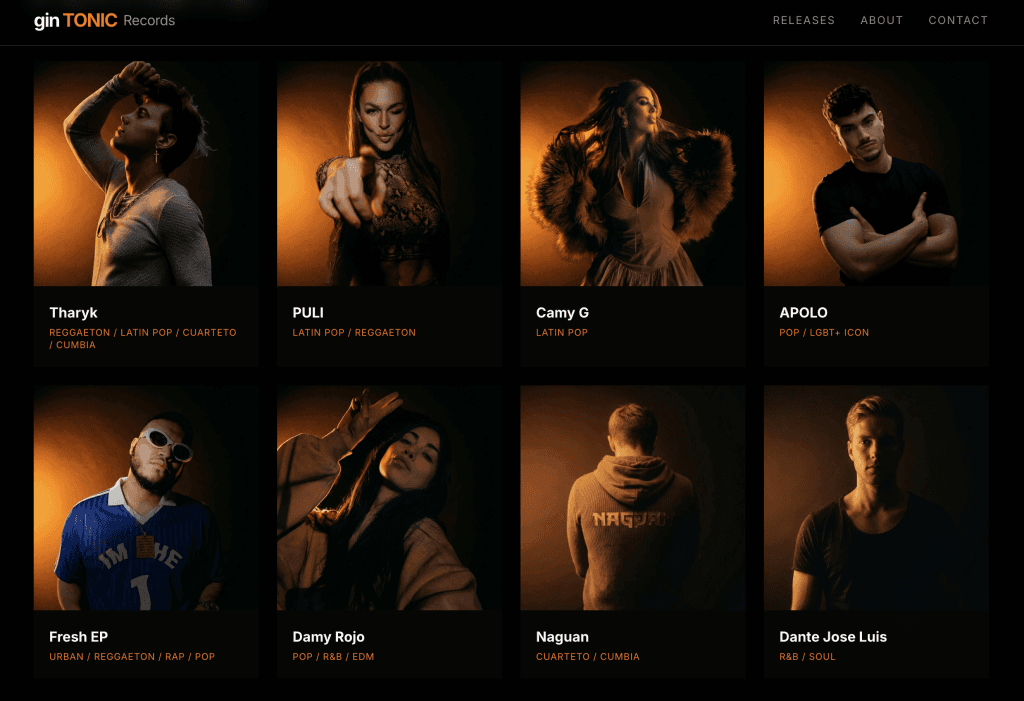
At some point, I stopped and thought about the name. Audition had once been Cool Edit, the same program my father had used decades earlier to develop his own plugins. Adobe acquired Cool Edit from Syntrillium Software in May 2003 and rebranded it shortly after.
My father had used Cool Edit to build a company from Ushuaia. Years later, I was using Audition to help build a record label from Sweden.
A loop started to close.
Around the same time, I started learning Adobe Illustrator to make posters for my PhD work. Once again, most people were using PowerPoint, this time to design scientific posters with boxes and arrows. I chose the slower path: curves, shadows, transparency, hours behind the computer.
The results were worth it. During my PhD years, I won 13 best poster awards at international scientific venues.
The dots kept connecting.
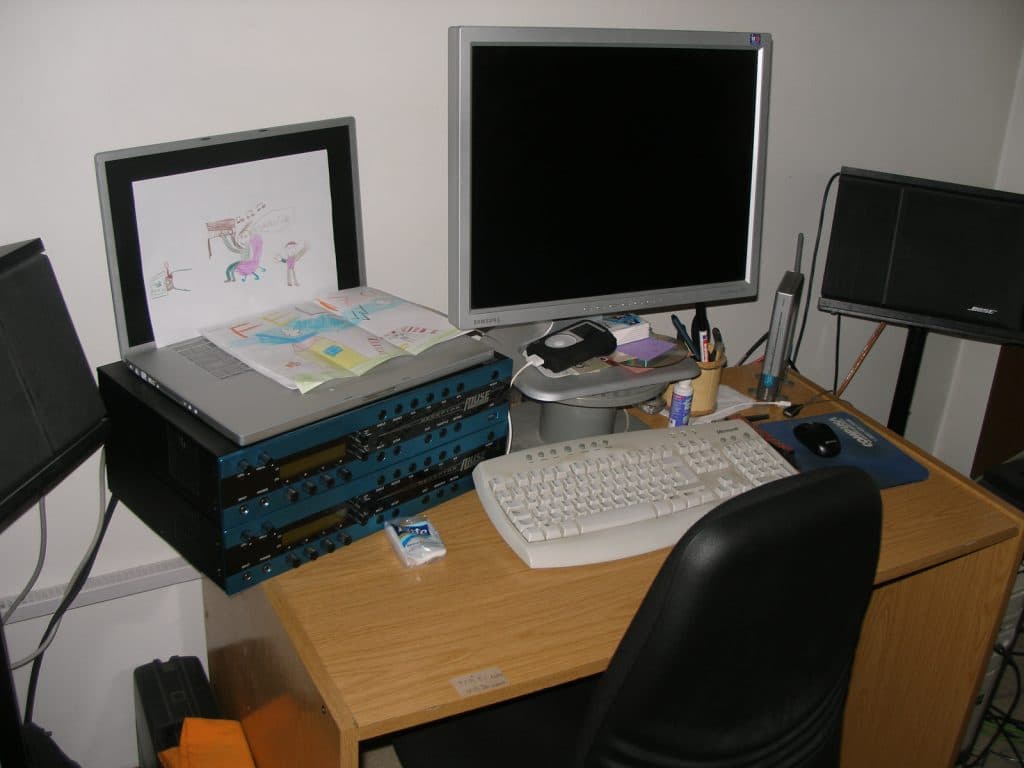
In 2016, I joined Feisworld Media and started editing the Feisworld Podcast for Fei. My job title was audio editor, but the real work was storytelling. I had to move audio pieces around, clean them up, and put them together in a way that helped people connect with the guest and the story being shared.
It was a real art.
I started working with Fei as a side hustle, just as I had done at 16 when I wanted extra money for gear and travel. But after a few episodes, something changed. I was drawn into the stories and eager to receive new recordings every week.
Fei and I also built a strong creative bond. We called it “High on Content,” and it became our mantra. Within months, what began as side work became a life project.
That was when I began to understand that almost everything I had been doing was storytelling.
The imaginary products I designed at 12, the photos I edited for newspapers, the videos I produced, the music I released, the websites, the scientific posters, the podcast episodes. They looked like different kinds of work, but underneath, they were all attempts to shape a story.
The tools had given me permission to participate. Storytelling gave me a reason to keep participating.
I have come to believe that storytelling is one of the most powerful skills a person can learn. If something matters to you, it can matter to others, but only if you find a way to carry the feeling across.
Made to Create
In October 2025, I attended Adobe MAX in Los Angeles for the first time. I have been lucky to attend many conferences in my career, including at Uppsala University, Google, and Ericsson, but this one felt different.
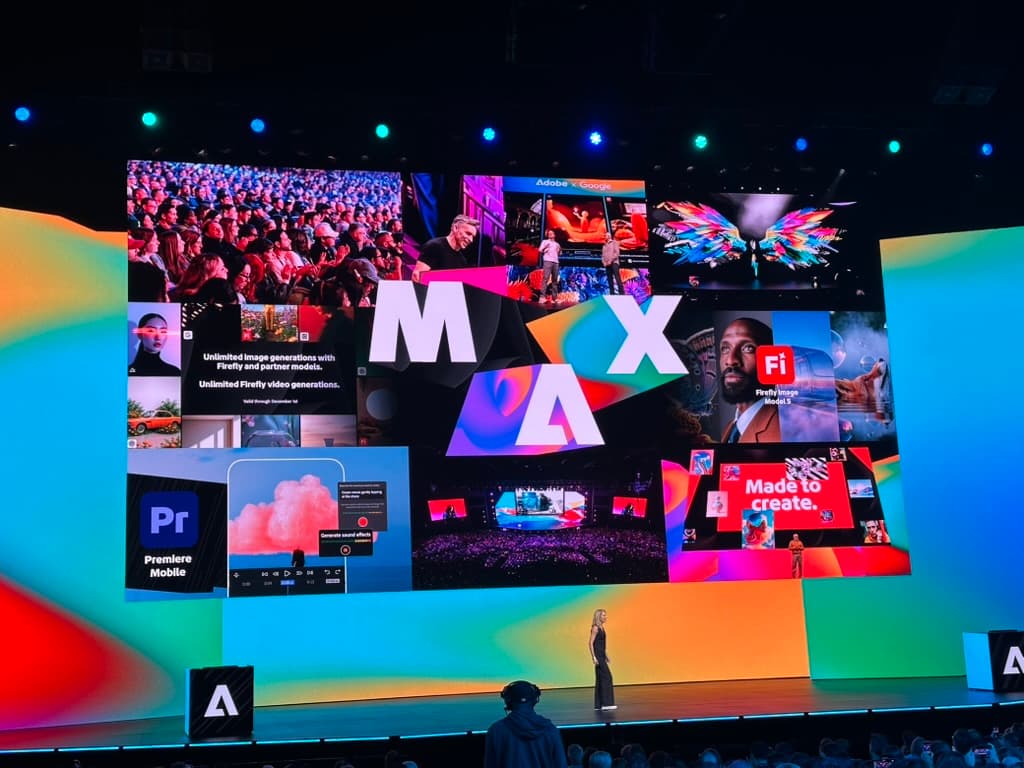
It was massive, with more than 10,000 attendees, but what stayed with me was not the scale. It was the fact that the whole event was organized, designed, and celebrated by creatives.
The room was full of people who understood the need to make things and the importance of telling stories well. Every medium seemed to be represented: design, photography, video, animation, music, typography, illustration.
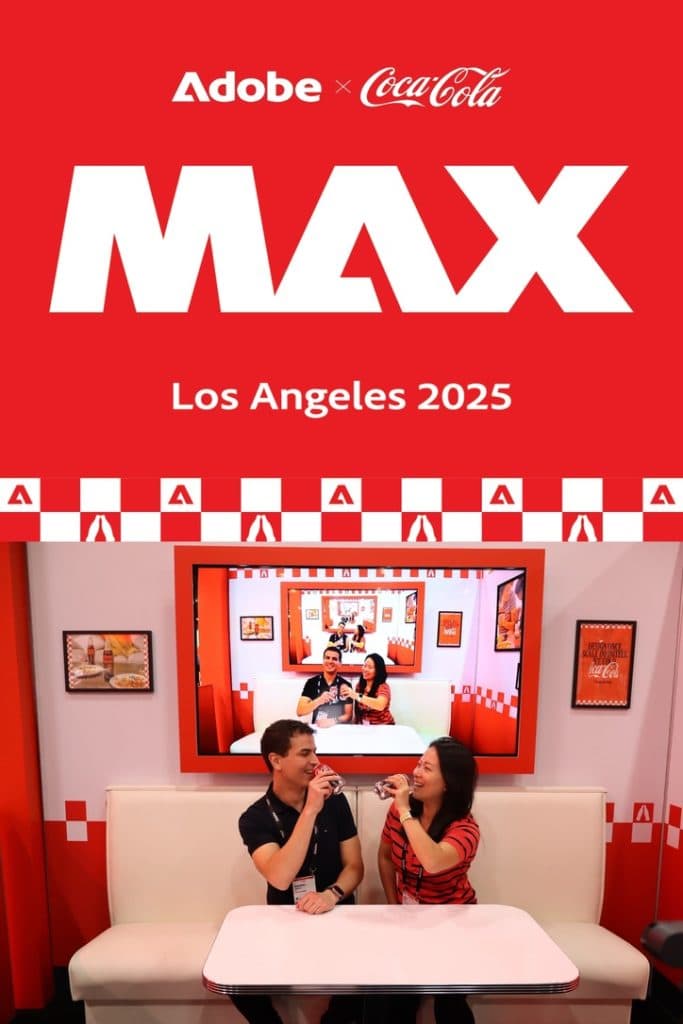
When you are surrounded by people who care about the same invisible things you care about, it brings a very specific kind of joy. The “High on Content” kind.
The moment I entered the reception hall, I got goosebumps. There was Adobe signage everywhere: on the walls, on the badges, glowing across the screens. For reasons I could not explain at first, it moved me.
Then it became clear.
Adobe had been one of the threads running through my life. Not the only one, but one of the quiet ones. The kind you only notice when you finally look back.
The names started lining up in my head.
Cool Edit had become Adobe Audition.
Macromedia Dreamweaver had become Adobe Dreamweaver.
Flash had become Adobe Flash.
Illustrator.
Photoshop.
Premiere Pro, now Premiere.
During those three days, I kept seeing flashes of myself at different ages: the kid learning Photoshop from a thick book, the teenager exporting DVD menus, the student designing posters, the audio editor shaping interviews, the producer trying to make songs sound better.
Adobe had been there at each stage, not as the story itself, but as one of the tools that helped me tell it.
Almost 30 years after my first contact with Adobe, these tools are still part of how I work, think, and tell stories.
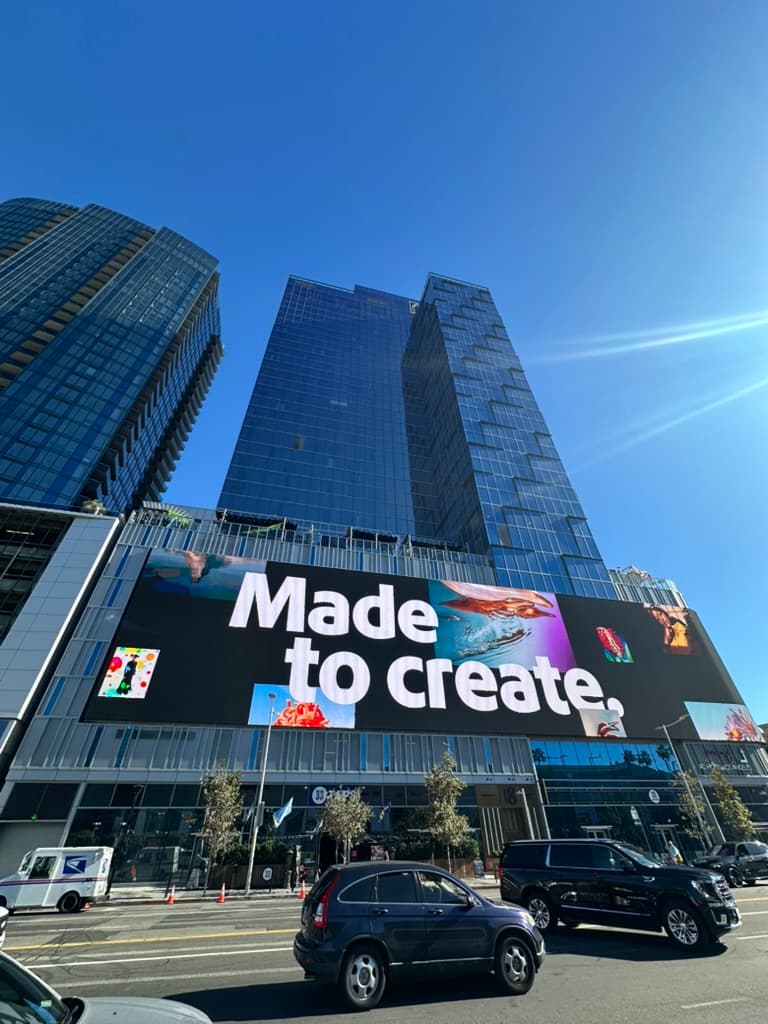
So this is my thank-you to the people who built them. Thank you for helping a 12-year-old kid in Ushuaia take part in a contest. Thank you for giving him a way to take something from his head and make it real, even if the first version was imperfect, with a few hundred clicks on a slow computer in one of the most remote places on Earth.
He did not know where any of it would lead.
But he kept going.
Maybe, in some quiet way, he already knew he was made to create.
Thanks, Adobe.
Germán
Topics

Written by
Germán CeballosGermán Ceballos has worked with Feisworld Media since 2016 and serves as Editorial Director. He co-created and edited the documentary Feisworld: Live Your Art, has overseen the editorial direction of the podcast across 300+ episodes, and shapes Feisworld's coverage of AI tools, creator workflows, video production, and content strategy.
View all posts by Germán Ceballos→Stay updated
Weekly insights on content, AI, and digital media.