Courtney Marsh: Behind and Beyond Her Documentary Film “Chau” (#51)
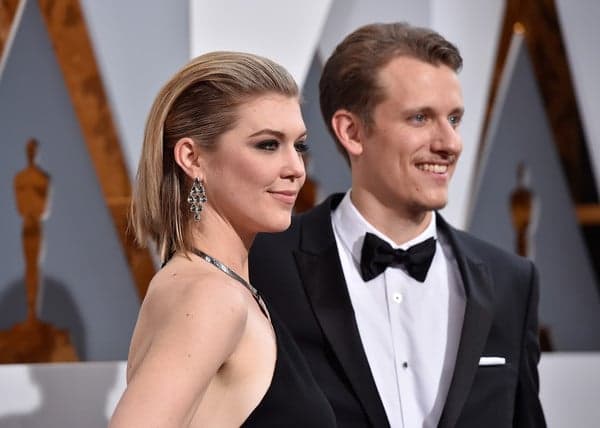
Our Guest Today: Courtney Marsh
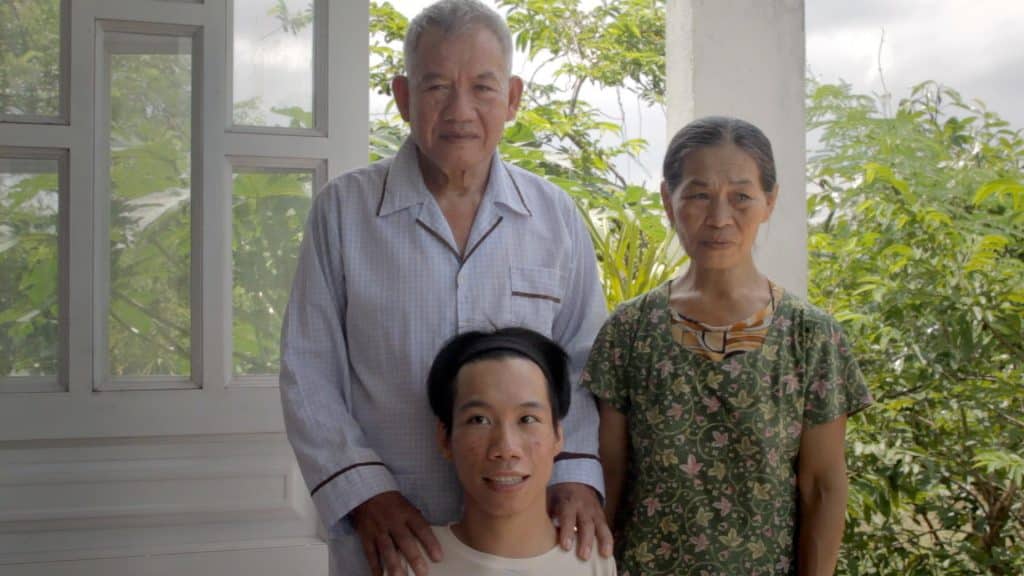
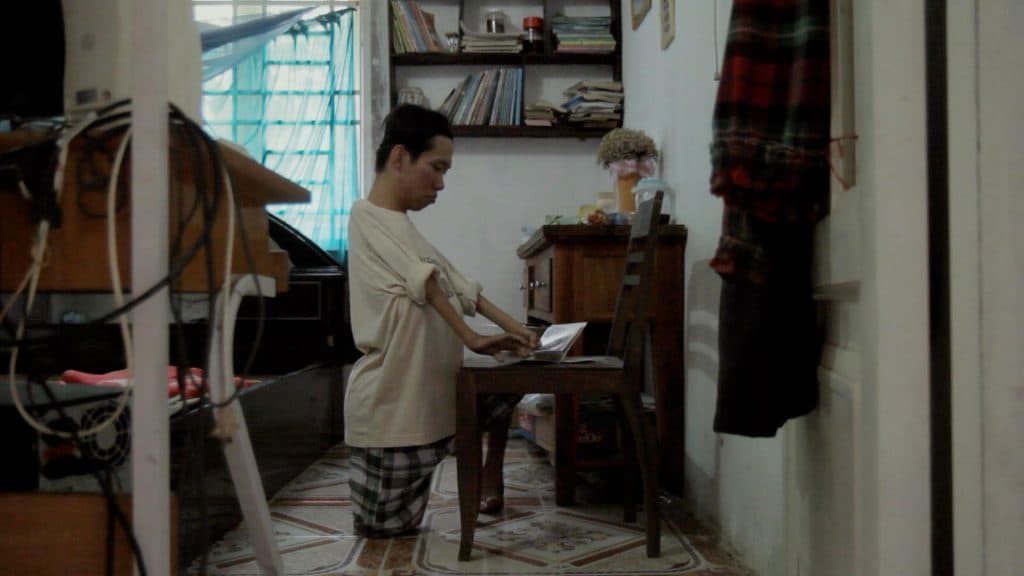
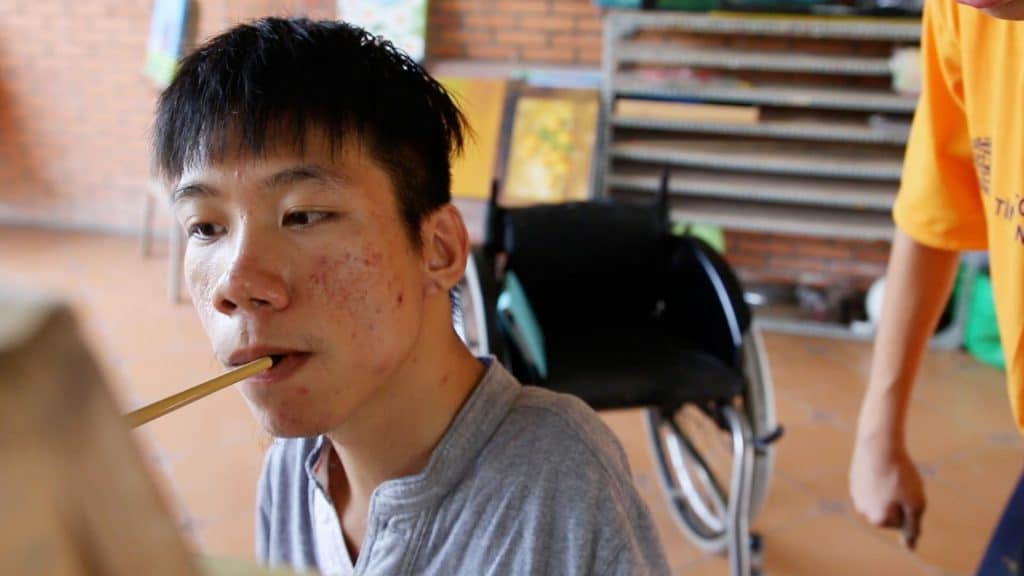
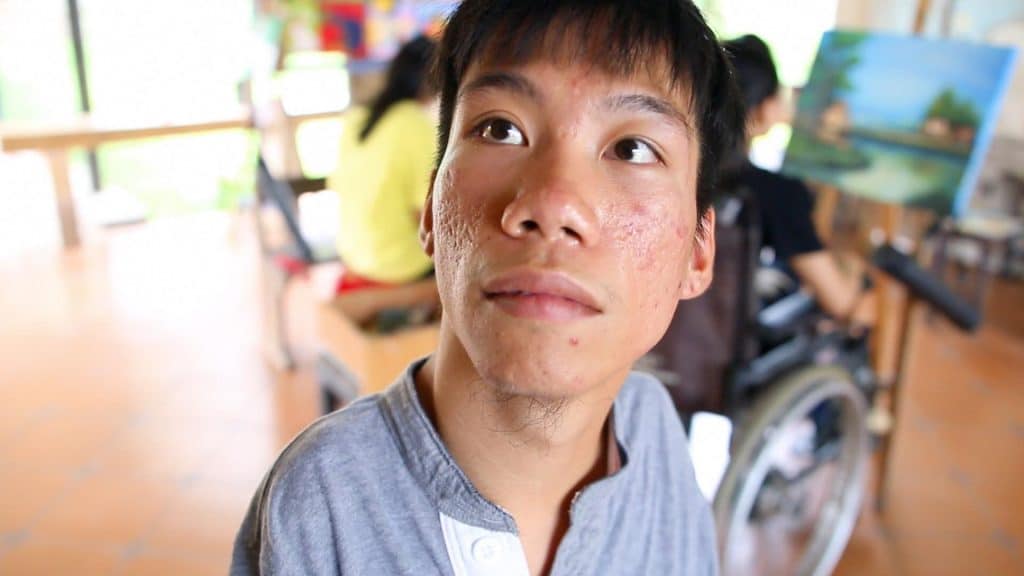
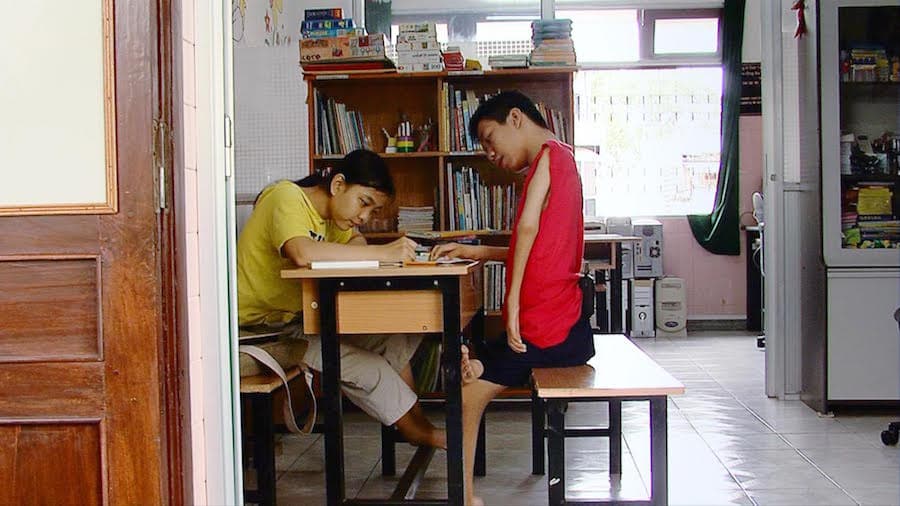
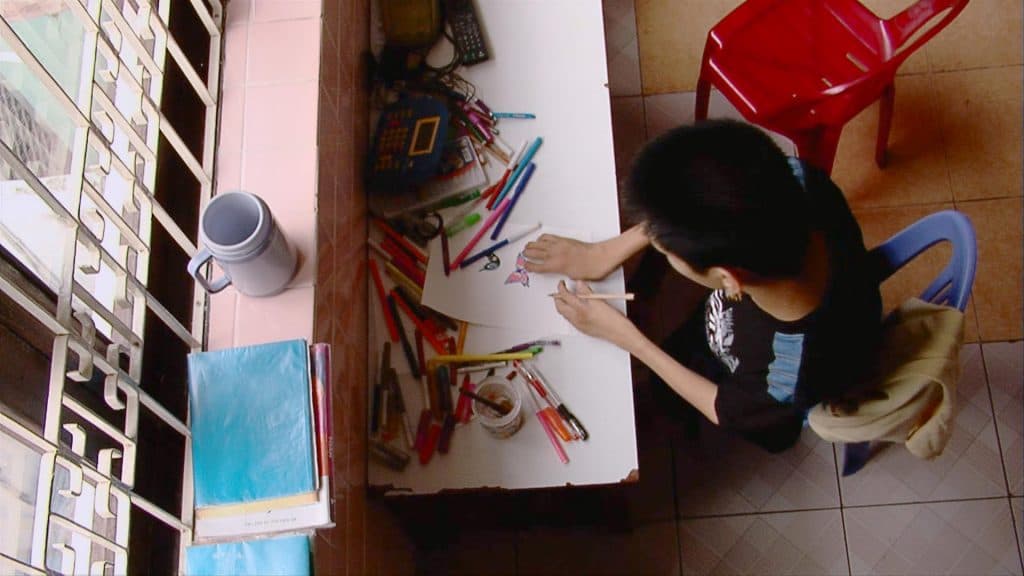
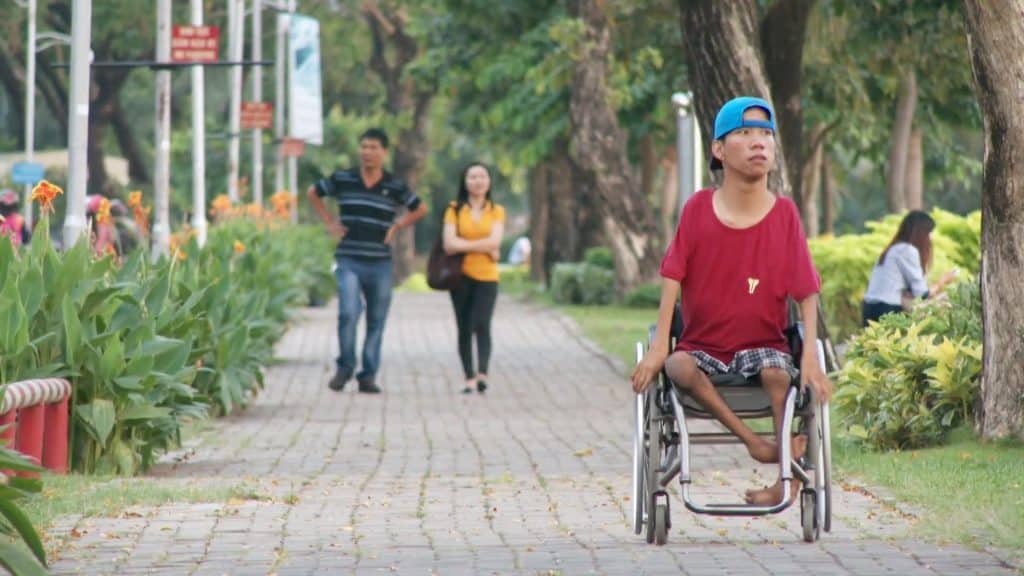
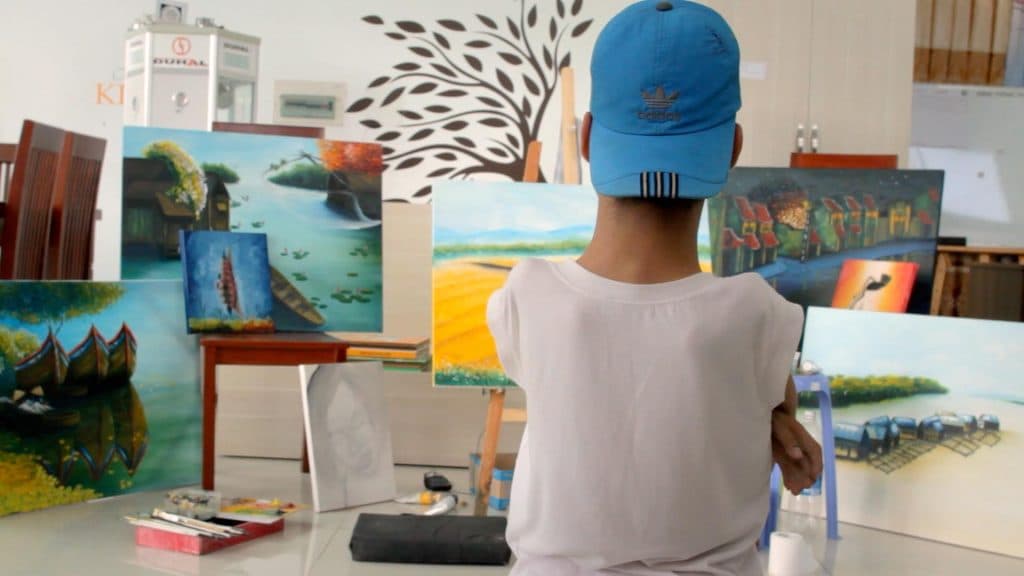
Courtney Marsh (@courtneynmarsh) is a director and filmmaker. Courtney’s latest film Chau, Beyond the Lines is a documentary about a 16-year-old teenager named Chau in Vietnam who was disabled by the effects of Agent Orange. Chau aspires to become an artist and clothing designer.
Agent Orange is the chemical sprayed over the jungles in Vietnam during the Vietnam War, to deprive the Northern Vietnamese Army of their food and cover. 30 years after the war, there are still young people like Chau who are affected by these chemicals.
I teared up less than a minute into watching the film.
Chau was told repeatedly that becoming an artist is a dream. “A dream is just a dream,” a nurse said to him, with good intentions. But Chau believes that he is not limited by his physical disabilities. Chau is the oldest teen at a peace camp in Vietnam, so his beliefs were influential to the other disabled children. Chau taught everyone around him that “people are only limited by their minds.”
Courtney followed Chau for 8 years from when he was a teenager into his early 20s. “I have no backup plan.” Courtney told me. Between self-financing (herself and producer Jerry Franck), generous donations and a few school grants to get the project off the ground, for years Courtney has had to live a humble life and work part-time as a Lyft driver.
The good news is that Courtney and her team’s hard work has begun to pay off. People around the United States are taking action after watching Chau’s story and are contributing to the cause. The documentary was also shortlisted with nine other documentaries from 74 entries submitted to the 88th Academy Awards. The final five nominations are scheduled to be announced on January 14, 2016.
To learn more about Courtney Marsh, please visit the Chau, Beyond the Lines official website and join their Facebook page.
This film couldn’t have become a reality without the indomitable spirt of all these filmmakers:
- Courtney Marsh – Director/Editor/Producer
- Jerry Franck – Producer
- Duy Nguyen – Associate Producer/Translator/Additional Camera
- Marcelo Mitnik – Co-Writer/Executive Producer
Transcript
Transcript
Fei Wu: Welcome to the Feisworld podcast, engaging conversations that cross the boundaries between business, art and the digital world. You know, it's interesting, I think why I got into documentary first, um, again, this, you know, this being my first film, was that I had been outdoors my whole life, very active. My parents gave me a great childhood where I traveled a lot, and I was able to see a lot of the world. And I think it created a curiosity in people and culture and what, what really connects us all. And that's kind of been something that's kept me going is that I'm very interested in not necessarily exposes or I, I really love the human psyche. Like what is it that drives us? Like, cuz it is such an interesting conundrum, especially when you grow up religious, which I'm not anymore, but, you know, to get to the origin point of humanity or what are, you know, what are the three questions? It's um, why are we here? Where are we going? Where do we come from? Welcome back to Phase World Podcast. This is your host, Faye W. After interviewing Chris Ye and an actress's, entrepreneur and fashion designer on phase world, she and her friend Dewey helped connect me with a young woman named Courtney Marsh, who is a filmmaker and director. In the past few months, I have received over about a dozen recommendation for who should be on, uh, face World as the next guest, and Courtney was one of them. Her story simply blew me away on so many levels. More importantly, I feel that her story is one that many can relate to. Including millennials, working professionals, and even parents. Her journey helps demystify the definition of a millennial. A generation often refer to as lazy on ambitious, but in reality today I see more and more millennials, especially women, to not only work hard going after that corner office jobs, but trying to leave a mark help change the world, even if it's for less money or no money at all. So to me, I think to many people out there that's courage and determination. Courtney's latest film is a short documentary about a 16 year old teenager in Vietnam, disabled by the effects of Agent Orange, who then inspired to become an artist and clothing. I didn't know anything about Agent Orange before this podcast. Agent Orange is a chemical sprayed over the Vietnam jungles during the Vietnam War to deprive the Northern Vietnamese, uh, army of their food and cover. But unfortunately, after 20 years of the war, a teenager like chow living in a peace camp has been disabled by the effect of the chemicals since birth. I teared up less than a minute into the film, but the everlasting message and, and the real impact puts a smile back on my face. The film isn't about judging the past pointing fingers, but rather providing options for people today around the world to take part in helping people still living in and impacted by Agent Orange today. Chow Beyond the Lines was shortlisted with nine other documentaries from 74 entries submitted to the 88th Academy Awards in documentary short subject. The final five nominations are scheduled to, uh, announce on January 14th, 2016. After our interview was recorded, I reached back out to Courtney and asked her about how she's able to support herself while working full-time for eight years on this particular film without a predictable salary or income. She gladly disclosed the information, which I included on my blog post phase world.com, for you to check out. You can also find the film's trailer, Facebook page, our show notes, and, and the storyline from Courtney, uh, directly on Phase World as well. Before we begin the podcast, I have a very special announcement as we enter into year 2016. Phase World has expanded beyond just a podcast platform and is now offering consulting services to small business individuals and students. You can visit phase world.com and choose work with Faye to learn more. I hope you enjoy the show. Oh, are you
Courtney Marsh: in the office today? Uh, my office being my home, yes. And I'm actually gonna put on a pair of headphones like you, so just, I'm sorry. Hang on one second. . Yeah, we, we work from home. This is actually where all the editing gets done.
Fei Wu: Wow. That's amazing.
Courtney Marsh: Yeah, it was quite a, quite an endeavor. So it's nice that it's finally getting out and, you know, uh, That we got, we've been getting the recognition so far. It's been nice because, you know, again, it's been a long, a lot of time in this apartment just, you know, hoping and, uh, you know, eating Trader Joe's frozen pizzas and just editing all day . Wow.
Fei Wu: For some, for some reason, I completely understand where you were coming from because even with just podcasting and
Courtney Marsh: Oh, I can imagine. Yeah.
Fei Wu: And I do know, I, I don't do nearly the amount of work compared to, you know, Chris a tibit on beat from on being, or npr. I mean, that, that we're talking about a team of engineers. You have like 15, 20 people, uh, working for you. But, you know, I, you know, through running a podcast is very difficult, but one of the reasons.
Courtney Marsh: Yeah. And you get there that day, you'll know everybody's job and you'll know how to run it. Right. ?
Fei Wu: Yeah. Yeah. Once you get there, um, it. You know, first of all, Courtney, thank you so much for spending the time with me and in the past few days, um, you know, thanks to Chris Yen and I, I was just simply thrilled to discover you who you are, and I've watched the, you know, chow beyond the lines and was immediately touched by your work. So thank you so much for joining
Courtney Marsh: me. Well, thank you very much for having me. This is a real pleasure.
Fei Wu: Awesome. So, we'll we, we just start talking about the frozen pizza trader Joe, and that, that's something I'll remember forever.
Courtney Marsh: Great .
Fei Wu: So in, in case some of my audience may not know you or your work very well, um, you know, going with some assumptions because I've, uh, read a lot about you in the past few days. Um, do you mind maybe providing like an introduction of who you are and what you do?
Courtney Marsh: Yeah, absolutely. My name is Courtney Marsh and I am a filmmaker. I'm currently based in Los Angeles. I'm originally from South Florida. And, um, I have basically, uh, just been making short films up until this point, but I came up working, I went to UCLA film school as an undergraduate and worked for about seven years in the camera. Which gave me a lot of education and through that time was making movies. And, uh, this movie that we'll be talking about today, child Beyond the Lines, was actually the first movie I made and the last movie to be completed. So it's kind of the rapper of all my films and the only documentary I've ever done. Wow. Yeah, I didn't
Fei Wu: realize that. How early did you start that work?
Courtney Marsh: Um, ch on the Lines. Mm-hmm. basically. Um, I didn't know much about, uh, filmmaking and, um, when I, I came to UCLA with the intention. Getting into film school or attempting it. And I did, um, get in and basically one of my good friends was Vietnamese and I became, you know, very involved with this family and really enjoyed the culture. And we decided to go to Vietnam to make a movie about street kids there. And I was about 20 years old at the time and we, um, you know, I raised some money and different things like that. And, uh, yeah, I had turned 21 right before the trip. We went over to Vietnam and because in the country you have to, um, get permission to shoot there, uh, people had heard about us and a TV producer who was based in Vietnam approached us and said, you know, okay, I get you guys wanna do a movie about street kids, but. Come with me to this camp and see if it changes your mind. And so I went to this camp, uh, Lang Ho Ben. It's kind of like this small two, two or three floors tucked away in the back of maternity, of a maternity hospital. And, um, I didn't really know what Agent Orange was. And the, uh, it was quite a shocker to me. You know, I just kind of grew up, you know, upper middle class, white girl, like no idea really. And, um, I was kind of, um, just really blown away just because the, you know, everyone's visually blown away at first by something so out of the ordinary. Um, just because they were beyond disabilities. There were, for lack of a better word, deformities. And very young kids though, seem to be so happy and fine. And we would watch a lot that these people would come into the hospital and, and take photos of them. And they were like, poster children for this. Cause Agent Orange for this, you know, Um, this campaign against the chemical companies, but they were just kids. So I was, to my friend, I said, you know, let's put the camera away. Let's volunteer for two weeks and just see if we get, you know, see what it is. And so, because I was 21 at the time, chow was only 15. We were so close in age, we would play soccer every day. And um, I was just like, can we film your guys' lives from your point of view? And that's kind of how it all started. So, kind of crazy. Um, definitely bit off more that I could chew at the age of 21 and not really having picked up a camera too many times, but it spanned out into this eight year adventure or journey and struggle to follow chow, try to, um, you know, go after his.
Fei Wu: Wow. Yeah. And you've been following him literally in the past eight years? On
Courtney Marsh: and off or, uh, yeah, on and off. Um, basically, so I was there in 2007 for about two and a half months. Uh, volunteered almost every weekday and we would just let the cameras roll for better or for worse. And then when I came back, I had imagined we were gonna make it a feature about like five of the kids. We had followed five of the kids, but no one had the story arc like chow. And unfortunately, my friend who I went to Vietnam with, who was Vietnamese, decided he didn't wanna be a part of the project. Um, he wanted to do other things. And so I was trying to find a translator. And during that time, chow went home. He left the camp so I couldn't get ahold of him. And his, his house is in like the rural, you've seen it, it's in the rural area. No internet. This was beyond be before Vietnam at Facebook. And so then it was. Reconnecting and going a million different ways with the film, just trying to make it something. And it dawned on me not to long ago, I'm like, this needs to be a short, and all my footage was centered around chow. And I was like, this needs to be a movie about chow. So
Fei Wu: you're clearly passionate about it, , because you know when, when somebody like yourself make a decision, in this case a very difficult one. And that just intrigued me. And even just by watching the trailer, which by the way, we're definitely gonna include in the blog post as well, along with this audio piece and oh, the awards and all the film festivals that you've been so far, you have chosen a path for yourself. And I know that for chow. You know, sort of for the deformities and the, the disabilities that many of the kids that, that have today, that clearly was not their choice. Um, but this is your choice to follow them and to give them a voice, um, to make them known to the world. And I think it's really incredible. And I wonder what. What did you, what was the trigger point? You know, was there a a, a day, was it a data point like, or a series of data points over the course of a long period of time for you to decide that, wow, this is, this is what I'm going to do for the next 10 years, possibly longer. And your, your baby back then. Like what, what was the trigger for
Courtney Marsh: that? Um, you're saying basically, cuz when I started this, I really didn't know it was gonna be this long. Are you saying what was the trigger point? Sorry, do you mind saying that one more time? What's the trigger point for what,
Fei Wu: the trigger point for you to say that this is what I'm going to focus on? I think you did answer that question, which means like many of us go into a project without knowing sort of the ins and outs. Like we really don't know what it might entail. So perhaps a better question would be fast forward three, let's just say three to four years into the project and you look back, it's. Oh my God. I've been eating Robin noodles all day, , and I've dedicated my young life in my twenties. Right. And I have a list of questions. You know, I imagine your friends would be probably out there partying and you know, all these things and then you're like, okay, I have a decision when I'm 20. You know, you may be 23, 24 to say, I can continue to do this. And at this point I probably know there'll be at least another few years. Or I can drop it off. I can just quit right now.
Courtney Marsh: Well, there I would be lying if I didn't say there were a few points where I definitely wanted to throw in the towel. Uh, it came really close to that because I was spending, I was working as a production assistant at the time and not making a ton of money and trying to make narrative movies too, because it was such a weight game with the documentary. I mean, we had 60 hours of footage from 2007 alone, and it's all in Vietnamese. And I don't speak fluent Vietnamese, uh, barely any actually. And, um, , my whole thing. I, I can't leave things unfinished. Like I cannot start things and leave them unfinished. And I knew, and I always knew, and I knew when I got there, and the feeling of when I left on the plane, I, I knew that it was something special. It's funny that you say, you know, people going out and partying all this stuff, I think, to be honest, yeah, absolutely. I mean, I lived alone for a while just trying to focus on my stuff. I, you know, I'd work all day, I'd come home, I'd try to work on the movie, I'd try to work on any of my films or write or do anything. And I think that when you're in an industry like this, um, you have to be that dedicated. Like it's just, there's so many people who want this and who are passionate and, you know, I felt that with, when I found, um, chow, that that was something that kind of came to me and therefore I had a responsibility to it. And it was a point of view that had never been told it. It was something as a young, as a young adult that I so badly could relate to, because I couldn't imagine living in a world where people come in and take photos of you and, you know, these kids don't care about Agent Orange or anything like that. And, you know, people really wanted to make it a political film. And I think that wanting to tell the human side of it is kind of what kept me going. And especially three years ago, my producer Jerry Frank, right when I was about to throw in the towel, um, we had just started working together and I was like, you know, I wanna show you this footage. I, a long time ago, I shopped this stuff that was fantastic. And he saw it and he was like, yeah, we, uh, we have to finish this. So when Jerry came on board, he found Dewey, uh, my compan, my partner in crime. And, um, she was a godsend because we, for three years, all three of us just every day worked on this so hard for nothing. I don't know, I guess it was a labor of love. I hope I'm answering your question. You are. It was just, just, it was just responsibility, you know, and wanting to finish it. So many people start things and don't finish it. And whether it's good or bad, it's a good experience to finish it, even if it's bad. Luckily in this case it's not the case, but because you always learn something from it, you know, if you finish something bad and you have to go through the pain of finishing something you, you wish you would've done different. Mm-hmm. . Um, which still there are moments in this movie that I wish I would've done different, but you learn from that and there's no better experience than that. So. I guess a mixture of all those things. ,
Fei Wu: you know, I hope you really, um, I, I hope that the film really gets everything that, um, it deserves, you know, getting, really getting out there in, in public. I hope I see it on, you know, Netflix one day, front and center, um, for recent films. And that would be wonderful because, you know, I had no idea what agent, uh, orange was, uh, as of a few days ago. No idea. And, and when I saw the des. I was like, what, what do you mean by that? So, of course I went to the Wikipedia page and I realized that it just, you know, it's, it's a nation that's like traumatized. And, and then, you know, part one of my question was, these kids are so young. I know the film was made, uh, you know, you start shooting about eight years ago, but they look so young to me. And while the Asian orange event was back in, uh, 1960 to 1970 mm-hmm. . So how did this happen?
Courtney Marsh: Uh, basically, um, Asian orange was sprayed during the Vietnam War, um, from, well, it was over the course of 10 years, basically because the Northern Vietnamese is, uh, it was, you know, they could do jungle warfare and they could hide in the dense forest of, um, Vietnam. Under the Kennedy administration, there was a operation called Operation Ranch Hand, where we would spray defoliants over the, uh, forest to kill the leaves and crops. Um, Soldiers, you know, business is also an issue that does affect Americans, American soldiers who sprayed it. Um, the government hired, uh, chemical companies to make this, and they, they made it at, uh, a very extreme amount, making it more dangerous than it should have been. Um, so basically they would spray it and in 48 hours, the leaves would fall off the trees. And we interviewed a lot of veterans and, you know, they told the veterans it's perfectly harmless to humans. They would, they would drop, um, little leaflets to the Vietnamese people saying, you know, that it's helping them. That it's, um, you know, it's rid the Viet con of their food and cover, which indeed it very well was, but at the same time, it. As a byproduct was poisoning people in the land. And when it, when it, when it was sprayed, uh, it smelled very sweet on your skin. So neurologically you think, oh, this is, this is fine. Um, the problem is dioxin the main toxin in age and orange has a halflife of a hundred years in certain areas of soil. So the way Vietnam is too, the rice patties are stacked. So if you're spraying 20 million gallons of this chemical over the course of 10 years, drenching Vietnam. That chemical is gonna go into the food supply, it's gonna go into animals, livestock, you know? So while the Americans who are just spraying it, living in it, have cancers, diabetes, they have so many, so many things. Mm-hmm. , Vietnam has been living with it. And the cleanup, luckily, has just begun. Uh, well, it's, it's on underway and we're very close to a full cleanup in Vietnam. By the year 2022, we have one more air base. Uh, if we continue to ask Congress to encourage them to give money towards the cause by 2022, Vietnam can be Agent Orange free and hopefully ensure a better future for, for, you know, the young kids. So,
Fei Wu: yeah. I see. I think basically because it, it impacts the, the land, the soil for so long. Um, clearly these kids are still very young today. Some probably their early twenties, some are teens, but Yeah. And still
Courtney Marsh: being born with deformities. I mean, it lives in Yeah, it's, it's ongoing. It doesn't just stop. The, the thing is, like, for example, chow, it's like a lottery. Child's older brother and younger sister are completely normal. He's the middle child and he's fully disabled, um, or disabled. And his mother just drank water from a river. You know, like, that's it, it's a, you know, you don't know a genetic mutation if it's gonna jump a generation. , you know, one of the kids, one of child's brothers or sister could have the gene. So the problem is, is that it lives in fatty tissue and it, it, it continues to keep going, but the first step is to clean up. And if we can stop that, you know, it eliminates things and, you know, but kids are still being born with, um, being affected with di with extreme levels of dioxin in their bloodstream. Wow. So three generations later. Yeah.
Fei Wu: Mm. It makes, makes sense. Now, I I, I find myself, um, to sometimes kinda get into the, the nerd details is like, how is the cleanups gonna take place? But, you know, certainly I don't, uh, certainly won't put, sort of, put you in the position
Courtney Marsh: really quickly. That's actually something that's very interesting is that, um, because I'm in touch with Charles Bailey, um, he was a former, um, he worked with the Ford Foundation and he lived in Han. And he saw the effects of it, and he really, you know, was one of the major players in it. And he just told me actually how they clean it up. It's pretty wild. Basically, they dig a certain amount of meters into the soil. They extract the soil. These are in the hot spots, uh, basically where the agent orange was kept, et cetera, et cetera. And they boil it at three times the boiling point for one month straight. And these like, um, foot, like half a football field, size tanks, and they do that and it, and it eliminates it from the soil. So there's one huge air base that's left. It was at the top of a hill. So basically everything drained down into the surrounding area. So it's a larger cleanup. Denay is just almost done. Wow. So, yeah. Yeah. So it's kind of wild. I mean, that, you know, that a chemical takes that much to get a chemical out of the soil, let alone knowing what it's just doing, living in your body. It's pretty wild.
Fei Wu: Mm. Wow. So I, I guess one of. We'll get into, uh, a chow a little bit here. I know that your documentary is mostly focused on him, and as I was watching with a fresh set of eyes for the first time. And, um, you know, I'm also, as you can see of, uh, you know, I'm Asian and I'm traditional, uh, originally from Beijing, China. And this is a story that that feels very close to home. And, um, I've visited and, and volunteered at children's hospitals in, in Beijing, and, um, you know, not quite the same, uh, uh, kinds of disabilities. But whenever I, you know, whenever you see children, um, with, you know, any sort of, uh, ailments make you, especially in this extremist scenario, make you question as like, what, what is that we can do for them? And, and in this case, what really shocked my system is which, how actually did for himself, because. You know, he grew up in this environment, right? It's not an environment, from what I can see in the film that's westernized or very modern. Um, but an environment where everybody, including the nurses, the people working there, everybody's Ave Vietnamese. And I remember this woman calling out that, you know, he's drawing, but a dream is just a dream. I mean, the way she said it almost sounded familiar to me, like when I was a child, um, you know, things I wanted to do. The teachers like, don't go there, don't do it. And right then and there, you know, a woman told him this thing, which I heard once, but I'm sure he has her repeatedly throughout entire life. And, um, then that, so I wonder how does someone in an environment like this, you know, tell himself a different story? You know, how does he believe in a different life that he could have?
Courtney Marsh: Well, I think that's the thing that makes cha so amazing is that, you know, um, to be honest, uh, I understand where the nurses, they're, they just have their best intentions in mind. They're like, okay, first of all, in Vietnam just isn't a quick aside is like art, you know, original art. It's a luxury. Like, and that's not a job. That's not, you know, that is so hard to be an artist, you know, let alone he's disabled. They're like, absolutely not. Like, you know, so in, in a way it really comes from a type of, of care. But chow must have had something so deep inside of him that told him that, that that was his escape. That is what he did. And I think in the film, in the moments where he, you know, without getting too much away, but he considers cheating or considers, he was just always gonna stop at nothing. I wonder, almost if everyone telling him, no, fueled him. But I know he, he had doubts like we all do. I mean, you know, he wanted to give up too, and. , I thought for a while I'm, I couldn't figure out if he was delusional a bit, you know? And because we all are, all artists, are all people trying to do something new or on their own, we all kind of are. Cuz it's different from the safe route. And I don't know. And then when he, he just really showed me that if you just put the blinders on, you focus on what you have rather than what you don't have, you can do it. And I, I wish I knew what it was, but it really taught me a lot. Chows always thought very highly of himself. And I think when he left the camp, he really started to say like, you know, I've gotta commit because without the art, I don't have anything, you know, without giving too much away about the movie. But I think that he just, that's something he needs, it's inherent in him. It's not a choice. And so I really accredit it to his perseverance. And again, just putting the blinders on. He never looked. And when he did allow himself to look at the negative, it was for a second and then he. Back in focus.
Fei Wu: So I'm glad he was in the camp with other kids because some of them are even younger than he was. Yes. And you know, I, I feel like to your point, we're all doing something different and probably many other people won't approve. And unfortunately at times it's our parents. But, um, in this case, you know, I'm sure, you know, you might look around and some of your friends are living a very extravagant lives and, um, there's something very, very particular expected out of you. And, you know, same with me, that I, I think I look around and people are saying like, oh, podcast is so cool, but I, you know, and I try to tell people how to do it. Some people actually wanna try it, but most of them actually don't ever get started because, you know, there's, they're blind, you know, they feel like I have my blind spots. Uh, you know, you, you live in a life and I know you must have your struggles because I see both of us as people in the, you know, who are creative and, and trying to do creative work. And, um, I feel the same way for, for child, but I'm glad that he's there. He was there at the camp to influence that, uh, to influence other children. Even though he might not believe in it, other kids may have convinced themselves like, he's just crazy. He's the artist kid here. But it will make them think. And I think that is really, really interesting.
Courtney Marsh: He was actually the oldest kid at the camp when I was there, him and another kid. And I think that he actually knew that it was, I think he felt a certain amount of responsibility to tell him to not, uh, which we don't include too much in the movie, but there's multiple interviews where he feels the need to make sure that these kids know that, you know, the nurses aren't the say and they, they. They're limited in their thoughts. And you know, there's this scene that I wish I could have included in the movie, and this little kid comes into the room and his ears, the way his ears are formed, they're like, um, they're in, they, and someone, one of the kids is like Kenny here. And Charles's like, well, of course he can hear. And someone else, someone else is like, no, he can't hear. And he goes, of course he can hear, don't underestimate him. And I think that that's a really great way to, to show who chow is and the way he thinks and the way he thinks about his brothers and sisters. So he calls them, I think he feels a great amount of responsibility towards them. And I do know that. In the future, he would like to open up a shop and hopefully try to employ, you know, kids without, without a chance or at least without a certain amount of drive that he had or luck or whatever you wanna call it. Wow.
Fei Wu: So he clearly is someone who dreams big. And I, I like the . I like the example you just mentioned when you said, you know, the nurses, they mean well, but they're limited by their thoughts and we are all limited by our own thoughts. And I think that is just, that is so beautiful when someone, you know, with constraints, uh, you know, physically, but is. Uh, you know, very still very mindful, uh, in a way that I feel like art creating arts is meditation for chow, even though I'm sure that he doesn't think of it that way. Not like you said in like, you know, um, sort of first world problem. Like, we have our iPhone app and that's how we, you know, sitting on the perfect pillow with candles. And, but for him, that's how he finds himself, finds his voice, and he's able to articulate that. I just, I find that to be very beautiful.
Courtney Marsh: Yeah. Yeah. No, he, um, no, he really is, he is, he's, he has inspired me a lot too, you know, and I, you know, again, um, it's kind of the beauty about being young. You know, you don't really, you're not out there yet struggling in the real world, and you, you have your dreams. And I think that if you can hold onto them and they're strong enough, by the time you project yourself out into the more of the hardship, maybe you do have a bit of a better chance, but, I think it was kind of the beauty of the kids, like a kid's perspective and being young and being innocent and being pure.
Fei Wu: I think the next segment of uh, a set of questions I hope to, uh, ask you is really related to you, cuz I'm fascinated by your story as much as I, uh, just as much as I'm fascinated by chow story. And, um, and part of me feels like if there are more people like you, uh, who are just so curious about. Other people's lives. And in this case, it's not even, you know, uh, your neighbors next door, but you've gone a long way to Vietnam and, uh, you know, as a woman traveling by yourself or possibly with a friend. So that's a decision you've made. So I, I wonder if you could tell us a little bit about your origin stories. Meaning, you know, where, where did you grow up and where, you know, who has who, who sort of have influenced you the most as a, as a child.
Courtney Marsh: Well, I, I grew up in South Florida. I was born, um, I was born and raised in Fort Lauderdale, Florida. And my whole life growing up, um, I was, came from a very active family and I grew up as basically a very good athlete. Those were always where my talents were, but I was a huge reader. Um, I don't know why, but books, and that just was my, my thing. Um, so basically the real reason that kind of really projected me into film was that, um, I was doing well athletically, good grades, everything in high school. And when I was 17 years old, I had two of my best friends pass away in a car accident. Um, you know, nothing. It was a total freak accident. Um, and when that happened, um, I kind of realized that I, I, I too could die very young. I grew up in like a Catholic school and. , I just was kind of doing what was right. You know, as the captain of my teams, I, I'd always really wanted to get into theater or do something, not necessarily act. I just wanted to be a part of something creative. And when my friends passed away and I saw that there was no real justice, not like they were drinking and driving or anything, and, um, they just, you know, there was a crash. And, um, when they died, I just, uh, said I have to do what I need to do with my life and not care what anybody else thinks, and I just need to go for it because that could be me. And, um, and so, yeah, so I applied to UCLA film school, um, or not the film school, but the actual school. And I got in and then, uh, the way UCLA works is that it's a, you know, two years of a regular, um, degree and then you can do it, get into film school. And I was, uh, one of the 15 students that got in. Wow. And I just kind of went for it. Um, . I, you know, it was interesting, I think why I got into documentary first. Um, again, this, you know, this being my first film was that I had been outdoors my whole life, very active. My parents gave me a great childhood where I traveled a lot and I was able to see a lot of the world. And I think it created a curiosity in people and culture and what, what really connects us all. And that's kind of been something that's kept me going is that I'm very interested in not necessarily exposes or I, I really love the human psyche. Like what is it that drives us? Like, cuz it is such an interesting conundrum, especially when you grow up religious, which I'm not anymore mm-hmm. but, you know, to get to the origin point of humanity or what are, you know, what are the three questions? It's um, why are we here, uh, where are we going and, uh, where to come from. And those have really always kind of driven me. So I think it was kind of a mixture of a lot of like, life and death experiences in my life that made me just kind of really wanted to get to the core of certain, you know, aspects of humanity. And . Luckily Chow was just the first. Person who really came into my life and um, and yeah, and I hope that the film kind of tries to get to a certain extent to, to who he is and what drives him and everything like that. But yeah, I don't know if I'd particularly have per se any direct, I mean, if I really thought about this, I'd really have to think about influences. Um, but when I moved out to LA when I was 18 to come out here to school, it was such a different environment and I got really introduced to cinema, which took over in my place of my love for books and theater and. , I was just introduced to the works of, you know, of course Stanley Kubrick for example. That was huge for me. Um, Albert MAs, you know, different things like that. Um, you know, gray Gardens, I had never seen a movie like that. And, um, you know, any of Kubrick's work, A Clockwork Orange, which of course was a book adaptation for, for lack of a better word. And, uh, I don't know, those things really just drove me. They got to something about humanity that I wanted to explore. And I thought that you. Film is just such an amazing medium in that it engages almost all of your senses, and it's such an immersive, communal experience that really was mind expanding for me. So I guess I kind of really wanted to follow that. And, um, I'm so happy that people are open to the movie that we made and, and that we've been getting the responses we have through child that is a, you know, more so a very amazing thing for him. But also I feel like I succeeded in trying to show the universal message beyond culture. You know, like whether, um, you know, your background is, uh, you know, for example, China or you know, Vietnam. Like there's a whole thing, you know, of course American and Vietnam have a very interesting relationship, but what I wanted to do was just show the humanity of it, you know? Mm-hmm. , we're all human and we all struggle, and some of us have different struggles than others. Mm-hmm. , but we all really share the same, like, what's our purpose in life and. I don't know. So I think it was just an accumulation of all those things that really just made me, that this is, I had no backup plan. This is what I wanted to do.
Fei Wu: Mm. You, you're an artist, and what you had described and shared just now is exactly how I felt when I watched the trailer. I felt like you really truly delved into the sort of the, the intricacies and sort of mysteries of human existence and one of the mysteries as I app, you know, the question I asked prior is like, how does someone. Be able to tell himself a different story when he's so young. You know, I remember when I was 15, I would largely influence by everybody around me. I mean, we're, we're down to wearing the same type of jeans, the shoes so we can fit in. You know, it's all about fitting in and it's very much so even when you're well into college years, and you know, now in my early thirties, and I see many people, you know, it doesn't matter if you're working for an agency or financial service, everybody's trying to fit in, but chow wants to break out. You know, he's different and he's not afraid to tell the world, uh, otherwise. And so is your story in this case. So I, I must ask you what, what type of, uh, sports that you've been doing, because I personally, that's, I feel like, you know, also as an artist, uh, sports fitness. Uh, very, very important elements of my life, uh, personally, I'm, you know, into martial arts and, uh, you know, yoga, swimming, and all that stuff. What, what's your, what's your deal, ?
Courtney Marsh: Well, I grew up, um, I came from a surfing family, funny enough. So as a young kid, I grew up being a competitive surfer and basically, yeah, it was. Um, it was pretty great. Um, my father, uh, really kind of had a surfing since we were like four years old and me, and me and my younger brother. And, um, yeah, so that was kind of an amazing experience. Again, traveling and getting to experience nature in such a way was really amazing. And I still surf way, you know, as leisure only. I don't, not like a big wave charger or anything like that, I just tend to take it easy. But, um, I, you know, of course I played all the different sports, although I was on all the boys teams. Like I was that girl. I was such a tomboy growing up, you know, like on the baseball team, I didn't wanna play softball and, you know, it was fun, flag football, everything. But when I got into school, um, I started, uh, training as a cross country athlete to get in shape for soccer, and then I got really, really good at it. That kind of care. It changed, you know, and, and what's interesting about cross country is, and I, I should probably credit a lot of stuff to this, is that you're with yourself for such a long time in your head. It teaches you such discipline, you know? Mm-hmm. and how to deal with pain and, cause that's really how I always looked at cross country running. I was like, okay, so this is like 18 minutes of pain, you know, for the race. Um, and just getting up and having to run before school or different things like that. I never loved it. It was more just like, you know, I just, I did it. Um, which I think when I knew that I loved. Books and theater and different things like that. I knew I wanted to go in that direction, but I took a while off actually when I stopped cross country and track, I, um, I took a while off and I realized that I really do need to, to work out and, and exercise in my life, probably cuz of the type of person I am, but moreover, for the creative release. Mm-hmm. as I'm sure you know, you spend so much time alone with yourself. Oh my God. Um, that actually I don't enjoy running by myself. I actually go to a spin class. Like, that's like my thing. I don't know what it is, but I, that is my jam. I love music, I love to dance and I feel. That's just like a dance class or something. But um, I just do that now. Um, and you know, long walks, but I think anything that's kind of a community for me that gets me out of my creative bubble, um, is really, really beneficial to my health. And of course every once in a while going surfing is always takes you away from everything.
Fei Wu: So that's incredible because I think in order to be able to deliver and execute, you really need a healthy body that your body is so much more than just a device that carries your, your head around, you know? And, um, I couldn't imagine that you're a surfer. That's, that's one thing. I used to be a skater skateboarder. And then
Courtney Marsh: the, I, that's another thing actually. I used to do inline skating. That was like the best years of my life, but it became very uncool, really quickly, . So I had, I could never, never champion the skateboard. So I'm very. I'm in the presence of greatness, . I said,
Fei Wu: oh, please. I, I think, you know, I, I remember when I moved to the states when I was 16, I was considered to be a pretty decent skater back in China, Beijing, China. And there was, I was one of the, I believe I was one of the few, like first skaters, uh, even in the city like Beijing. But the moment I moved to, um, us, I was very lucky to be, uh, I'm still living on the east coast, obviously. And, uh, here, I remember when I first year in college, I would skate and you would meet these guys who were, you know, 18, 19 who would start skating, uh, just very recently. And I was like, wow. You know, I started when I was nine years old. And then, you know, my job after I graduated took me to all these places in particular, la uh, San Francisco, but especially San Diego. Oh my god, San Diego. It's like every living person is on a skateboard. I mean, you know, it's such a different grade of skaters and. It's just incredible. It's like a heaven to me
Courtney Marsh: So yeah. It's, it's a totally a different level out here. It's pretty wild.
Fei Wu: Yeah. For that part is, is for sure. And this, this is very interesting. Like once you learn someone, I, I just feel like if you are here in the room with me, I think it'll have a a really, you know, we'll be able to hang out and, and talk to each other. And what I, this is very different than, you know, when we make assumptions about people. Because when I saw the pictures of you on, on the website and then, uh, and then some of the other, I believe just screenshots from film festivals and I didn't really see a tomboy in that person, but the moment I saw you, you know, on screen, I was like, oh, that's It's like a Oh yeah, yeah. Two different people completely.
Courtney Marsh: Oh yeah. I, I, uh, definitely grew up. Definitely grew up as a tomboy. I'm, I'm still, I mean, you know, I am who I am, but, uh, definitely got that, um, , that tomboy in me and never die. . Yeah.
Fei Wu: I think it's better. I think when I, if I were to have daughters later on, I thought about that I, if she wants to be a tomboy, I will support her fully. You know, .
Courtney Marsh: Yeah, you have to. And then too in, in this industry, it works out good, uh, for me at least cuz um, not to say that Tom boys are tougher than other people, but mm-hmm. , there is that element that maybe is slightly more approachable for men. That is kind of, you know, Hey, I used to play on a guy's sports team, so who are, who are you, you know, No, that's right. So.
Fei Wu: So funny you said that because I, I was also playing ice hockey on the boys team and that was certainly very challenging. Oh, very difficult because
Courtney Marsh: ice hockey is a serious, I played that too, and that's a, I couldn't stay actually in ice hockey cuz the boys were so intense. And did you have the same experience? Oh, very,
Fei Wu: very intense. We were talking about on the East coast up in, uh, Freberg, Maine, you know, it's like Boston, this whole New England era, people are really, uh, into hockey and maybe not as much so as like Minneapolis or, or Chicago or some, you know, somewhere, but here because it's, you know, because of the weather. And that's like the, the go-to sport for, uh, many, I, I guess many families. So for it just like, just like skateboarding in San Diego, you know, it's very, very competitive here. So I was in high school and uh, uh, I remember playing hockey with a, not only on the boys team, but against another, another boys team from. This place called Briton Academy. It's academy dedicated to hockey players and raising professional hockey players. So, oh my gosh, , that's such an experience.
Courtney Marsh: I think this, yeah, could probably write a book on that. I know I
Fei Wu: should, I should really write about some of these stories. Um, so, you know, I was thinking what is the desired outcome, um, for doing what you do? What, what do you, what do you hope people would get out of chow? What do you think, what, what is the walkaway or takeaway that you want them to have
Courtney Marsh: from, from chow? I think the thing for me, kind of, that I mentioned before that I wanna take away is that, you know, Asian orange is a very, um, it's a touchy subject that a lot of people don't wanna talk about because there's a lot of pointing fingers and a lot of, like, you, you know, America should give money to Vietnam and mm-hmm. you know, um, you know, a lot of lawsuits. It's been a nasty history and I think what I would love people to go in, there's two things. One, I would love for an audience member to get to the point where they could see the kids as kids and not as victims or not as different. They have their own goals and dreams. They, they fight over candy. They love soccer. You know, like they're kids. Mm-hmm. . And so many people have trouble with that. And, and I just hope that I wanted to create the experience I had where at first you look at them and you notice a difference, and then it slowly fades away. You slowly become immune to it, and you realize that they're just kids. And the second one would be, you know, I hope that child stories universal, that it's a bridge into this agent orange issue. And that, you know, what happened in the past happened and there's tragedies that happen in war. And I can't say, you know, I can't blame anybody say it was right or wrong or anything like that. I wasn't in the war, I wasn't the one making the decisions. I don't know what was at stake. And, you know, nor do I, I I wasn't there for it. Mm-hmm. for me, it's about, Agent Orange affected, it affects everyone, you know, included in the word Americans, Vietnamese, you know, and we should focus right now and use chow as an inspiration of, you know, what is our present situation and what can we do in the future to make it better. I'm just a big fan of looking towards kind of the positive aspect of it. Just Likehow did, like, he put the blinders on. He never focused on what he didn't have. He looked at what he could have. And the way I wanna kind of, I would hope audience to look at this is to say, you know, we're so similar in so many ways beyond culture, beyond physicality, everything like that. And also, let's not look at the past anymore, but like, let's look at the future and like, and let's see what we can do. And I think that that would be the thing to focus on. And, and I would hope that it engages people on such a level, and of course to inspire them. Because if child could do it, like I seriously like. you know, there's not a ton of excuses anymore. You know, I, I get frustrated sometimes when, geez, I stub my toe. I mean, it takes chow maybe six minutes to open up a sliding glass door. I mean, the patience that he has and the, you know, and I would hope that, you know, those would just all be things that people could really, really take away from the
Fei Wu: movie. That's, that's amazing. I, you know, I I think you answered another question. Uh, of what you, what you wish people would ask you, but haven't yet, you know? Oh, yeah. That's a great question. Yeah. You go to these festivals, people will probably have, there are some questions where pointed, like you said before, but I think one of the questions that you wish, I mean, correct me if I'm wrong, but one of them would be, you know, what can we do? What can we do today with our.
Courtney Marsh: Yeah, no, I think that's, I think that's actually what I would wish, because right now we're getting very involved in these activism screenings that, again, we're trying to encourage Congress to continue the spending in Vietnam to clean it up. And the exciting thing is that the end is in sight. Um, you know, the effective families is a whole nother thing, but I say, you know, let's, let's do one check at a time. Mm-hmm. , and I think it was, yeah, how, how can I get involved? And seriously is, it's as simple and what we're starting to do at our activism screenings is we have this letter that will soon be able to be downloaded off of our website that literally you just can sign and it just encourages congress and you send it into your congressman. And basically that would. That it just, it's on their mind and you know, it, it says, Hey, you know, we're proud that this is happening. We're proud as Americans to be finally putting an end to the lasting effects of this ward. And then, you know, that's kind of, you know, and of course there's certain NGOs and different things like that. I mean, yeah, of course you can donate, but we're also trying to get high schools, um, kind of involved with trying to go over to camps and integrate with the kids, because integration with the outside world and different cultures is such a valuable, such a valuable thing no matter who you are. Mm-hmm. . So it's kind of like, we're just really starting to bring it to light. But the Congress is really what's where it's at right now. Because if we can clean up that air base so much will will change.
Fei Wu: I really like the, the, yeah, I really like the idea of integrating high school kids in the us. Because there are opportunities and certainly a lot of models, existing models you can, uh, mimic as well, like volunteer opportunities, uh, and especially in, uh, east, in, in south, uh, south Asia. So I think that would definitely be worth pursuing. And there may be organizations can really support you as well and just kind of put that structure in place.
Courtney Marsh: Yes, absolutely. And, and another really great thing is, you know, too, just from experience, I mean, you know, people always say, oh, when you volunteer, it changes your life. And I went and I volunteered and it really actually did change my life and it was the happiest I'd ever been. It was hard, you know, and by no means was it, was it easy in any way, but the amount of information and, and how that helped me grow up was just such a valuable thing. I have a younger brother who's 16 and. And we're, we're, you know, we talk about that often. And, and, um, he's involved with, uh, with this, um, film as well. And, you know, I just think it is such a valuable experience. Of course, there's study abroad, studies abroad, and different things like that, but what's so interesting too, for an, uh, you know, American kids is that this is an issue that we are directly related to. You know, like this is the, this was the Vietnam War. It's such a talked about event, you know? I mean, and it would just be an amazing thing to, you know, I learned so much when I was over there, you know, and even just to go and immerse yourself in a culture, it's just such, it's beyond what a textbook can teach you. Mm-hmm. . I mean, it's a feeling. So it would be an amazing thing.
Fei Wu: Yeah, for sure. That's, this is exactly what I tell my friends who, uh, travel to Asia in part. You know, they're saying that, you know, we feel like we're learning a lot, reading a lot about China, you know, Vietnam these days. I'm like, but you have to go because it really, you, it's such a different, uh, en engaged sensations, you know, within yourself to learn a culture just by being there because. Otherwise, you know, stories told outside of the country are always gonna be so drastically different than how you experience it yourself.
Courtney Marsh: Absolutely. And you know, with Facebook and the advent of the internet and the amazing thing of, of a certain amount of universality that's happening with the internet and different things like this, I feel like it could be because you can keep in touch with people now, you know, and, and what's so and why? You know, I really fell in love with Vietnam, with, with the, with the weather. I mean, I am coming from Florida, so I love humidity, but the food and the people, and it is a, an amazing experience to go somewhere. Mm-hmm. where you don't speak the language and observe, you know, and observe. Not, not in an like, you know, obviously it's a crazy outsider way, but just to be immersed in something that you're not a hundred percent aware all the time of what's going on. But it allows you to kind of shut the cla the clatter out and or the clutter out and. Really just see something for what it is. Mm-hmm. . And, you know, over time of course you become so much more immersed, but it's invaluable. I totally agree. Yeah. Be,
Fei Wu: be completely present and have your devices turned off and just kind of absorb, uh, with your own eyes and yes. So I, I wanna, I wanna close on the interview with a, with a few, um, takeaways also for some of my listeners who tell me that it's so incredibly helpful and insightful to understand that you know, what it takes to, to become the guests on my show. And, and, uh, for your information that the, the ages of my guests kind of span a, a pretty, pretty good deal here. So you're certainly on the younger side of my, my guests and Okay. , but I think. If you don't mind sharing sort of your, uh, experience now being as a director of, um, documentaries and in particular, you know, one question would be, you know, what is your, what is a day in the life of, uh, Courtney ?
Courtney Marsh: Well, uh, uh, probably what's more interesting is when we were, when we were editing the film and it, and it really changed throughout, so throughout so much. But I'm a big fan. I'm an early riser. Um, wow. Good for, I, I like to wake up early. I have, I'm kind of like, have gotten into this routine, but when we were in our last stages of editing the movie, um, that changed quite a bit. We would, I would wake up, I literally would go to, the problem is, is cuz I work in my own home, it's, it's a little hard to kind of find any type of re and I can relaxation. I tend to be kind of a workaholic in the beginning when we were editing the film, um, like I said, I wake up early. Um, how early ? Uh, it's not that bad. Six 30. Okay. And then, you know, some, that's early for me, but, uh, compared to how late we would stay up at night and then, you know, I have my, my regular routine and I would kind of just go, um, and sit and just watch footage, watch footage, you know, pool clips, everything. And then, um, doing my translator would come over, we'd work for multiple hours. I'd work out at night. Try to figure out, you know, then you'd start to write cuz you're trying to write the stories. Like we have a whole, you know, wall just full of no cards of um, you know, plot points. Oh, crazy wall, , crazy wall. Absolutely a crazy wall. And, um, our whole apartment was just covered in no cards at one point. And then, um, towards the ending of the film I was working with a, with a co-writer, um, just for an objective point of view, someone who really understood structure and we would try to like, you know, really work chow's story out to um, what it needed to be enough room to breathe. But, you know, to cut away certain things. Maybe I felt protective over, you know, they say kill your darlings. And that was a whole different thing because he works at night. So then it was a whole different schedule. It's a lot, a lot of adjusting is probably what I'm gonna say. My routine is we would start work at 8:00 PM and work till like 4:00 AM and it would just be like, you know, that's not my deal, but I tend to not be able to sleep in. So it was a lot of sleepless nights. But it was worth every second of it. We really finished this, like right before we wanted to try to qualify it for the Oscars, and we finished it right at the last moment. And, um, it seems like our hard work paid off. So I guess my routine a day in the life of me is really adjusting, um, to whatever that day needs, but they'll tell you what, there's always a cup of coffee in it. Mm-hmm. , there's, and there is always, uh, at least an hour of working out and trying to get at least, you know, some time out there in the sunlight. So. Nice.
Fei Wu: Wow. So what are, it sounds very fun and I hope, uh, my listeners feel the same about having the crazy wall, having no carts. It's a very active, collaborative, creative process, which sounds good, sounds great to most people. What are, what are some of the themes of the challenges, uh, that you have experienced and how do you recommend that one could overcome them? And, you know, basically how, how you overcome some of them. .
Courtney Marsh: Well, I think that the main thing is when you're working with other people, everyone's gonna have an opinion. Um, I think that there's one thing, you always have to know what your movie, what story you're trying to tell, and always stick to it. And we would have that log line up on the wall, and that, that's your, that's your, you know, your, that's what you always go to. Um, I think that the hardest thing absolutely working in a movie is personality and spending so much time with people. Because even the people you love at moments at 4:00 AM in the morning, you'll hate or at, you know, you'll be annoyed with, or, you know, when you're day seven, you know, straight through working and you know, you, you see, you realize someone made a mistake, you know, or something you, it's easy to get irritated because everyone's tired. You know, it's, mm-hmm. . When everyone starts to get tired, that's when things happen. And I think that the main thing is you always have to ask yourself, what is not the best for me, but what's the best for the film? You always have to go back to that. You, you, you know. Maybe someone is getting your nerves, but you know that what they're onto, even though they get all your nerves is, is ripe for the movie. Like, you have to let them express themselves and you have to let them do that. And it, and, you know, if you can persevere through just certain, you know, ego, kind of like ego trends, and I'm talking about ego and myself, you know, like when my ego's kind of like, oh, well that's not right, or this isn't right, or blah, blah, blah. I think it's just mainly focusing on the movie. You know, what is right for this movie? And bite your tongue if you need to, but what is right for the film? Not what's right for you, not what's, you know, not gonna hurt anybody's feelings, just what is gonna make the best movie at the end of the day. Yeah. And I think that that's just something in a collaborative experience that everyone goes through. And in all honesty, it's just everyone's being, you know, creative. And of course there can't be too many cooks in the kitchen, but you want people to be able to explore their potential. Mm-hmm. . So I think as long as you keep the main goal and you, you always remember your goal. I think that that's the way to get to it.
Fei Wu: Yeah, true North sounds like Chow is, the film itself is a true north and, and everybody, you know, can, can really know what to aim for. And I think when you have a goal like that, it really helps the entire team. Yeah. Cause it's so
Courtney Marsh: special. Yeah. We were just, you know, it was really four of us. It was myself, my producer, Jerry Frank, my co-writer, um, Marcello Mitnick and Dewey, who was like my, she did camera work, she did some edit, she mainly did all the translating. But it was really the four of us having, you know, it was a passion project. Like no one, no one was really getting paid. We were just all here in my apartment trying to make this happen. And I think there's a testament. to the care of those people, um, to really make this, you know, be what it is. It really was a collaborative effort. So where, where do you go from
Fei Wu: here? Uh, the, the film is pretty much done. I can find in imdb you, you're already very active in the, the film festivals. So what is the, uh, not ultimate, but what is an ideal outcome of a production company? Picking it up, spreading the worst scheduling events like I. Not as familiar with all that.
Courtney Marsh: Um, so basically we're, we are doing festivals. I'm actually leaving on Tuesday to go to a festival in my hometown of Fort Lauderdale, which I'm very excited about. And we're starting basically a series of activism screenings, um, where I basically paired with, um, very prominent people in the cleanup and we'll be hosting screenings and doing q and as. So we have one on December 3rd in la and then we're coming to New York with one, and we'll kind of see where that takes us. But we're trying to just basically raise awareness about the topic, talk about, you know, disability and independent living, and really just show child's artwork. Um, I've been selling Charles artwork on our website. Mm. And that's been, um, you know, because he's, that's how he makes his money and, um, he's been doing really fantastic. And then basically, um, what a really great thing for, for us was recently is that, um, the, uh, academy of Motion Pictures Arts and Sciences released, um, a press release that, um, basically the way um, it works is that certain amount of documentary short films, um, are submitted to the Academy for Oscar consideration. And, uh, they select 10 that are put on what's called a shortlist. And then out of those 10, they'll select five in January. And we are one of those 10. Wow. So on January 14th, we'll find out if in fact we'll be nominated for an Oscar. Um, so we're very excited about that and the level of, um, The level of just press it's brought to us has been so great because so many more people are just getting involved and wanting to know more about the subject matter. And I know it's a really big thing for those who have been working on this for so long. It's been a very thankless process. Not many people know. And so it's been just a really exciting time to kind of travel and meet such dedicated, I mean, you know, I am nothing compared to these people who have dedicated their, their lives to the cleanup, to, you know, to the voices that are so unheard. And, um, so really just becoming involved with that and starting kind of a more activism stage in the, in the film. Mm, wow.
Fei Wu: So you made it to a top 10 and how many films were considered?
Courtney Marsh: Um, I think it was about a hundred. Oh wow. Yeah. That were that qualified. Yes. So there's, um, only a
Fei Wu: 10% chance on you. Got it. So, yeah.
Courtney Marsh: Yeah, we were very excited and, you know, we did it all by ourselves, so, you know, we didn't, um, You know, we were just burning, we had to turn in like 50 DVDs and we were just burning it here by ourselves and Oh wow. Yeah, so it was a really, like, you know, we felt like it was because our movie was good and that was great feeling.
Fei Wu: What, what are the chances of you being able to come to Boston as well? I'm
Courtney Marsh: in Boston, by the way. We're, yeah, we're actually, um, we just entered a film festival. We just submitted to a film festival in Boston, which, and it is called the Boston Independent Film Festival. I know that they do a lot of really big documentaries, so our fingers. Wow.
Fei Wu: Please get me posted on that. And absolutely . And I think Boston is, it's really a, is a really interesting city for this type of work. And I know everybody wants to go to New York. I know all the authors I interview wanna, they, I mean, not wanna end up in New York. It's almost like a, it's a required stop. So, um, I think Boston is kind of this hidden gem and support independent films. And as I'm walking down the street every day I'm seeing that their, uh, documentaries featured and even the Museum of Fine Art, uh, every month they will feature certain documentaries and that's, that's just huge because they really have the spaces and, um, the people who are already there to be part of, part of this movement. Yeah,
Courtney Marsh: I've been wanting to go to Boston, actually, my grandmother's from Boston and I've never been there, which is so sad. She, she still has the accent and I have a lot of friends actually up there and. I've heard amazing things about it, so we're really just crossing our fingers and it would just be such a really kind of like a, one of the places I've been wanting to visit the most. So it would just be fantastic.
Fei Wu: Oh, so lovely talking to you Courtney. And I, I really, really believe in what you do, and I know I'm not alone and I know it's a, it's a long and, uh, it's a long journey and I hope you continue to do this and just produce many other films and just continue to do what you love. To listen to more episodes of the Phase World podcast, please subscribe on iTunes where visit phase world.com. That is F E I S W O R L D, where you can find show notes, links, other tools and resources. You can also follow me on Twitter at phase world. Until next time, thanks for listening. Yeah.

Written by
Fei WuFei Wu is the founder and CEO of Feisworld Media, a Massachusetts-based digital media company helping brands get discovered by people and by AI. An Adobe Global Ambassador and brand partner to ElevenLabs, Synthesia, and 50+ other tech and AI companies, she hosts the Feisworld Podcast (400+ episodes, 500K+ downloads — guests have included Seth Godin, Steve Wozniak, Chris Voss, and Arianna Huffington) and co-created the documentary Feisworld: Live Your Art on Amazon Prime. Fei writes for CNET, Lifehacker, and PCMag, and her work has been featured in Forbes, Harvard Business Review, and WIRED. She has been publishing on the internet since 2014 — long before AI discoverability had a name.
View all posts by Fei Wu→Stay updated
Weekly insights on content, AI, and digital media.
Keep Reading
Related Articles
Joanne Lipman on Mentors, Untapped Talent and Why Women Should Stop Waiting to Be Perfect
Marc Randolph on Curiosity, Messy Starts and Why “Nobody Knows Anything”