Helen Chin Lui: Natural Healing and Self Care at Home and at Work (#82)
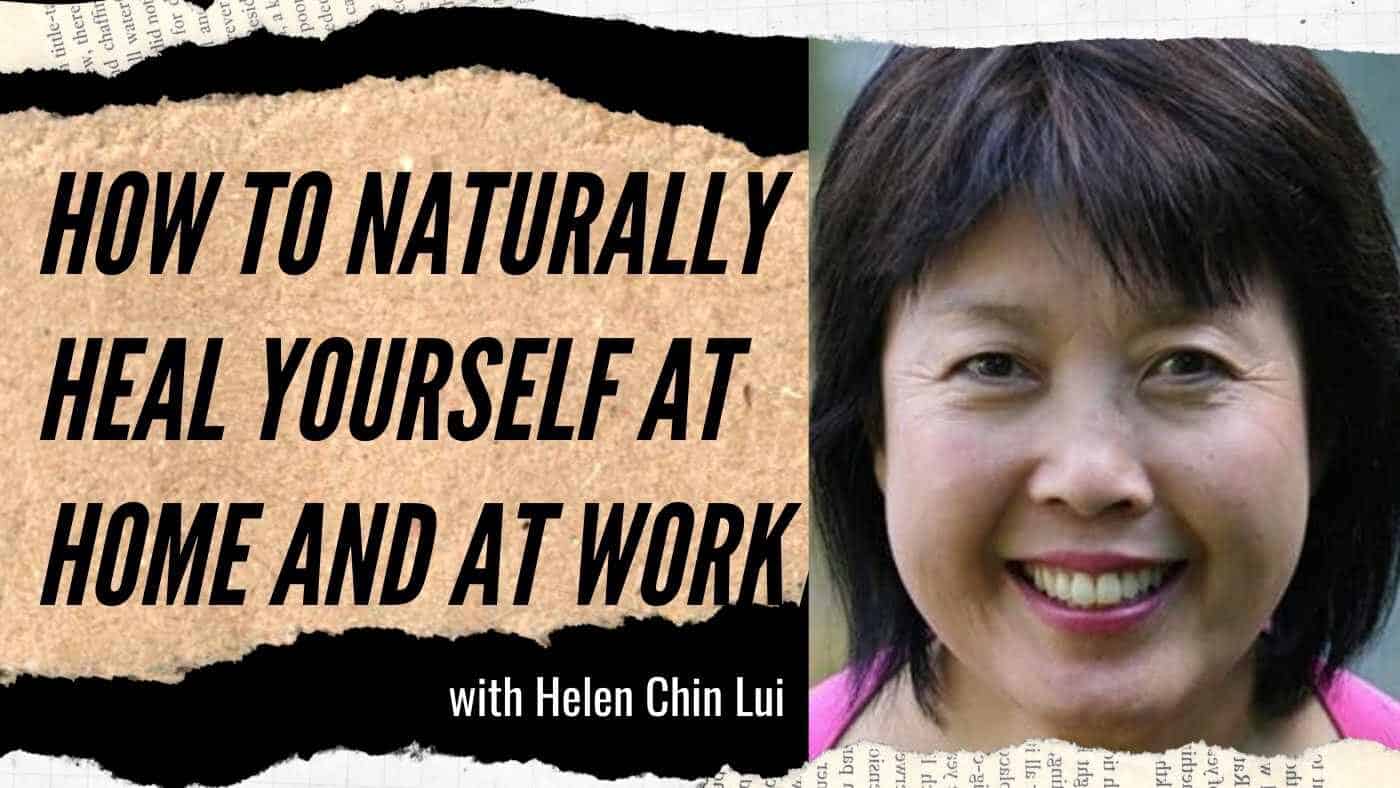
Our Guest Today: Helen Chin Lui
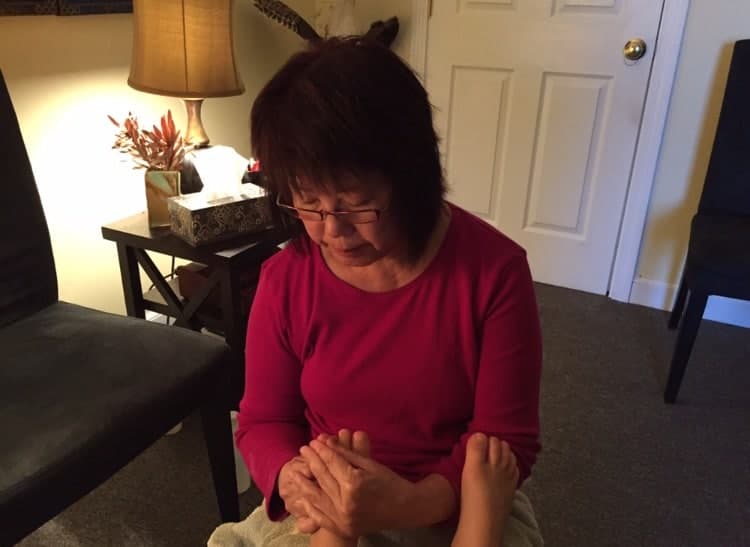
Helen Chin Lui is a Certified Reflexologist, Certified Energy Medicine Practitioner and teacher. She specializes in helping people of all ages to to provide chronic digestive relief, chronic pain relief and balance hormones naturally. In 2006, Helen founded the Healing Place in Medfield, MA. When Helen isn’t healing she is researching, teaching and writing. She also coaches self-care, self-healing Reflexology, Reiki and Chakra Balancing workshops.
As part of Helen’s education program, she will be presenting for the fourth consecutive year (started in 2012) at the largest New England annual Natural Living Expo on November 13, 2016, in Marlboro, MA. This year she will be presenting topics on “Are Your Emotions Eating You? Stop Negative Energy from Sabotaging Your Digestive Health.”
Personally, I’ve always been interested and invested in massage treatment, reflexology. I participated in various sports in high school, college and needed an outlet for injury recovery. Though my regular activities today (yoga, swimming, Taekwondo) don’t bring nearly as much physical trauma to my body, like most of you, I still experience varying levels of stress and anxiety from personal life and work. Massage therapy, meditation remain at the top of my list for healthy living. (I recently wrote an article on My Favorite Apps for Meditation)
Before I spoke with Helen, I had little knowledge of Reiki and digestive well being. But even if none of these topics resonates with you just yet, I also invited Helen to speak to us about wellness at work and how to avoid and balance situations that are unhealthy or toxic.
I hope you enjoy this healing conversation, and I’m sure Helen will be able to answer your questions (she provides 60 mins free consultation) on her webiste – click on “Request a Consultation”. Or if you need a recommendation for a reflexologist near you, drop me a note in the Comments section below and I’ll be happy to help!
To learn more about Helen and the Healing Place, you can visit their webiste and Facebook Page.
Show Note
- [05:00] Helen’s comment on the Chinese community growing up in the United States in the 1950s
- [07:00] Brief introduction about Helen and her healing techniques.
- [09:00] What was it like for Helen to grow up in Boston in 1950s? → Helen’s upbringing.
- [14:00] How does Helen work with people who work in very stressful environments? What do you mean by “neutralizing negativity”?
- [20:00] How can people deal coworkers they don’t get along with? What they can do to maintain their own energy levels?
- [22:00] What does Helen think about seeking out people whose energy compliment yours?
- [26:00] Does Helen think that it is OK to fail in the process of identifying different energies from people? It is a complicated process and you need to have a lot of experience.
- [27:00] How does Helen work with her clients after the initial consultation?
- [30:00] What are some of the reasons for energy blocks in Helen’s patients?
- [32:00] How often does Helen see her patients?
- [35:00] How could anyone start self-healing?
Favorite Quotes
- [14:00] The work environment was so incredibly toxic […] and I knew this as soon as I walked in. I couldn’t believe I did a 360 degree turn from my previous job.
- [15:00] One of the things I started to understand is that I could no longer hold my energy space at work anymore. Slowly I was being eaten away…
- [26:00] Staying objective with clients is really difficult. If the energy of an employee is not good, in the long run I’ll let them go.
- [31:00] You will only be able to help people, whenever you’ve been helped. If you are stuck with a situation because of your energy […] you’ll only attract similar people.
- [36:00] The first step to self-healing is learning how mindful are you about your body, your mind your emotions, because most of us, whenever we have pain […] we will ignore it. […] Pain will go away. But what does that energy go? People think that it dissipates. It never does. It lives in us. Acknowledging your past is key to start the first step to self-healing.
Transcript
Transcript
Helen Chin Lui: Welcome to the Phase World Podcast, engaging conversations that cross the boundaries between business, art and the digital world. We were like little islands, every one of us. As soon as I walked in, I could feel how dense and negative the energy was in the work environment. One of the things I started to. Dan is, I could no longer hold my energy space at work anymore. Slowly I was being eaten away. But where does that energy go? People think that it just dissipate. It never does. It lives in us. You will only be able. People, wherever you've been helped, the first step to self healing is learning. How mindful are you about your body, your mind, your emotions? Because most of us, whenever we have pain, we will ignore them.
Fei Wu: Hi everyone. This is Faye w, your host for the Face World podcast. Welcome to a brand new episode with Helen Chin Lu. Helen is a certified reflexologist certified energy medicine practitioner and teacher. She specializes in helping people of all ages to provide chronic digestive relief, chronic pain relief, and help them balance hormones natural. In 2006, Helen founded The Healing Place in Medfield, Massachusetts. When Helen isn't healing, she's researching. She's teaching and writing. She also coaches self-care, self-healing, reflexology, reiki, and Shaka balancing workshops. As part of Helen's education program, she will be presenting for the fourth consecutive year, starting in 2012 at the largest New England Annual Natural Living Expo on November 13th, 2016, located in Marlborough, Massachusetts. This year she will be presenting topics such as, are your emotions eating? You stop negative energy from sabotaging your digestive. Most of my family, friends, and even colleagues know very well that personally have always been interested in massage treatments because growing up in Beijing, China, I had infinite access to massage therapists and reflexologists. It was part of my life and my family's life since I was a little kid. As unusual as it may sound, this part of my life lessons actually helped me tremendously as an. I have participated in various sports in high school and in college. These days I practice TaeKwonDo, yoga, swimming regularly, though these new sports don't necessarily bring me nearly as much physical trauma to my body. I, like most of you, still experience some level of stress and anxiety from work. So massage therapy remains to be a very big part of my life. It takes time to find a place, however that's convenient for you, your family, as well as a therapist you can trust and rely on for optimal results. Before I spoke with Helen, I had very little knowledge of Reiki, self-healing, digestive wellbeing, but even none of these topics resonates with you just yet. I also invited Helen to speak to us about something all of us experience, which is wellness at work, and how to avoid and balance situations that are unhealthy or toxic. Helen grew up in Boston in 1950s, and, um, she surprised me by sharing her upbringing stories as a young Chinese American growing up in the city. I hope you enjoy this healing conversation and I'm sure Helen will be able to answer your questions. By the way, she provides 60 minutes free consultation, which you can schedule with her on her website. A link is provided with this blog post, or if you need a recommendation for reflexologist near you, draw me a note on the blog post and I'll be more than happy to help. Without further ado, please welcome Helen Chinle to the Face World Podcast. I'm very excited to have you on Helen, because during the past few days I started to learn more about you since our initial connection and to be honest, You know, as you know, I was born and raised in Beijing, China until I was 16 years old. And, you know, since I was born as, as long as could remember this traditional Asian energy work, including cupping, foot massage, reflexology, and uh, learning that directly from my mom and just, that's always been part of my life and much beyond that. Came to the state at the age of 17. I basically continued pretty much that lifestyle shortly after I left Fri Maine, where, when I was still in high school and there wasn't, there weren't a lot of, um, places where I could continue that sort of treatment and having people to talk to. But as soon as I got to Boston, I feel like it was such a sweet spot, you know, with the Asian population, with, and yeah, you know, introducing a lot of my friends into the practice as well. Have them benefit that directly. So I'm glad to have you on. Helen Chin Lui: Welcome. Yeah, well, thank you. You know what amazes me about what we do here in Boston. So many of us still don't know what this is. I'm gonna assume the way you were raised in China. It sounds like your parents expose you to more. Different ways of healing. And my mom came from the Canton, China area. So my mother's philosophy on health is, is soups. She used to make a lot of bone broth based types of soups. So every chance my mother had, uh, she'd be making a soup. So whatever ails you, she'll make a soup for you. So that's what I was exposed to, but not to the hands on. Which I find it absolutely amazing and, and it's kind of funny or not funny in this generation, my generation and my mom's generation, everything goes towards, I would say, herb base healing than hands on healing. Mm-hmm. . And when I even told my mom that I was doing this work back 10 years ago, she didn't even know what this was.
Fei Wu: It's so intriguing, you know? And so before we kind of lead into our. A little chat today and have the opportunity to educate listeners who are willing to learn more. And this is an area where I was hoping to blog a little more about as well. But I am no expert compared to you, Helen. A brief introduction is that Helen, you are certified reflexologist, certified energy medicine practitioner. And is it Helen Chin Lui: Uwe Master? Yeah. You, some people pronounce it, uh, U Reiki. And one thing about reiki. Energy work is relatively the same, more or less. You might use different symbols and different methods of holding your hands, but the intention for the healing is the same no matter which one you study under. Mm.
Fei Wu: Interesting. And as I mentioned before, reiki is something that I feel like I don't know as much about and uh, we can certainly, I. That to the audience as well. Mm-hmm. . Uh, and um, I also wanna explore, certainly you are the owner of the Healing Place based in Medfield, Massachusetts, and which was established in 2006, and you specialize in helping people of all ages to find long-term relief from chronic digestive relief. Pain relief and balancing hormones naturally. And you are a member of the Massachusetts Association of Reflexology and Reflexology Association of America. So you've done a lot of work in the past 10 years and you've raised your children and put them through school and you're very successful business woman. So I certainly wanna get to that part as well. Did I miss anything else before we get. Helen Chin Lui: Um, I don't think so. You know, one of the things I was gonna tease you about, Faye, here you are, you come from China. I probably have more of an accent than you do . And I was born here and. I'm the oldest of five and all my brothers and sister, I'm the only one that has an accent.
Fei Wu: Can we talk about that for a second? Because you mentioned that you were born and raised in Boston and you have very honestly told me about your age, and I feel like you have so much energy and you look very young. But tell us, what was it like for you to grow up in Boston? Was it unusual? Did, did you see nearly as many people who look like you? From where you were from at the time? Helen Chin Lui: Well, the Chinese population in Boston pretty much stay in the Boston area. True. So my mom's population, when they first came, the only jobs primarily they could find were, um, laundry work. Back in the fifties, everyone had the laundry and unfortunately people didn't make enough money to survive on. So the men again left and they. Primary went towards the restaurant business. So my dad used to put in these ridiculous amount of hours. He worked six days a week, probably 12 hours, 13 hours a day. He just came home long enough to sleep before he turned this whole thing around and then, He only had that one day off and the one day he did have off, he would spend his time cooking at home. So my family, my sisters and brothers, there's five of us. We all have a passion for cooking. Every one of us, and my dad's been gone for 24 years, but I would say growing up in the fifties and sixties, we were like little islands, every one of us. You know, my mom, back then, she was the survivor of the Japanese war, directly affected by the war. In fact, she still today, after 60 years later, she still has a lot of the post drama syndrome as a war survivor, and so she has a lot of fears. So back in the fifties and sixties, there were so few of us. When we were in Boston, we saw more Chinese people in school. But once we moved to Brooklyn back in 1967, my elementary school that I went to, there was one Chinese family that was us, one Japanese family and one African American family. And that was it. That's all the my own. And it was the strangest thing looking around and saying, oh my God. With only ones. And in high school where I grew up, only had one high school at the beginning, uh, back in 67, 68. The Chinese population was very small. We grew up primarily in a Jewish neighborhood and slowly. As they were doing more, uh, what they call metro system, which they will bus people from parts of Boston to come to school as a metro program. So there was an exchange of minorities and slowly there was more. Black Americans, more Asian people, um, from 68 to 72, and now, you know, 40 years later, the school is a really mix with variety of every single nationality.
Fei Wu: Isn't that fascinating? I, you know, this is, this is one question I always wanted to ask. Sounds kind of ironic, but even between when I arrive in the US uh, right around 2000 till now mm-hmm. . There are so many more Chinese students. You know, there are so many different ethnicities, races that you see everywhere and yeah. Helen Chin Lui: And, uh, and uh, and it also tells me that the world is becoming very global.
Fei Wu: I think every, just as you mentioned, everything is globalized. You know, relationships from when you're so in the school or to a more, you know, more serious relationship marriages. And I think it's also the case with medicine, with food, and I love the fact that. Are an expert in food and I think food and you know, meditation and energy work. I feel like all that is very neatly related. And so based on my observation, I worked in downtown Boston for an extended period of time. Because I was, uh, working in marketing and advertising. So three out of, uh, basically all three agencies at some point, uh, were in downtown. It was very easy for me to just walk over to Chinatown in five minutes. Mm-hmm. , you sit down, you order lunch for s. Sometimes four, five, $6 with a full meal, right? Oh yeah. Right Soup. And um, meanwhile, all my other, you know, American colleague would be waiting in line at some sandwich shop for half an hour, getting a sandwich in the drink for 12 to $15. And after a little while, as you can imagine, they will follow me around. And, um, you'll be proud that sometimes as an add-on service, what I would do is direct some of them to get, uh, you know, like. Back massage, get a foot massage. It's something I really strongly believe in. Mm-hmm. . And, um, so let's talk about, let's jump right into that, if you don't mind. How do you work with, uh, people who are gonna work in a very stressful environment? Or what do you mean by neutralizing, you know, negativity? How do you go about these Helen Chin Lui: things? Um, I'm gonna talk a little bit about my last job. I, I worked as a office manager in a non-profit organization that dispenses education materials on depression, eating disorders, and alcohol, and as much. Of an environment that I learned so much on how to run my run a business primarily so office manager for six and a half years. But the environment was so incredibly toxic. We have people who all have their, not only the business agenda, but they also have what I call the personal agenda. And I knew this when I walked into the. In 2000, I walked in. As soon as I walked into an environment, the first thing I said to myself was, oh my gosh, I can't believe I did a, a 360 where I came back to a job that I had similar back in the early eighties. And I, as soon as I walked in, I could feel how dense and negative the energy was in the work environment. And I said to myself when I was, I'm gonna slot for two years. I'm gonna get my experience and, and get out. After two years. Two years became 3, 4, 5, 6, and the last year of working there, when I first started, I was soak gung-ho. I had all these great ideas. I put a lot of systems in place, but each year as the company slowly was draining me and I knew I was being drained. That's what made it worse. I knew I was being drained. And the last year, not that I become, um, not only physically, emotionally strained, I started to get sick and I'm one of those people. I never, I don't get sick. In fact, the last 10 years of my business that I have now, I probably have had two colds in 10 years. Mm-hmm. . So one of the things I start to understand is I could no longer hold my energy space at work anymore. So slowly I was being eaten away, and even though I tried to work with the various energies, there is what I call the brow beater, the one that stands over you and constantly haunts you about your work. Uh, there's the one that. The one that tattle tails. If something goes wrong, that person's the first to, to throw you under the bus. Mm-hmm. . Uh, three, the, the sabotage, uh, the people who sit next to you around you supposedly supposed to help you, and they're trying to constantly undermine you. So how do you hold your energy? Well, first of all, you've got to recognize. Who are these people and why they are in your life and learning how to talk to these people is gonna be key because most times when you're in a nasty work environment, just usually as you, as you decide which person's gonna help you and which one is gonna tear you down, the people that's gonna tear you down, you have more of a tendency you don't wanna work with. Simple as that. You just don't wanna work with them. So how do you find the right people is going to be key and to track the right people, and a lot of times with negativity, instead of learning how to increase and track more. Positive energy. More times than not, people end up becoming negative. Even if you come with good hopes and good desires mm-hmm. and all of a sudden things starts to turn around. Mm-hmm. and you'll ab not only absorbing negativity, you'll also going, telling, doing as many negative things as possible to keep yourself protected because you're always afraid somebody's gonna take your job or, uh, undermine.
Fei Wu: I wanna add a few things here because, This is quite interesting and it's very applicable, very relevant to nearly everybody who will be listening to those podcasts. So for instance, in an environment, Today for many different workplaces, I guess it's a benefit that a lot of them are project based, meaning you don't often get to choose who you work with. You know, even as a project manager for my years or digital producers, I could. To a degree, select and recommend people who are better suited for the project, right? So you have some leverage there. But for people out there who are basically kind of dropped into project, not to say the people, sometimes the timeline, the budget or all that could be a little bit messy too, you know, added stress and. How could people go about, you know, working with the people they may or may not like during the day, and how could they kind of break away from that if that is their project? Helen Chin Lui: Well, how do you work in teams where you're finding the comparable vibration to help you? Well, the thing is, we usually we're just thrown together. Nobody ever sits and say, Hey, I think so and so could work better with so and so, because so many people don't understand how various energy personality work together and how they support each other. So if you have, let's. Two people who have enforcer energy, they're gonna butt heads. They're just going to butt heads because usually when you have two enforcers or, or let's say a room of enforcers, their goal is to win you over with their ideas. And many times they're not. They're not really interested in what you have to say to contribute to making a better. So, for example, a leader, uh, what I call a charismatic leader, they're the one that understands various energy. They understand, like, for example, support people are people pleasers. They're the backbones of the company. They're the one that executes ideas. So they really. They want the project to succeed. Mm-hmm. . So by finding the right combination of energy is key for a successful team. Helen, I
Fei Wu: like where you're going because you know when you are younger and especially if, I don't think age is even matters to the equation here because I notice that the struggles I had in my thirties in, you know, in retrospect to my twenties are different. But some of the themes are still the same, where it's really easy. You know, kind of blame yourself to say, wait a minute, I'm older now. I should be wiser, and why do I let this get to me? But I also think about the same thing of, um, you know, when I worked on the project, if I felt like the energy, unfortunately, on my project is toxic, what I end up doing is then I look outside of that team, especially when I cannot control my project, my clients or my team, I look outside and say, wow, you know, Emily's a really interesting person to talk to. Let me go hang out with her. Let me learn a few things from her. You know, or Matt is this incredible person. I look up to him and I feel like somehow it's not the perfect solution, but by proactively seeking out the group of people whose energy compliment yours can really offset a lot of the, uh, negativity. What do you think? Helen Chin Lui: Oh yeah. Like for example, last summer I had a team of people and so I put in practice all the things that I even teach my clients about in terms of energy personalities. So in my group, I had a sabotage. I had a people pleaser. My assistant was an enforcer, okay. And the person that helped me do graphics, she was, um, passive aggressive, so she wanted to please. But it just was not a right fit. So the sabotage, he went away cuz I, I basically had enough, I said, this isn't going to work anymore. The people pleaser was trying to work so hard to do everything, but he was sacrificing his own time and health to try to get things done. So that didn't work because he blew up the assistant who was the enforce. We had it out. You know, she basically told me she didn't like the way I did search and things, and so she decided that she was, she went ahead all of these projects and I basically said, no, I'm sorry. This is not gonna work out this way. And, and so unfortunately we left and the person who did my. Again, it just wasn't a good fit because she wanted to say things, but she did not know how because she was young. Mm-hmm. . Now I have a two different teams. I have somebody who's helping me with my marketing aspect, so our energy is complimentary, and the other person who's helping me with the SEO. We're very much like a rule keep. We say, this is what we're going to do and we're gonna get it done, and that's it. There's not a lot of things to talk about, so I'm okay with that anyway, so that's a problem when more times than not, when we develop groups of people. Yes, we're looking at their qualifications, but we never look at their energy qualifications, and most people don't know how to do that. So that's a reason why in my last job I was able to recruit people. And I remember I had one buddy who said to me, Helen, you recruited people in your image and. I never knew what that meant until years later. And I said, yeah, why wouldn't I? Cuz we only do things what we know. So if you come from a low vibration, uh, platform, you are going to only more times than not only attract people of the same caliber as you.
Fei Wu: So quick question there, which is, You know, you had mentioned that a team of people, what I find, to be honest, even running my company, hiring just a few producers and um, you know, a few people here and there, I must say. Sometimes when you hire your friends and even your friends who, whom you've known for a long time can be very challenging. So, yes. You know, in a way that, I guess my question is, who now does the hiring and and firing at your own company? And if you were to interview them, and do you think it's fair to say that that whole process and identifying the energy actually takes a lot of practice and it's okay to, to fail and to move on and. to then decide and work with a new group of people. Helen Chin Lui: You know, and you're right, it's really hard to be objective. Uh, one of my team members, uh, the sabotage I've known in my group, he, I've known him since I was 12 years old. So we have not necessar a span of relationship over 50 years. It's been, it was concentrated at the beginning and at the end, but I knew it wasn't working out. I should have divorced him. I would say at. Five years ago, six years ago. But I was hoping and hoping and hoping, mm-hmm. . So one day, beginning of the year, I made a decision. I didn't put any of the personal note into it and how it just became a business move. The relationship was over six years ago, and I was just being overly polite. Mm-hmm. , and I was stuck energetically, business wise, I was stuck. And I knew if I did nothing about. I would stay stuck, which would've been absolutely awful. Mm-hmm. . But I just took the personal note out of it and said, this is what I'm going to do. And I thanked him so much for years of help. And you know, we're still close today. But we just don't have the business aspect of it anymore. Mm-hmm. . So staying objective is really difficult. I'm much better at it with clients than I am with people that I work with, but I've gotten to the point now, you know what, if the person doesn't fit the mold, what I need, I will let them go. I will talk to them. I will try really hard to make it work. In the end, I could feel just this constant struggle.
Fei Wu: And also with, for a small company, I think that's even amplified. Oh yeah. To another degree. Because you are, you are doing healing, right? You're not just running a company and leaning back on your couch, so you're. doing a lot of the work. You're doing teaching, you're creating new products on your websites, as I can see very clearly. I wanna make sure that we get to your healing practice as well. If I'm curious, how do you work with your clients? And I noticed that you generously offer a consultation to, on your website and you see people probably face to face. How does that, how do you work with them, especially Helen Chin Lui: initial. Well, the first step is I have them fill out an assessment form. I am fairly intuitive. I could already feel somebody's energy before we start. We could start a couple sentences, but we end up going into what I call a interviewing process. So I have them fill out a form because as soon as they fill in the form and I'm looking at the information I already know more or less where the. Is stuck or sluggish. And to make it even more amazing, every single illness has a personality associated with it, energy, personality associated with it. For example, I work with a lot of people with digestive issues and digestive people more times than not are very feeling feely type of person, which mean this. They feel things sometimes to the point it hurts. They probably overanalyze a lot of the information. They were usually very helpful. They go out of their way to help somebody, sometimes to the point where they'll absorb somebody else's problems. Their own. So at this interview, we start to talk about their health, and I will ask 'em about their personality just to make sure that I'm on the right track and depending on where they wanna go with their healing process. What I also do is a lot of education. As much as I love to work with you, let's say doing reiki. Reflexology or shocker balancing. I always tell clients this is just a tool, one tool in your bag. If you decide to not to make any changes in your diet or you don't want to do anything to manage your stress, how do you find balance? And most importantly, I teach clients how to move and recognize when the. Become blocked because as good as I am in terms of helping them, the cycle repeats over and over again until they get it.
Fei Wu: What are the signals that the energy is blocked for maybe this particular group of patients? Like what do you notice? What Helen Chin Lui: should they notice in order to understand somebody's situation? You have to be able to look at your own stuff. Cause this is something I'm really passionate about when I teach my Reiki students. Cuz I, I've trained probably about a hundred students in the 10 years that I've been doing this. And I always, especially for those people who want to make a practice out of this mm-hmm. , I always tell them, you will only be able to help people. Wherever you've been helped. Mm-hmm. . So if you come into the relationship with low vibration energy, because you are stuck in certain situation circumstances or scenarios, you are going to only attract people that is pretty much comparable wherever you've been healed. So
Fei Wu: this is really fascinating. What I'm trying to do is, Give the listeners an idea of what it's like, the journey of working with someone with you or someone like you. And how often would you say that you need to see a particular patient in this case? Uh, let's maybe continue with a digestive problem. Helen Chin Lui: Oh yeah. I have those constipation people that. Will come in. I had this one call last month. Her mother is really, uh, constipated to the point she's jaice, so her skin is actually yellow. And this woman, she works as a traditional nurse and so she's looking for alternative healing for her mom because she's really concerned. So she comes in the next day and I'm working on her, and I got all, whatever was backed. In her intestines to start moving. Mm-hmm. . So I was hoping that she would continue to come to see me again, because again, one session is nice but is not enough to help to reset the body. Mm-hmm. . And what made it really interesting was. The woman didn't come again because of money situation. And I'm like, Hmm. And that told me a lot of things about her personality. So I haven't. Reached out to her just to see how she's doing after a month later, I figured if she wanted to reach back out to me, then she can. I,
Fei Wu: I think it's interesting because, um, we, my mom and I, you know, we're passionate about, um, you know, for instance using cupping Yes. For your back pain. We tell our friends that, you know what you can. Look at the purple marks and say, oh, I don't necessarily feel better, or I feel better now. It's a continuous process and you know, it's like treatment. It's like learning anything. The one time deal never works and even if at times a remedy the situation temporarily, it's uh, important to actually sustain a practice and treatments. Helen Chin Lui: See, just the thing that people don't understand is the investment of time. Like one of the things I always explain to people when they come to see me and they always ask how many sessions it's going to take. When I was in reflexology school as part of my clinical work, I had. To find 10 people willing to commit to once a week for 10 weeks. Mm-hmm. , I wrote my thesis on can reflexology help to diminish or eliminate medication intake. So I went out to try to recruit people I knew. Who have various chronic pain. So the people I went after are the various arthritis pain, rheumatoid osteo. I did a little bit of on immune issues too at the time, and I found. No matter how much pain anybody was in severe pain, nobody needed once a week for 10 weeks. I'm like, oh my gosh, this is incredible. Usually by the fourth or fifth session, once a week for five weeks, four weeks, the pain cycle breaks. . So usually what I do by after the fourth session, I set the space out the sessions. So usually by sessions five and six, I see them every other week. Mm. Again, we evaluate to see if the pain has quieted down. Then seven and eight session is every three weeks, and after the eighth session, people are on maintenance. I always tell people, I love to see you come, but I also love to see you. because this is not part of addiction. So
Fei Wu: how could anyone kind of tap into his or her own ability to self heal? Helen Chin Lui: Well, the first step to self healing is learning. How mindful are you about your body? Mm-hmm. your mind, your emotions, because most of us, whenever we have pain, physical pain, emotional pain, We will ignore them. You know, we're all tar. I don't care who we are, we're all tar from little kids on, oh, you have a pain. Oh, don't worry. It will go away. It will go away. It will go away. And then before you know, things will be better. But where does that energy go? People think that it just dissipate. It never does. Hmm. It lives in us. It stays until one day something breaks that routine and all those emotion erupts. By acknowledging your past is going to be key to letting go and start the first step of
Fei Wu: healing. I am very fascinated by this, Alan. I think you know how passionate you are about your work, how interested you are in working actually, and think about what a different environment it is. Sometimes in some of the Asian countries where women stop working and you know, even in their forties. And I've seen so much of that and to a degree that upsets me. It actually hurts my energy to, so I'm glad you're doing this, Helen. I'm so glad we had this conversation. Yeah. Helen Chin Lui: You know, here I am at the age of 62. I feel like I'm just beginning. I know I'm gonna expire really soon, but I got to finish these appointments before I go. I know in my heart, cuz we were all taught growing up that we have limited resources, we have limited outlook. This is absolutely endless. You could do anything and this is what I tell every single client who comes and work with me. Mm-hmm. , we could make these changes. Yes, it's going to take work, but just nothing in life. Is relatively work. Effortless. Yeah. Yeah, effortless. I'm sorry. Yeah, everything.
Fei Wu: This is great. I think it's such a positive note to end on this podcast. So yeah, thank you so much again, Helen, for your wi. Send for sharing your stories with us. To listen to more episodes of the Phase World podcast, please subscribe on iTunes where visit phase world.com. That is F Helen Chin Lui: E I S W
Fei Wu: O R L D, where you can find show notes, links, other tools and resources. You can also follow me on Twitter at Face World. Until next time, thanks for listening.
Music Credits:
Choose Music – Royalty Free Music
Are you on Facebook? Let’s connect there.

Written by
Fei WuFei Wu is the founder and CEO of Feisworld Media, a Massachusetts-based digital media company helping brands get discovered by people and by AI. An Adobe Global Ambassador and brand partner to ElevenLabs, Synthesia, and 50+ other tech and AI companies, she hosts the Feisworld Podcast (400+ episodes, 500K+ downloads — guests have included Seth Godin, Steve Wozniak, Chris Voss, and Arianna Huffington) and co-created the documentary Feisworld: Live Your Art on Amazon Prime. Fei writes for CNET, Lifehacker, and PCMag, and her work has been featured in Forbes, Harvard Business Review, and WIRED. She has been publishing on the internet since 2014 — long before AI discoverability had a name.
View all posts by Fei Wu→Stay updated
Weekly insights on content, AI, and digital media.
Keep Reading
Related Articles
Joanne Lipman on Mentors, Untapped Talent and Why Women Should Stop Waiting to Be Perfect
Marc Randolph on Curiosity, Messy Starts and Why “Nobody Knows Anything”