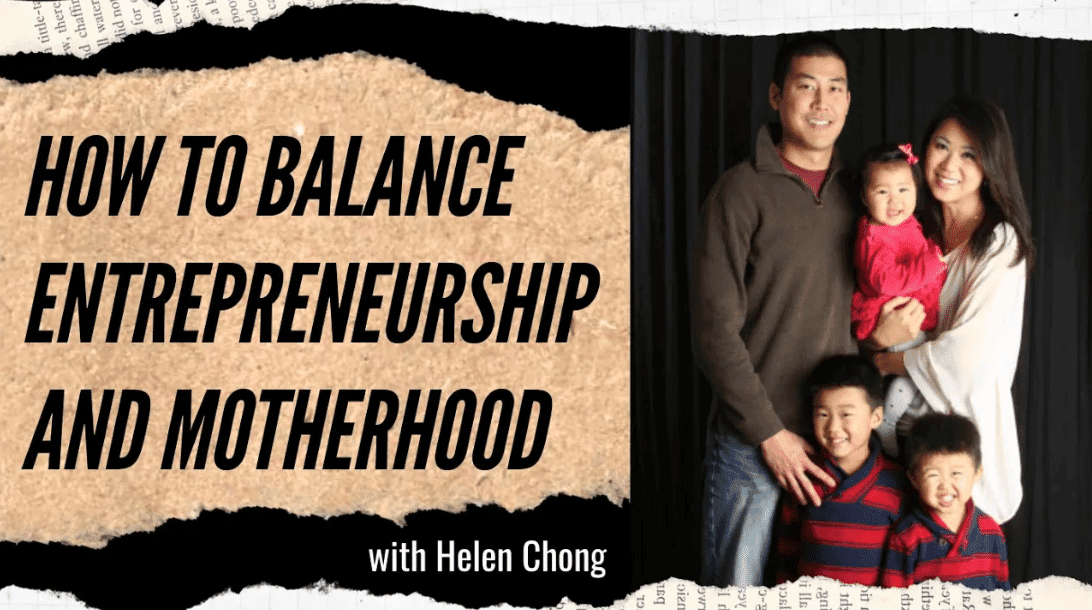
Meet Helen Chong
Helen Chong is the founder and principal broker of Haylen Group Inc, a real estate investment services company, located in the San Francisco Bay Area. She raised three young children while building and running her own business. Helen grew up in Hong Kong. At a very young age, she experienced how difficult life can be. She had gone through numerous financial hardships as a child, recalling days being left home alone while her parents worked in another country. Helen had to quit school from time to time to help her parents’ restaurant business.
When Helen was 18, she made a difficult decision to move to the US on her own despite her parents’ objection. As a result, she had to save every penny and graduated with a degree in Economics from the University of California, Los Angeles.
Seen as a successful business woman today, Helen shares with us how she balances career, relationship, motherhood.
Helen Chong was introduced to Feisworld by Chris Yen, a previous podcast guest on the show. We hope Helen’s voice gives mothers out there, an opportunity to connect and reflect. During our conversation, Helen volunteered to answer some of the most difficult questions including her own struggles with postpartum depression.
If you enjoy the show, I hope you share Helen’s wisdom and lessons with other women. To learn more about Helen and her company, visit their website here.
Show Notes
- [06:00] Tell us what you do and what are some of the things you are currently struggling with.
- [08:00] What are the most common questions that you receive from other people, as a woman with a career and three kids?
- [10:00] Can you share some of the tips and tricks that worked for you to find free time and some ‘peace of mind’?
- [13:00] It is very challenging to raise three children. How was it for you the shift from your professional life to being a mother of three kids?
- [16:30] Do you have any external help with your kids, such as babysitters, or other supportive resources (mother groups, etc)?
- [26:00] Can you tell your experience and thoughts about postpartum depression?
- [32:00] What are your thoughts about this modern concept that mothers need to be able to do anything and everything.
- [35:00] Nowadays, how do you balance your career and leading a team on your own company with your busy routine as a mother?
- [38:30] How did you end up in the US? What type of business were your parents running?
- [40:00] Helen comparing a bit modern society and teenagers with working a couple of decades ago.
- [50:00] Is being a real-estate agent a good career for mothers?
- [51:00] What do you think is the key ingredient for being successful?
Favorite Quotes
- [10:00] ‘There’s no slow time in your life, but the [peace of mind] is how you talk to yourself. You treasure the moments when you are holding your baby, or right before you go to sleep, or when you shower…’
- [13:30] ‘[Moving to LA] was really tough. What made a difference was that you start to try really forcing yourself, not even for yourself, but for your child.’
- [17:30] ‘It’s good to hear from other moms that what you are feeling is normal. I was so frustrated, I didn’t even know what to do. I wasn’t happy at the time’
- [20:00] ‘Knowing that they are also struggling, and that they listen to you takes a lot of pressure off your shoulders’
- [28:00] ‘Once I learned how to accept [the change in my life] is when I finally got out of [postpartum depression]. I couldn’t accept it, I kept thinking to myself why?, what did I do wrong?’
- [40:00] ‘Those philosophies got stuck in my head. Even though I didn’t wanna hear, I heard them. Who I am is what you have said [what I heard] during those years.‘Those are the things that he told me when I was very little. This is what my dad has been teaching me’
- [51:00] ‘To be successful is about persistence and discipline’
Transcript
Transcript
Fei Wu: Welcome to the Feisworld Podcast, engaging conversations that cross the boundaries between business, art and the digital world. The peace of mind, I think is how you talk to yourself. You treasure the moment when you are holding your baby. You start to try really forcing yourself, not even really for yourself is for your child. Everything is because of found now. I was so frustrated I didn't know what to do. I mean, it's. Kind of in a way good to hear from other moms. It's like, oh, okay. So the way I'm feeling is normal. I starting to feel a little bit better to learn how to accept life because it is a huge change to be a mom who I. Because of what you had said during those years, but this is the problem of this generation of children. It's that how do we make sure that our children is not going to feel like they have this sense of entitlement? They should have gone without working hard. Hi everybody. This is Fei Wu, your host for the Face World Podcast. Today I have Helen Sean on Face World. Helen is the founder and principle broker of Hayden Group, Inc. A real estate investment company located in the Bay Area. She was born and raised in Hong Kong at a very young age. She experienced just how difficult life can be. She has gone through numerous financial hardships as a child recalling days from left home alone while her parents worked in another country. Helen quit school to help her parents restaurant, but she had to make a very difficult decision at the age of 18 to move to the United States on her own, despite her parents' object. As a result, she had to save every penny and graduated with a degree in economics from the University of California Los Angeles. What intrigued me the most about Helen's story is that she was raising three young children while running her own business. I have to know, and many of my friends who are young mothers all have similar struggles and questions. Is that as a woman balancing career, relationship, motherhood are household terms, but really how does one actually do it and do it well? Without any children in sight yet, I find myself listening to the Dear Sugar Podcast where Cheryl Stray and Steve Almond read numerous letters from listeners asking the same question. The conclusion makes sense to many mothers trying to do everything and do everything perfectly. That's just not possible. We're reasonable for any human being, but still, I thought inviting Helen to Faith's world will give mothers out. An opportunity to hear, to connect with the source. I sensed a deep kinship while hearing Helen's voice her story, her excitement, hesitation, struggle, and and realization. Though her children are still very young, all under the age of 10, she has become the resource among hurt and network of women. Why did she choose to do this? Because someone or a group of other women were there for her first. She decided to pay forward. In fact, Helen is the one who volunteer to answer the difficult questions on face World, such as postpartum depression due to the struggle of of being a mom and a career woman. How has Helen balanced between career and motherhood and how does Helen find free time or peace of mind for he. Self confidence to be in the professional world as a pregnant woman and as a mother who has limited time and energy compared to others and how many others will see you because of these limitations. If you enjoy this episode, I would really appreciate that you consider sharing it. Without further ado, please welcome Helen Chung to the Face World Podcast. So Helen Chung, uh, welcome to the Face World Podcast. I'm so thrilled to have you.
Helen Chong: Thank you so much. I'm really excited. Yeah, I wanna
Fei Wu: first thank Chris Y for introducing us, uh, via email. And to be honest, I, I'm personally not in real estate. I don't really know much about the industry, but after our brief conversation, I was so pumped because you were touching upon so many things I would love to learn more about. And I know I'm now the only woman, uh, saying that, you know, you are, you're success. Broker, you've been running your own business for an extended period of time, and during that time you had three lovely children. Yes. And uh, you are super mom. So , ,
Helen Chong: I can't say I'm a super mom. I think I'm like a, a mom trying to do all that things. And a lot of, I know a lot of mothers out there are, uh, struggling with the same thing that I'm struggling with as well.
Fei Wu: So tell us what you do and what are some of your current
Helen Chong: struggles are. Sure. So I'm a real estate broker. I own my own, uh, real estate brokerage, um, company, and it's called Hailing Group in the Silicon Valley, California actually. Um, so about four years ago, well, I started my business in Southern California. Four years ago I moved up to the Bay Area, um, specifically in the Silicon Valley area. Um, so I had to start my business all over again. Um, obviously including operation, uh, marketing, sales administration, pretty much, you know, um, just like any other entrepreneur, um, of a small business, you have to wear many different hats at the same time. Um, when I moved up here, I had to start this business all over again because I have to build my clientele again while. Partnered with my second child at the time. So it was definitely really hard because, uh, we have no families around. Um, we obvious have very limited number of friends here. I was in, in a way, fortunate enough that I had two, um, childhood friends. They lived up here already. So that, that was a little bit of a comfort. It's not like going from, um, a place to, to, to a new place where I knew nobody at all. So, but definitely it was pretty hard, um, because, you know, I don't know this area and real estate is all about knowing the area, right? And it was quite, um, stressful time for.
Fei Wu: Yeah, definitely. And you've, you've come a very long way because the first thing I sense speaking with you is that you are very, you're very confident and you are very eager to share your story, which I feel like. Having birth, having children is such a natural process for, you know, most women and mm-hmm. while you want to have children and a career, and this is something I've been thinking about and discussing with my girlfriends consistently for the past 10 years, and I feel like there's still so much that I, I don't know. So I guess, what are some of the most common questions that come up for, you know, career woman like yourself with three kids from other people?
Helen Chong: You know, um, it's funny because really I hear that a lot. It's almost like it just left and right. Whenever, um, who was a mom come up and that I meet them or see them after a long time, they'll be like, how do you do it? It's always that question, how do you do it with three kids? And you know, sometimes it. I, I don't even know how to answer it. I just said, you just do it. You know, it's not like there's, uh, a special formula and it's not something that I had figured out before. I. Decide to have three kids. It's kind of one of those things where, hey, you know it happened and now you need to learn how to go around it and figure things out. And kids schedule changes all the time. As much as you try to train them. They never follow your schedule. You're trying to follow their schedule. And then once you've thought, you figure it. They change their schedule or change their behavior again, then you have to learn it all over again. So it's not like, how do you do it? It's just, I'm just like, you just do it. I, I used to tell some of my friends was like, Hey, you know, when we were single, we used to think that we're so busy, you know, we always tell people, oh, we are so busy. I have so much to do. And then once we we're married, we're like, oh my gosh, we were so busy to take care of the house, da, da, da, work. And then you have one kid you say like, oh my God, how do people have two? Then you have two kids, you're like, man, one kid was easy. How do people have three kids? You know, you just do it .
Fei Wu: You just go with a flow. So I think I have a feeling doing what you do, you might not realize that before this call. Um, but I must ask, do you have some of the tips and tricks, things that you've exercised that worked, uh, for you before? You know, how do you find. Free time and that peace of mind for yourself basically, um,
Helen Chong: you know, for a while. Uh, because life, I mean, I'm not even gonna, it, it's great to have kids. I mean, honestly, it's great to have kids, kids. Are my life now. Um, as hard as it was. You know, I, I remember after I gave birth to my oldest, I was like, oh my God, I just wanna remind my life back to just, you know, have my own life where I can just go out on my own without having to worry about, like, let me pack all this stuff. And then the milk and the diaper and then the baby with the car seat was just so much, so, such a huge change. The peace of mind, I think. There's no slow time in your life, but it's how you talk to yourself. Um, you treasure the moment when you're holding your baby, or right before you go to sleep or when you're showering. That showering is probably the most private time that you, you are gonna have. Once you have the baby , I think that's the time when you start like thinking about all these things. Probably you'd be crying at that time to let it all out, or, um, sometimes, um, that's the time you think about like all these funny moments you had with your, your kids. Um, and then the other time that I actually find peace was, uh, when I would, I, I didn't really have a lot of opportunity to go to church because, you know, when they're babies, Is really hard to schedule that. And then as they grow older, they're always being loud, right at church. But I really enjoy going to church whenever I'm there, I feel like that's the time when I'm, I can find peace. I will tell the kids like, Hey, this is time to kneel down and pray. Even though I only get like 30 seconds, I kneel down and I just like, oh my God. I would get into it and then just talk about like, I'm grateful for. Um, thank you for making me so, so much stronger by having this kind of
Fei Wu: experie. It's funny for me to hear this and I know there are a lot of hardships you're going through. So funny maybe isn't the most sensitive adjective to use, but you know, especially as Asian American, Asian woman living in this country and, and sometimes even more pressure outside of this country somewhere in Asia, that now we're asked to do everything going to the best schools and, and undergraduate degrees are no longer somehow. Sufficient to satisfy your parents and then all of a sudden you're, you know, many women unfortunately find themselves in their mid twenties and thinking about getting married and have kids and have to rush through everything. Um, yeah, and most women have children when they're much older than even just, we're looking at moms from 10 to 20 years ago. So, How do you even find a cohesive story, you know, to think that, you know, I'm doing all the right things and finally I'm married and have kids. It, it sounds like, not to anybody's surprise, it's, it is very challenging to raise children. Like, I guess we haven't really had a moment to, to kind of think about it more cohesively. What, what is it like? Mm. To shift.
Helen Chong: Well, you know, um, what's it like to shift? It's, I always tell people, people always say, oh, when I'm ready, you know, when this and that is ready, then I'll have kids. I, I always tell you, tell people, it's like, you will never be ready. Trust me. Nobody will ever be ready to have kids. Who is gonna say, I'm so ready to have no more freedom in my life, , it just will happen. And I was like, I mean, if you want, um, to have family in the future, then just tell yourself, I gotta have kids by this age or something, you know? But you will never be ready as you get older. It does get harder. And it's true when you know the parents. Tell you like, oh, you know, don't wait too long. You, it's just gonna get harder. I would say it is true because as you get older, you enjoy your freedom so much more longer. It's really hard to let that go.
Fei Wu: Really. Is it true though, when you get older, you want more freedom? Yeah.
Helen Chong: Because you enjoy so much. I mean, I, I, I was thinking, um, to myself like, wow, you know, if I had given. If I had given birth, let's say, you know, right after college, I've never really had, had fun before. You know, experienced that freedom. , I probably wouldn't even know what I'm missing out on. Right? But now that you know somebody who, let's say, wait till they're 40, they have enjoyed like 20 years of freedom, make their own money, they go, uh, have fun. And also was like, what? I have to give up all of that to this baby you.
Fei Wu: I think you, you, uh, nailed. And, uh oh, I'm serious because, you know, I've always known that when I was younger, even thinking that I will be married and have kids in my thirties, and I don't think my mom particularly like that at all. But you know, she has been ready for a very long time. But for me it was a different reason because financially, spiritually, I wanna be independent when is a lot of things. And I'm not naive in that sense to say, you know, if something. Happens with the family. I really, I really need to be able to kind of carry this through and, but then now you mention this, I realize you are absolutely right. You know, when you're 22 you make no money and then now you, you're way more confident into your early to mid thirties and, You are exposed to so many more people and ideas and places to live and to travel to, and my world has changed completely. You're absolutely right. I didn't realize this . Yeah. And then the money you've made, you know, right. Like the, back then in your twenties, you had the freedom, but you had no money to go anywhere. Now I actually have the money and I'm thinking every day it's like, how do I, you know, and I to spend it on myself. . Yeah. How. Live it up. You know, now is the time. . This is so funny. Unexpected answer. I really appreciate it. So, living in Silicon Valley, which I didn't even work out because that is the place of all these things happening, known to many people who don't live in Silicon Valley, is the the tech world. But I'm sure there's everything else. There's fashion, there's medicine and all that. So everybody around you. Like you said, doing all kinds of crazy creative things and mm-hmm. , I'm not sure if you've found help. Do you have babysitter, multiple of them, or are there resources, uh, out there supporting a lifestyle that you're able to maintain? Well,
Helen Chong: um, So kind of like go back to, I actually moved up here from LA and uh, after we moved to Silicon Valley, we, obviously, it's not as colorful as la right? In Los Angeles it was just so much more entertainment. Silicon Valley, there are a lot of. Very, very smart people here, very successful. There are a lot of money, but it's a great area to have families as well. There's less traffic, relatively speaking, compared to Los Angeles. But one big problem for us is that we moved to Pew. We have no families around. We cannot say, Hey, you know, I'm busy. Can I drop off my kids? With you, with mom and dad and can you guys, you know, wash him for a few hours? We just didn't have that kind of luxury. So when I first moved up here trying to sell everything down, looking for houses, um, looking, looking for a place to live in, I was pregnant with my second one, living with my, at the time, oldest. He was one and a half. Not even one and half your old yet. He was like 14 months old. So it was really tough, but I think. Made a difference was that, you know, you start to try really forcing yourself, not even really for yourself, it's for your child. You know, you just force yourself to take him to go to some, um, social events like the mommy groups or, uh, some play dates. With people you don't even know, but you are doing that is literally just for your child, just so that your child can have a play date. Uh, if I'm by myself, I wouldn't just walk up to another person, say, Hey, you know, how are you doing? And can we talk? You know? But with the child, you just go up to another mom and then say, oh, hi. You know, let's start the conversation about, you know, each other's children. And, uh, I think that was, uh, the most important support at the time because we didn't have family, but if we had families around, I'm sure our families would be the big support for us. Uh, so the transition as a mother and, and a new place that was my support is to try to. Make new friends. I think you just gotta get out of your comfort zone and go meet people so that you can get some support. I remember I was, I was so stressed out. I was so stressed being up here with no friends, and my husband was like out of town all the time and I had to be taking care of my one year old. Partner and I was trying to set up my business from scratch here, so I would cry and I started doing research online looking for other moms who were in the same position and I couldn't, I really couldn't find any. It's like really hard and, and then I started looking through my Facebook friends and I saw this mom, she had three kids and her husband always like out of town as well, so, Messaged her. I don't even know her very well, but I messaged her out of desperation. I was like, can you tell me how do you do it? You know, , how do you feel happy? Your pictures look so happy. Da. And then she tells me the same and she's like, you know, we post the happiest pictures on Facebook, but there are a lot of struggles on the back
Fei Wu: end. That's very smart of you. Continue. Yeah. Yeah. But I
Helen Chong: mean, it's, it's kind of in a way good to hear from other moms. It's like, oh, okay. So the way I'm feeling is normal. I was so frustrated I didn't know what to do. I was just like, please, I just wanna see somebody, like a psychology to something to make me feel happy, like where I am right now. I, I'm not happy at the time. Um, but hearing from other moms, um, knowing that they are also struggling. They listened to you, you, you vented them, it's. Like it take a lot of pressure off of my shoulders. I think that's, that's kind of like a point where I start to feel a little bit better to learn how to accept life because it is a huge change to be a mom, um, from being single. To become a mother of one and then from mother of one to become a mother of two multiple children is another level of difficulty right there.
Fei Wu: I think there's an opportunity there too that if a Meetup group or such where Facebook group doesn't already exist, I think women should really come out and re. and actually think about doing something fun, whether it's like brunch or our dinner, we're living close by. To be able to offer each other support is really, is really important. Um, yeah, uh,
Helen Chong: they, they actually have a lot of those groups and, um, you know, I remember before. I gave birth to my oldest. I was still pregnant. And people talk about those mommy groups. I just kind of rolled my eyes like, oh, so cheesy mommy groups. Gosh, you know, Moha never joined those things, And after I gave birth, I was just like, oh my gosh, I need to share my stories. I need to hear from other moms. How do you do it? Who do I do it if my child is like this and that? And we formed a really. Strong connection. And that was like in la And then after I moved up here, I was trying to look for like similar groups. Mm-hmm. . And I was able to find a few people, you know. Um, but another problem was that because I also worked and I really tried to join these mommy groups, well a lot of these moms, they are full-time moms. And I, I could. Come out as often as they are holding their get together. So every time I go, I just feel like, okay, I have to start all over again to get to know people. Right. And as much as I, I'm kind of outgoing, but I feel really awkward really, every time I go to a networking event, it's. Really hard for me. I always feel, I don't know how to start a conversation. I'm more of that one on one type of person. Like, you know, I just wanna get to know you intimately. I'm not very good in a big group of peoples, like I don't know where to stand, who to talk to. So that is one thing that I felt a little bit sad in a way, because whenever I go to these mommy's group, they all know each other and it's like, and then they see me come, I was like, oh, you don't come out that often, huh?
Fei Wu: You know? Yeah. Very, very cliquey. Almost like when you, you know, same thing was you working in marketing, uh, advertising. Any company really, like people kind of already formed their little. Groups, you know, three to five people that hang out all the time and it's hard to, to break in. And I must say, I'm not sure if you lived on the northeast, you know, Boston, New York, uh, before, where have you always been living In California? Always in California. I noticed something. I love traveling to California. I have been consistently, almost, at least once every two years or so, and I noticed something very intriguing is, uh, maybe consider moving out to Boston is the misconception of that. People from New England are cold as a not very welcoming and on the surface. That's true, but deep down, once you break into a group or you, you start authentic conversation and or you make plans and, and people are very much on time and mm-hmm. kind of follow through that way. Whereas I love California, the sun, the beautiful people, but I notice when I'm. Over there when I try to make plan, we're trying to, you know, the people I meet, trying to stay in touch with them. It's not always consistent. It's like when you're there, you're there. And I guess people from California really hate this podcast, but once you break away from it, they're sort of done, you know, , um,
Helen Chong: well, I, I don't know, I guess depends on people, and I actually think that California people are the very laid back and. In la Very, very laid back. Right? And then in Silicon Valley, although it's not as colorful, like I said, as in la, but people here, they are actually a lot more always thinking about like, okay, how am I gonna improve myself? They always think about like professionally, I mean, I know a lot of mommy friends, a lot of them do decide to become stay at home mom, which is something that I wish I have the heart and the energy to do. I feel like stay at home. It's so hard to do. I've done it and I went into almost like a depression and, um, and, but that, that's, I think is everybody's, Calling, right? Mine is like kind of in my blood. My family's always entrepreneurs. Um, my mom, I, now, I realize that I'm exactly like my mom. Never. I can never stop. I can't. I have to like constantly going. I have to do something. I always have ideas in my head. I have to do something, so I can't just like, okay. As much as I thought I wanted to do it, when the time comes, I just realized I can't just stay home and watch. My child, even though I love him to death, but I can, I cannot just stay home 24 hours a day and be a full-time mom. So that's my calling in terms of like, you know, I have to
Fei Wu: work. I think you're certainly not alone in that because I've reached, uh, an age where, Several of my friends, you know, some of them actually have had more than one child. Some of them are pregnant, currently, don't know what they have signed up for. And, uh, turns out pregnancy is the easiest period before the child is born. And, and, um, I wanna talk about a topic which is, uh, postpartum, uh, Depression. Mm-hmm. , it's a kind of a dark, uh, topic in a way that I personally didn't realize how involved, you know, the condition is. I had originally thought it's almost like don't wanna use food poisoning, but something, it's like having the flu and you just get over it very quickly. Mm-hmm. , I didn't realize was such an extended period of time. Sometimes some women almost never come out of it. So could you tell us a little bit more about what you know, or your experience or helping women to kind. Understand a little bit more about that.
Helen Chong: Yeah. Um, so, so like I mentioned earlier about me feeling really depressed, um, after moved up here, I think that's part of the postpartum. I, I think aside from they said like if it's the hormonal changes, it's also because of the lifestyle change. I mean, again, it's like, hey, you know, you've enjoyed all these years of freedom and all of a sudden you're, you are, Being jailed pretty much not only from the baby, your body too is nothing that you can control. For example, as a mother, you need to breastfeed, right? And your body produces milk and you have no idea how painful that can be for your breasts. It's really painful as if like, I didn't even know how to explain to my husband. Um, and then all I can tell is like, just imagine you need to use the bathroom and you cannot go. Wow. And you need something else to help you get, get it out of your body.
Fei Wu: Um, oh, I didn't realize that. Oh
Helen Chong: my goodness. Yeah, it's painful and so ignorant, , but no, we, nobody knew. I didn't even know either. And I mean, so. So besides the freedom, besides, you realize that you have to get up every two hours, your lack of sleep, and then your body change, your body shape change obviously. And then, and then all of a sudden your body's producing on this milk that you have to get it out every two hours, three hours or four hours or so all day. And then you can't just do it in public because people would be mad at you if you come, uh, in public. Or you have to, if you wanna breastfeed, you make sure you all cover up. Um, you know, ideally cover up so people don't look at you. There's just a lot. I think those are really the main factors that cause people to have postpartum depression. That's why I was saying that once I learn how to accept it, And that's when I finally got out of it. I couldn't accept it. I kept thinking to myself, why? Why do women have to go through all these, you know, um, what do we do wrong? You know, I kind of like go back. I was like, no, we're all being punished for, for, you know, for, for the rest of the women out there. And, and, oh, I talked to another mom as well and she had, um, four children. She does not work, and her husband worked full time and she's always home taking care of all the children. I was like, How do you feel? Because, you know, we all went to college and I remember she was very, uh, ambitious as well. She was always looking into investments and now she's staying at home Mom. And I asked her, I was like, do you feel being, it is like life is unfair, that you now have to stay home while your husband's going out to work and, and advancing in his career. And she was like, you know, I just accept the fact. No, this is my life now and I support my husband to go out and work, and I take care of my children. So, so yeah, I think, I think that acceptance is a big part of it. I feel especially sensitive and also concerning when I see my friends and my sister, uh, were giving birth. I, because I know how hard it is in the beginning, you don't sleep, you realize you have no more freedom and. You go into depression. So I always try to make time to talk to them, make sure that, you know, I give them these kind of reality. Because I was like, I don't wanna make you think that, oh, everything's so beautiful. This is the best thing ever happened to my life. As soon as I see the baby, I just fell in love. I'm like, no, that's just. Fair tale. Yeah. It's totally fairytale. I, you, you give birth and then you see these babies at, huh? Who's this ? You know? I'm like, what? What is this? How come I thought maybe you're supposed to be cute? How come. His, like my baby came up his nose like crooked. His ears like all weird. And I'm just like, oh my God. I thought they were supposed to be cute. .
Fei Wu: I heard, I heard that they were basically like a, a almost like a jello, like everything so soft. And my, one of my coworkers describing his son was born and his like, that was their first born. And you look at his leg, it's like, oh my God, it's all twisted. What's going on? And it's like, oh, it's all. But nobody talks about these things. ,
Helen Chong: no. People always talk about like how as you see your baby, you'll fall in love. I'm like, oh my God, I didn't feel that way. I must be a very bad mother. And then everything that you do, everything that the baby does is all because of you. You're the mother. Oh, how come the baby's crying? Oh, because your milk, your milk is probably not good. Oh, because what you ate is all because of you, your fault. .
Fei Wu: Oh man. You know this, remind, if you haven't listened to this, I'm, I must send it to you. I recently listened to one of my favorite podcasts called Dear Sugar because Mother's Day, Just a couple of months ago they released this episode, and one statement I never forgot is, why is this world asking so much from mothers? And because then mothers kind of take that upon themselves is trying to do everything and trying to do everything perfectly. . Mm-hmm. . Yes, totally.
Helen Chong: And that was the issue. Yes. I, I, I absolutely agree. I actually recently watched a video and I, I pretty much was crying with my sister because my sister just gave birth as well. And, uh, it was about the mommy groups. They're all talking about how hard it was about. You know, breastfeeding and pumping and all that stuff. And then this mom who's pregnant asked if it's that hard, why do you guys do it? And uh, and then it went on to like talk about, um, the whole experience of this new mom now. And then she, it's so hard. She has to hide in the closet to pump while at work. And, and then let's say you have a meeting and you're over that three. Period of time, your breast all of a sudden is engorged and it's so painful, but you can't do anything. You just have to like continue on with the meaning. I mean, things like that, other people won't know. And then we always like, oh no, breast pump. I can't let people know. Right. We try to hide. We want to do it on our own, so people don't know about it. If people know they might look at us weird.
Fei Wu: I never thought about that before because all the meetings I've been in, you know, especially client meetings. Nobody knows when it's going to end and. And it's really, and definitely now because of talking to you, I notice companies with, you know, uh, what do you call, like, not nursery rooms like nursing room. Yeah, that makes perfect sense. And having more of them, it's important. Sometimes you only see one, but then you have, you know, companies with hundreds of women, like where they can't go anywhere else. So, Um, yeah, so I,
Helen Chong: it's a big problem. It's definitely a big problem,
Fei Wu: but I definitely want to also mention the fact. You've chosen the more challenging path, and not only that, having three children going through these things, you described kind of, uh, vividly, you know, I must say that you're definitely still sounding very confident and you're very successful at what you do. So could you share a little bit more about, you know, being in basically a leader, a founder for your company and in the professional environments? You know, how do you. Balance your career? How do you lead a team and the stories around those topics?
Helen Chong: Yeah. You know, when I, one of my agents, um, she's also a mother and I always wanna make sure that hey, you know, I know obviously from firsthand that it's not easy to be a mother and working at the same time, especially in real estate. We don't really have a set work schedule. It's kind of like kind call you literally 24 hours a day whenever they feel like it. And another problem with the entrepreneur sometimes, like we wanna just answer your questions as they come and we wanna be. They always talk about like, oh, being a real estate, you better be fast responding to your clients or you're gonna lose them. But I have to constantly reminding myself and our agents that, Hey, you know, You have to remember what is the priority here is your child's, um, wellbeing. So let's say during dinner time, you're, it's supposed to be your family time, please. It's okay. You don't have to answer every single call and check your email, you know, wait until they go to sleep. I, my husband and I, we are very strict on that. We're there for dinner every single night unless we obviously, um, Uh, uh, business trips or really have business engagement, but it's very rare. We always try to scale, schedule all of our social, you know, social events or networking or other, you know, kind of like, um, one-on-one meetings during the day when the kids are at school and then at night we make sure that we come home and then we'll start working again after they go to sleep. I mean, yeah, it sucks. We probably don't get as much sleep as before, but I. More importantly, I want our kids to know that when you are here, when we're having dinner, this is our time. You know, there are sometimes that I might have to pick up a call because of a deadline, because of the urgency, but that will be rare. And then when I do that, they will know, they, they now know that, oh, mommy's on the call. We better be quiet now because they know it's a rare occurrence. It's not like, you know, everyday thing. I, I, and I try to set that as an example myself. I want to. Let my team knows, Hey, you know, you guys all, even you don't have children, you should have your own personal time and you don't need to pick up my calls every time. But obviously, ideally during the day, we should be on, you know, we need to make use of the few hours that we have during the day to do things that we are supposed to do. But otherwise, I think family time is extremely important. Uh, and I, I mean, again, I just wanna make it very realistic is that in, during that dinner time, it's not, again, all beautiful. It's like we yell at the kids, like, sit down, eat dinner, . Mm-hmm. . I mean, but that's our family time. Um, but that's what, how we connect with each other and that that's how when we discipline or we share. Fun time. But then there's also some really stressful time with the kids in the sense that they misbehave, they don't listen, they cry, they whine, and all that stuff. Yeah. ,
Fei Wu: of course. I mean, this is, this is the the truth, you know? Yeah. And, uh, You reminded me of a guest I interviewed recently, Glen Angler, who is, uh, was the president of tasks for over 10 years, and then was the CEO of the company I worked for called Digital Influence Group. And one thing he said that I really resonated with me and which I actually brought, uh, surface to the top of the podcast as a soundbite was the same story. He shared that no matter how busy he was, he always made sure that he was home for dinner. Now his two kids are grown. One of the reasons that as I'm hearing you talking about your experience, I realize one question I haven't asked I'll be very interested in learning more is your childhood. You mentioned, you know, you grew up in Hong Kong, your parents, especially your mom, very career driven and really had a very good relationship with you and your sister. And so tell me a little bit more about your upbringing.
Helen Chong: Yeah. Um, you know, actually that's a great question. And um, so like you said, my, my parents, um, they both entrepreneurs, they own their own business. And I remember the, what I grew up, same thing every single night they were there. My mom made dinner and then we always sit in on the dining table and then my dad would always preach, you know, about life, about philosophy. And then we were like, oh my God, it's so boring. , um, . And we actually just, um, I actually just came up from Hong Kong, celebrated my parents' 70th birthday, and I. Said the same thing. I said like, you know, dad, I remember when we used to have dinner every single night, you just kept talking about life philosophy. And then sister and I were just like, oh my God, it's so annoying. We kept rolling our eyes, but I was like, you don't understand that. But now as an adult, those philosophies stuck in my head, even though I didn't wanna hear. I heard it and it stuck with me Until now, that's who I am is because of what you had said during those years. Did he say? I mean, a lot of things about like as a person and, um, for him especially, it's about how to treat people, uh, with integrity. You know, when you work you need to be honest and, um, hard work pays off. Don't be too considered, don't be too prideful, just. You know, be a good person. All his philosophy is about how to be a good person, how to lead, how to show, show people, or change people's lives by doing it yourself. Those are the things that he, he had shown me since I was very little. This is what my dad has been teaching me. What
Fei Wu: do you mind me asking? What type of business, uh, they were in? Uh,
Helen Chong: sure. When I was little, my parents, they were in the import export business, so they also worked from home. I remember those nights I would wake up and I just hear my parents like packing stuff in the, in the other bedroom, like with boxes, and they would pack stuff themselves and just hear the, the machines, you know? And I'm like, oh, they're working again. And then so many times I would wake 'em in the middle of the night and just see them. . But again, and I see my mom every single night, she'll be the one cooking. That's what I do too now. Like I, okay, I'll work all day and then I will cook. Oh, and afterwards, um, we actually went through a pretty tough time. My parents went out of business basically, and they also had done some bad business decision by lending money to other people. And then they pretty much took all that money away. So we, our whole family kind of, Went through this financial turmoil and my dad had to, um, go to Indonesia. This is where they were, they were from, they were born. And they, he went back there, tried to find jobs, um, and he even became a fisherman at one point. Literally go on to boat and to fish. And then tried to do that as an import export business. And my mom went and. Other really low level type of work in Indonesia while my dad worked in Hong Kong. It was a lot of like crazy stuff at, at the time. And then eventually they decided that both of them are going to go back to Indonesia and start a restaurant. And then, um, my sister and I were kind of left alone in Hong Kong and I was 15, 16 years old and my sister. Um, she's a little bit older. She was in college at the time, on her third year of college. She also went to Indonesia and, and left me alone in Hong Kong. , , and um, yeah. And so I was like, oh my gosh. I have, at the time my friends all went somewhere and went to America, England, or Canada for school and. Sister, my parents, nobody's in Hong Kong anymore with me. So I just quit school and I told my parents, I'm coming with you guys, right? So I left and went to Indonesia and so I was there. I didn't go to school, so I would help them out, kind of just sit at the cashier, wash the restaurant, and then we would try and make as much money as possible. So we're W work 24 hours a day. And then I told them that I really wanna go to America for school. They were just like, what? We have no money. How are you gonna go? I was like, I don't. I'm gonna figure this out. And how did
Fei Wu: you figure it out? ,
Helen Chong: you know, that's what, I guess that's in me. I'm just kind of like, you know, you cannot prepare this. You just gotta go. If you want something, just do it.
Fei Wu: Just go for it. So did you get a scholarship or
Helen Chong: No? Honestly, if we think back, even I talked. Talk about this with my mom all the time. We're like, how did we do this? I'm like, I don't know. I mean, I came here, I was like trying to do, you know, work here and there, tried to make some money tutored kids. I, I work at restaurants and, you know, to make money. Um, I, uh, my parents at the time were even went through the worst economic crisis, um, for Asia. And then my mom even said like, Hey, if. Come back. I'll buy you a Jeep. I bought your car, . That's funny. Yeah. I was just like, you don't have to. It's okay. You don't have to go to college. That's what my parents would tell me. It's okay. You don't have to go to college. And I'm like, no, I have to go. And I was like, I'll figure it out. And I know I just worked. I just kind of try to make money everywhere, you know, try to work anywhere I could find work, um, and bus tables and stuff like that. Wow. And my mom, she would send me money. Whatever she could make, she would send it over for me. Wow. And yeah.
Fei Wu: I'm so glad you share that story. It's very, uh, it, it's very engaging because it's something that I'm sure many people can relate to because my relatives, you know, when they came out to the US they literally had something like, Two to 300 US dollars in their pocket and their English was probably broken and with no other in college. And you know that many jobs that they don't qualify for, they cannot. Too and such. You know, when I saw your picture and I, uh, I realized you're from Hong Kong. I had assumed that you came from money. Not, not in a negative way. Um, I didn't realize you have to really persevere and really fight for a lot of things, uh, that you own. And today, and that's, yeah, that's, that's courage.
Helen Chong: Yeah. And actually, and that's, I just had this conversation with my husband and I was like, Hey, you know, how do we make sure that our kid's not gonna be spoiled? You know? Now, I mean, not that, you know, we are super wealthy, but we are okay. Right. We're good. Um, we have a nice house. and our children get to have so many toys all the time. But this is the problem of this generation of children. It's like they have that sense of like, you know, I don't need to work hard and I can have all this stuff. And then he was like, well, I guess they will have to go through, you know, like have no, have nothing in order to understand the value of money. And I was like, but how do we make sure that our children is not going? Feel like they have this sense of entitlement, they should have gotten it without working hard. I
Fei Wu: think, you know, I actually start thinking about these things as well because I know that when my children will be born be very different than when I grew up and I thought about. Stories and lessons I learned from my other podcast guests, such as, uh, this gentleman Mick Ebling, who came from a very comfortable family. But one story that he told me resonated, uh, for a very long time that his father will take all the boys to the beach or to go hiking. And then at the end of the trip, his dad will say, if you see, um, garbage anywhere, you should pick it up. Because imagine if everybody leave the place better than when they found it. The world will be a better place. So I think setting an example is very important. That this type of job isn't just for the, the cleaning, the cleaners, and it's for everybody to protect. And I also think that, I'm really respectful of, uh, a few friends that I know, you know, two of them are married and they're both doctors. And when their two sons reached the age of 16, they didn't just go say, Hey, here's 40, $50,000. Pick any car you want. Mm-hmm. . But instead, you know, they, they got, uh, secondhand cars and they were leftover from grandparents and the kids really appreciated and they fe their parents. And I'm thinking, I have not seen that. You know, some of my own family members for quite some time, and the kids are very demanding of what they want. Definitely brand new cars, brand names. Yes. Yes.
Helen Chong: Oh, I remember when I was in college, one of my exes and, and then I just remember he would cry to his dad is like, I want this car is a friend name car. And I looked at him and I said, are you kidding? You cry over a car that you didn't work for. I mean, I, I was like, I have no money. I don't even, I didn't even have a car and you're crying over because you didn't get that brand. I was like, oh my God, , I just did not
Fei Wu: believe it. Not gonna marry you, .
Helen Chong: Yeah, that's exactly what I was like,
Fei Wu: no way, Yeah, exactly. So, Yeah. This is so fun, Helen. I really appreciate you being so honest and sharing your stories and, and I feel better thinking about motherhood and, you know, sort of the, into the world of the unknown. Um, so thank you for that. No, thank
Helen Chong: you so much. I'm so glad I get to, you know, kind of share some of these stories. I always tell my friends, um, who are about. Birth or who just had young children. I tell them, you know, things may not be as beautiful as they, you, as they have imagined initially, but it is the best thing ever because the children, you, you have a, a different goal for your life. You probably work harder than before because now you're trying to set that example for your kids and everything is because of them. Now.
Fei Wu: Yeah, it's, it is beautiful to hear you say that, and I'm sure many of the desires and goals kinda extend beyond that. And I'm sure you've led a, a really good example and you try to be there for them and definitely as they get older, they will certainly appreciate that at some point, you know, and mm-hmm. I, I, I just have to wait
Helen Chong: 30 years, so
Fei Wu: it, it's worth it like you. Yes,
Helen Chong: definitely. Definitely.
Fei Wu: Yeah, it's so fun, Helen. Really appreciate it. And maybe being a broker, being a, you know, maybe a real estate agent can be good careers for moms. I don't know.
Helen Chong: No, yes, I, I absolutely think so. You can set your schedule, but at the same time, I always tell people who try to start this business is that it's not as easy. If they're that easy, then it won't be just 3% of the real estate agents can make it and make it as a full-time career. And very small percentage of people can make this as a, um, full-time career. But it's very rewarding if you do
Fei Wu: make the effort. Nice. I hope you've written something about how to be a successful real estate. Uh, it be successful in real estate because I know. Many people struggle and clearly very small percentage of people can turn into a full-time job. So what is the key ingredients? I hope you can supply me with some inform.
Helen Chong: Um, I honestly think, um, to be successful in real estate is really your persistence and your discipline. Without the persistence really in anything, you cannot be successful. There's so many times when I first started in this business, people tell me to, like, why don't you just. Find a full-time job, you know, and you get turned down all the time because you don't have experience. Your friends may not trust you because you don't have experience yet, and I just used to roll up and cry in the room. Why won't they come with me? You know, why wouldn't they use me? But you cannot give up. Experience is like you have to build with. Time, you know, and a real estate industry doesn't get a lot of respect from people because the license is too easy to get. Um, I always tell people it's not about the license, it's about the experience and also the post licensing education.
Fei Wu: I love that. Maybe we need to do like a little, I'll think about some of the questions. It's interesting to learn, have a separate episode to focus on how to be successful in this field. It's really, it's really interesting cuz some of that may be counter, I. . Some of that may be, you know, just like being a mom, the things that you need to know if you wanna get into this field. It's not as, you know, rainbows and unicorns as you think it. Yep.
Helen Chong: Absolutely. Exactly. I, yeah, exactly. I, like I said, people always think that, oh, I, I joked around earlier with you, but it's true. People really say like, oh, so what do you do as a real estate agent? All they do is just showing homes anyways. I'm like, no. Oh my gosh, how I blame it on the industry. For not educating our consumer enough what real estate agents do. Really we need to educate consumers what exactly our responsibilities
Fei Wu: are. This is very, very meaningful because I mean, even like you said, most people might not be in real estate, but you know, buying houses and whether that's, uh, commercial or non-commercial, these are the things that you really should know. But thank you so much. I've, I've run over your time. Yeah,
Helen Chong: yeah. I'm, I had so much fun. Thank you so much for this opportunity. I loved it. . Oh,
Fei Wu: thank you, Helen. Please, I, when I'm in, uh, California next time when you come to Boston, I mean it please, uh, make sure to drop by even in New York, which, uh, we travel to very often. So yeah,
Helen Chong: absolutely. That would be great. Enjoy the rest of your day.
Fei Wu: Oh, you too, Helen. Take care. Okay, you too. To listen to more episodes of the Face World Podcast, please subscribe on iTunes or visit face world.com. F E I S W O R L d where you can find show notes, links, other tools and resources. You can also follow me on Twitter at Face World. Until next time, thanks for listening.
If you are using Facebook on a regular basis, we welcome you to connect with us there.
Credit: background piano music by Michael Ortega

Written by
Fei WuFei Wu is the founder and CEO of Feisworld Media, a Massachusetts-based digital media company helping brands get discovered by people and by AI. An Adobe Global Ambassador and brand partner to ElevenLabs, Synthesia, and 50+ other tech and AI companies, she hosts the Feisworld Podcast (400+ episodes, 500K+ downloads — guests have included Seth Godin, Steve Wozniak, Chris Voss, and Arianna Huffington) and co-created the documentary Feisworld: Live Your Art on Amazon Prime. Fei writes for CNET, Lifehacker, and PCMag, and her work has been featured in Forbes, Harvard Business Review, and WIRED. She has been publishing on the internet since 2014 — long before AI discoverability had a name.
View all posts by Fei Wu→Stay updated
Weekly insights on content, AI, and digital media.
Keep Reading
Related Articles
Joanne Lipman on Mentors, Untapped Talent and Why Women Should Stop Waiting to Be Perfect
Marc Randolph on Curiosity, Messy Starts and Why “Nobody Knows Anything”