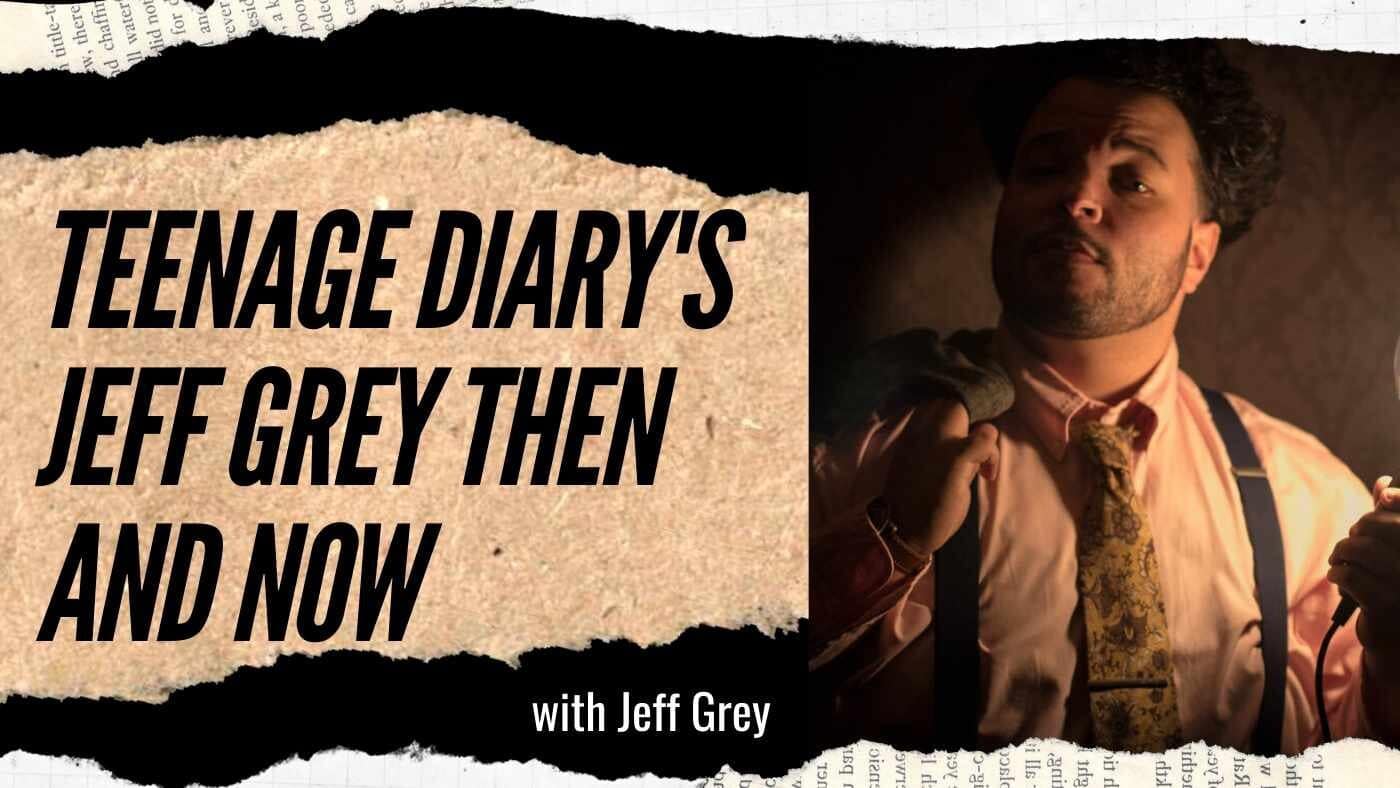
Our Guest Today: Jeff Grey
Jeff Grey, also known as Professor Grey, is a father, a record producer/studio engineer, podcaster, as well as human services/non-profit consultant.
Our conversation travels through the most unexpected places.
Jeff and I met at The Podcast Garage in Brighton, MA during an event featuring guest speaker, Radio Diaries Founder and Executive Producer Joe Richman. Joe is a Peabody award-winning producer and reporter whose pioneering series Teenage Diaries brought the voices of teenagers to a national audience on NPR’s All Things Considered.
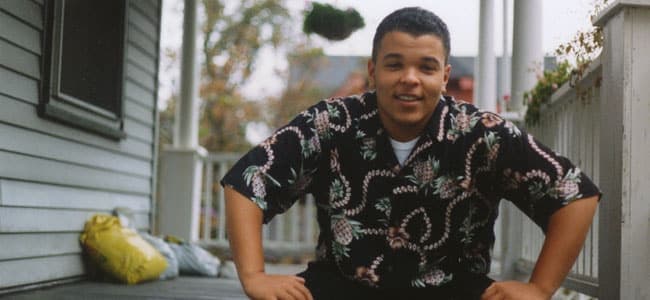
When Jeff Grey recorded his Teenage Diary back in 1998, he referred to himself as a ‘halfrican.’ He had a black father and a white mother, and like many teenagers, he was trying to figure out who he was.
Nearly 20 years later, Jeff calls himself a ‘mulatto.’ In fact, he’s the founder of something called Mulatto History Month that celebrates the unique experience of mulattos. It’s from February 15 – March 15.
To learn more about Jeff, check out his podcast called The Platform Podcast (a show about book signing, polyamory, sex, drugs, killer whales and sharks).
Follow Jeff on Instagram: @Professorjgrey. Inquiries about music, podcasting and being on people’s podcast, speaking, and life, please email him directly.
Show Notes
Part 1
- [06:00] Jeff and Fei talking about stereotypes we often use with people.
- [08:20] What was it like for you to grow up in Boston?
- [13:00] There are a lot of things we don’t question about our origins and cultures. Do you know why?
- [14:00] How do you know so much about China and Asia in general?
- [15:00] How can we all learn more about other cultures?
- [18:00] Growing up in China, we think extracurricular activities will prepare you for different goals in life. What’s your take about that?
- [20:00] Could you tell us about how you got started with Radio Diaries?
- [22:00] You looked very mature at that age. What was going through your head at that moment, and how did you approach that project (Radio Diaries)?
- [26:00] You mentioned your life was all over the place before, and now you are building your own business and podcast. What changed and when?
Part 2
- [05:00] What have you learned from parenthood?
- [08:00] You are involved in charity and nonprofit organizations. Can you tell us about that?
- [11:00] Instead of forcing kids, I like the model where we help kids to become more exploratory.
- [13:00] You have lived many interesting and life-changing experiences. Are you still blessed with them today?
- [17:00] How are people finding more about you and what are you hired to do these days?
- [33:00] Fei and Jeff talking about how to deal with kids vs adults and how to engage them into learning and thinking
Quotes
— Part 1 —
[29:00 ] I know a lot of people who have kids 15-17. However, you can look at it by age or by preparedness. Was I prepared to have a child? No. Did I have a career? No. Did I have a house? Did I have a car? No.
— Part 2 —
[10:00] A lot of what we do for children is designed for the experience of bureaucracy. What does a classroom have? The teacher up in front, and all the chairs facing forward, and they take tests on Fridays, and study on Mondays… it’s the factory model of education. [we have that] but not because it works very well…
[24:00] I think we do a great job at rewarding the absolute gold medal winners, but we don’t do a good job of maximizing the utility and the enjoyment that average people get out of life, and that’s what most people are.
[30:00] A lot of times, you ask kids ‘what do you want to do when you grow up’. And that has the in-built notion that your job is your identity. That assumes that the person will move to perfectly fit the job. But instead you can ask ‘what do you want to do?’, and you don’t have to know the name of the job yet. You just need to know what you enjoy doing and the types of problems you want to solve.
Transcript
Part 1
Transcript
Fei Wu: Welcome to the Feisworld podcast, engaging conversations that cross the boundaries between business, art and the digital world. There was a time I was. Nowhere to go and no place to go home. My only friend was the man in the moon, and even sometimes he would go way to them. I know a ton of people that had kids. 15, 16, 17. However you can look at it by age, you can look at it by preparedness. Was I prepared to have a child? Did I have a, a career? No. Did I have a house? No. Did I even have a car? Uh, no I did not. Eh, sand A lot of what we do for children. Is designed for the expediency of a bureaucracy, right? Why does a class have the teacher up front and all the chairs face forward and they test on Friday and study on Monday? It's the weird expectation that the kids are just going to come to whatever we do, and if they don't, something's wrong with them. Promise that you never be lone. I think we do a great job of rewarding the absolute gold medal winners, but we don't do a great job of maximizing the utility and the enjoyment that average people get outta life. Cuz still, that's who most of the people are. In another world, maybe we would be together still and be here to resent that. I don't give a shit up. So a lot of times you ask kids, you know, what do you wanna be when you grow up? And that has the, uh, inbuilt notion that the job that you have is your identity, right? And that, again, that assumes that the person will move to perfectly fit the job. But instead you could say, what do you want to do? Or What problem do you wanna solve? Right? You don't have to know the name of the job yet. You have to know what do you want to do? What do you enjoy? That's up to you. Now what others believe? Geez, I swear that's the part. There's so much opportunity out here, so much unmet need that I think you can find something that fits you so perfectly that you can never be supplanted. You can be the best you. You, the world in between what I am, what it was, what it will be. It's the only place that I feel free. Hope you fail me. I am a hi everyone. Welcome to another week of the Face World, a podcast. I am your host, FA w. I am here today to guide you through another episode of Face World celebrating unsung heroes and self-made artists. People and things I find interesting and would like to share with you, but I know time is the most precious thing, so I thank you for choosing to spend it with me today on the show. I'm joined by Jeff Gray, also known as Professor Gray from the Platform podcast. The platform is a show about, oh, let me see. Book signing polyamory, sex, drugs, groundhogs, killer whales and sharks, and so much more. Jeff is a very talented and interesting person to talk to. He is a father. A record producer, studio engineer, podcaster, as well as human services nonprofit consultant. Our conversation travels through the most unexpected unscripted places Jeff and I met at the podcast garage in Brighton, Massachusetts during event featuring guest speaker, radio diaries, founder and executive producer Joe Richmond. Who is a Peabody Award-winning producer and reporter whose pioneering series teenage Diaries brought the voices of teenagers to a national audience on NPRs all things considered. When Jeff recorded his teenage diary back in 1998, he referred to himself as African. He had a black father and a white mother, and like many teenagers, he was trying to figure out who he. Nearly 20 years later now, he calls himself Mulatto. In fact, he is the founder of something called the Mulatto History Month that celebrates the unique experiences of Mulattos. By the way, it's from February 15th to March 15th. Every year, our conversation travels beyond our lives as podcasters and really delves into history, geography, race, and educat. I hope you enjoyed as much as I did. Hey, quick announcement phase World recently released a mini-series called The Freelancer's Starter Kit. Two episodes are already in and can be found. Right before this one. I cover an array of questions related to freelancing, often not discussed in popular media by prominent teachers and gurus. Things such as setting up your own company, how to be more effective on the job, how to discipline yourself and manage your time wise. What about health insurance for you and your family while working as a freelancer? You get the idea. I welcome you to check it out, leave your comment and ask me any questions you have for now. Without further ado, please welcome Jeff Gray to the Face World Podcast. We were just talking about growing up in China for the longest time in the eighties, and. I mean, there were no other kids, uh, around us other than we're just Chinese. In fact, I recently, I watched a, a commercial on YouTube and really got me, it was from, uh, 23andme. Do you know where that is?
Jeff Grey: The, the DNA testing thing yet? Have you done it before? I
Fei Wu: have not. So I watched it and it was just quickly after, soon after the election and I watched and it was very touching even though I. Relate to anybody necessarily in that commercial. So I immediately ordered my kit and my mom said, oh, your results would be pretty boring cause of
Jeff Grey: It's gonna say Chinese, Chinese.
Fei Wu: I, I thought it was, uh, kind of hilarious in a way. Right?
Jeff Grey: And, but even, but even that, a lot of these things are arbitrary, right? We're looking, you know, for the listeners that can't see, we're in a room where there's a, a world map on. Mm. And so where, you know, I keep glancing at it and looking at China, but of course China is not real. You know what I mean? If you'd have been born a certain amount of miles to the north, you'd be Mongolian. Mm-hmm. . But mongolia's not real. Yeah. Do you know what I mean? It's just a label. Little, right. A little further. Russia. Russia is not real. Mm-hmm. . And you can actually see. And then, you know, if I was born in China, I'd be Chinese too. Yeah. But I would still be me. So in that sense, you know, I, I believe I heard that, for example, in the West, we just say Asia. Mm-hmm. . So when, when we say Asia, when I, when everyone I know says Asia, they say someone's Asian, they mean they're Chinese or Chinese looking. Mm-hmm. . Right. And then what we don't mean East Indian, even though those people are Asian too, because again, Asia's not real. And of course, in our. , the Chinese are like the closest cousin to the Japanese. Mm-hmm. . But I guess first of all, culturally that's not necessarily true. But outside of that, even genetically, that's not true. That the Japanese are not closely, are not as closely related to the Chinese as we would kind of, you know, lively, assume based on yellow skin. Mm-hmm. , do you know what I mean? Yeah. When I was growing up, I had no idea about anything about Antisemite antisemitism because to me, white people are, So it's not real. Where did you grow up? I grew up in Dorchester and Roxbury of Boston.
Fei Wu: Wow. And what was it like for you to kind of grow up, um, you know, in Boston in a particular neighborhood, and how often does this come up or really impact her life on a regular basis?
Jeff Grey: I mean, impact my life? I don't know. It comes up a lot because I look. Hispanic, right. I look like a Puerto Rican. I live in a neighborhood where a lot of people are, some kind of Hispanic, probably Puerto Rican or from the Republic. Hmm. And so it's an assumption that's constantly made, just like Faye, if you were, uh, you know, if you were just full Swedish and you just looked like you looked, but you just were full Swedish, and then you're living in Sweden and people are constantly looking at, you know what I mean? They're constantly baffled. You have that? You go, no, my name's, uh, you know, fid jurgenson, like, they're thinking, no, I know, I know what people look like. Mm-hmm. and where you're adopted, right? You're at something. Yeah. And so, you know, it came up a lot when I was younger. It was a way bigger deal. Mm-hmm. , um, because, uh, you know, black and white are the arch rivals, right? Like the, the Yankees and the Red Sox, or the Hatfield and McCoy. of American society, it comes up a lot. It was an oddity when I was younger, right? Mm-hmm. So people would, so they say, what are you? So the pattern goes like this. They go, they talked to me for a little while. They think they know I'm Spanish. They talk to me for long enough and they find out my name's Jeff Rogers. And they go, oh, so what are you? I can feel them. Ease into it. What are you? And they say, ease into it. You can feel it, cuz then people want to ask, but they don. They know that like, that can be touchy, but they want to find out why do you look one way and talk another way? And your name is so American, why? Mm. And then I would say I'm a lot, I'm mixed. For a long time I used to just try to say black, cuz I felt like I feel like a black person. I was kind of raised. Mm-hmm. black. And then I say, well, whatever I say. Then they go, oh, who's black? Your mother. Your father? And they try to, they're trying to figure out. What category I belong in, meaning they'll go, I've had this a lot. Who's white? Your mother. Your father? My mother's white. Oh, your mother's white. Okay, so you're really white.
Fei Wu: So interesting. How does that make a difference? I don't
Jeff Grey: know. That's their thing. Mm-hmm. . But it, it happens so often that I know that that's a thing in people's heads. Mm-hmm. and, and different cultures have it. Like I know the Jews say you're Jewish from your mother, right? Yeah. Yeah. So people look at it like that. But people go both ways. People go, who's black? Your mother. Your father? I like my father. They go, oh, you're really black cuz your father. Interesting. There's no pattern except for that. People are trying to say like, what are you really? I don't know if you know, but when you fill out like a form and it says, are you black, white Pacific is or other? If you put other somebody from the, the, the home office just picks which one you're going. There really is no other, I heard about this, it really gonna shock me. Right? And so they have to categorize you. And people feel that way too. And there's categories that people kind of have to have to be comfortable. So that comes up a lot. And so for years, , I too wanted to be in the black category. Right. And in many ways I am. I gotta, my, my mother is an only child. Uh, her mother is an only child. I don't have any cousins, aunts or uncles that are white. I have 10 aunts and uncles that are black and, you know, majority a hundred, a hundred cousins, right? And I grew up in black neighborhood and went to black schools. I feel like a black guy. But part of being black is people can look at you and know that you're black and that I do not. I slowly had to realize, no, you really are other. Regardless of what people would put you on on a form, there really is a other Jeff and you are it.
Fei Wu: Wow. That's a lot of information for me to process. And
Jeff Grey: it's particularly cuz you didn't grow up in our informal caste system of America. I'm sure you, you know, China had its own that would just be as bad. Like I truly You said can you said I'm, you really said to me just now. Well, I, you know, I'm, I'm half Cantonese and half Mandarin. . I'm like, yo, that couldn't be more the same thing to me. Mm-hmm. , I see no distinction at all. I, I, I, up until 10 minutes ago, I thought the only thing was language. I understood those two languages. Yeah. I didn't, it should have been obvious to me because of human nature, but I didn't understand at all. Yeah. That it was like some kind of culture clash. Like, oh, Mandarin always go left first. Oh, Cantonese always go right.
Fei Wu: Yeah, it's interesting, you, you were helping me learn more about me and kind of my culture. There are a lot of things we don't question just because I wonder why we don't question them. Maybe they weren't. Um,
Jeff Grey: it's the default, right? You grew up with a default. Yeah. And the only time you, you find out that there's an issue with that is when something breaks the boundary or doesn't fit the category, right?
Fei Wu: Yeah. Until I was in sixth or seventh grade, uh, growing up in Beijing, you are, uh, you're Manda, right? That's the label. I remember one of my school teachers, head teachers said to me that, Faye, you obviously look Cantonese, obviously, you know, and that really hit me when I was 12 or 13, cuz it never occurred to me that I looked a different way. And she made it sound like not only she felt that way, but all the classmates,
Jeff Grey: everyone knew. They all knew something you didn't know. Yeah. And what's again, and it shows how arbitrary these distinctions are, you know, one of the main American, uh, uh, kind of like stereotypes of Chinese people Yeah. Is that you all look alike. Yeah. So the idea that I can tell someone's Mandarin by looking at them goes against my like upbringing culture, you know what I mean? But of course, with human nature, I can tell whether somebody from is from Roxbury, Dorchester by how they dressed . I can't but you. That sounds silly, right? It is silly, but I'm such a native that I could like, oh, look at his, he's wearing Adidas, so classic Mattapan You know what I mean? But, but really I can. But then meanwhile overseas, you know, they go, well, people from America are either from New York, Texas, or California. You know what I mean? Cause you see the broad stereotypes from, you know, from America. Chinese people are, they do ancient Chinese, uh, herbs and karate and food and chopsticks. The end. I don't, I ran outta stuff already. Yeah. Where
Fei Wu: did you learn about that? As through movies
Jeff Grey: or? Movies and tv. I went to Boston Public Schools and there was, there are some Asian kids, but. There's not enough where I would know who's from Beijing. Mm-hmm. . But there's enough where I understood like, oh, Chinese New Year's in February, or something like that. Yeah. Like I know that much. You brought up
Fei Wu: a good point, right? For the longest time I, not just me personally, but Chinese people or Chinese populations struggle with one fact that, um, as a country, as big as it is bigger than any other country near us, you know, with the exception of Russia. That we haven't really been able to brand ourselves, uh, very well. Mm. What I mean by that is chopsticks, um, you know, things that you've seen. People constantly assume it's Japanese because as, as country, as small as Japan from, you know, car, you know, their automobile industry, this and that, they've really done a really good job branding themselves and helping people make the assumption, anything related. You know, certain type of food, martial arts and just crafty things are all Japanese. So how did, I mean, that's a long winded question, but how do you think we could, we should or learn more about other cultures? What can we do to kind of enable that? Like, if through our own generation and the future, the future ones
Jeff Grey: a kind of morbid, uh, uh, a kind of morbid quote from Jo Joseph Stalin is that one, death is a tragedy, but a million is a statistic, right? Mm. And although that's morbid, it kind of points out the fact that people don't really learn through. Like if you said to me like, well, you know, China's the number seven manufacturer of microchips in the world. Like, who cares? But instead, if there's a Chinese Steve Jobs, then the idea will suddenly become that China is a land that produces a guy like Steve Jobs. So in my experience, when you look around, , the way that any anything kind of gets branded is they have a few individuals that kind of break through. I think to some degree, it seems to me that, uh, the Chinese issue and kind of block out, um, individualism. And so like Steve Jobs, the idea, even though it's a lot of it's bs, the, the, that this rugged individualist guy is a type of industry himself and his whole company is, it's like him. Mm-hmm. , that doesn't seem like the Chinese way. Mm-hmm. that like one guy, like superstar guys. She gives you a hug, tell you she loves you, but you've been drinking too much, but you don't quit. Instead, you rather find us than take it to the point to where she can't get off and it makes you feel breaks. You, you got a gig. Who has to live with the,
Fei Wu: so surprisingly, I think that shift has, uh, begun a while ago. What I mean by that is, Has become more prominent maybe in the past 10 to 15 years. Mm. There may be a lot of brands, um, that I'm not going to start naming out similar to Apple, but they're based in China and you might not know those brands because they like Lenovo. I think they recently sold that to, not recently they sold that to ibm. But there are many brands or at the sort of the microchip level as part of the computer that these guys are incredibly successful. And what I notice that there's a shift. In ch the Chinese population to go after, to really look up to these individuals such as the, um, guy from, uh, the founder of, uh, Alibaba. Right, right. You know, online manufacturing. Um, and it's just really fascinating that people notice that they wanna step up and they wanna speak up.
Jeff Grey: I mean, it definitely, that's definitely the. , you know, John Wayne, let's say, is in a bunch of cowboy movies and then people become the avatar Yeah. Of certain groups. You know what I mean? Yeah. And so you really, that's why even sports teams have mascots. Mm-hmm. an individual that is the embodiment of what this team is. Mm-hmm. . And so in the same way, I think that's the way people kind of operate. Right. The reason why, you know, in the United States, the president. Has a lot of power. He's the executive of one, you know, one branch of government, but also Supreme Court. And the Congress is in Senate is the other branch of government. But the difference is the president is one guy. Mm-hmm. . So because he's one guy, when the economy goes good or bad, people tend to blame him. They don't blame the 400 members of Congress because the, the, the responsibility is diffused. So when you look at it in the same way, The way that, that we were going to know, the way that other countries are going to know China for anything is when a one Chinese person becomes like the face of that. Mm-hmm. , do you know what I mean? For, for better or for worse. And I, I, I think that's how it works. Just cuz I think that's how people's kind of. , they attach in that individual way, they attach to individual personalities. Way more than the fact that you might say, oh, I actually, China invented the chopstick, or whatever. Like, no one cares. But instead, if one dude becomes like, chopstick Chang. Mm-hmm. , then everybody knows him.
Fei Wu: Yeah. Yeah. It's interesting how powerful storytelling is, and at the end of the day, as much we categorize people and become more isolated, I think we. Dr. You know, we do connect at that level. Well, I remember many, many episodes ago, maybe a hundred episodes ago, um, one of my mentors ly described there's a commercial and there's a video about, you know, the astronaut out in space and looking back at, um, You know, planet Earth. Mm-hmm. and realize there's no, you or me, there's only us. Right. Right. Uh, we are in this together. Mm-hmm. and I, I thought that was really powerful. Um, you were such a fascinating person. We met at, um, podcast Garage in, uh, Brighton, Massachusetts, listeners who don't live in Mass. Um, but we met through a very special event mm-hmm. um, about radio diaries. Mm. Um, I had the chance to listen to the, that segment of it. Mm-hmm. and I actually went back to listen to other episodes related to, uh, teen Diaries as well. Mm-hmm. , it was so fascinating, but could you tell us in your own words about what, what, how did it get started? What was that experience like for you? So,
Jeff Grey: radio Diaries was a, um, there's a guy named Joe Richmond, great guy. He is a radio producer and kind of documentarian. And years ago, many, many years ago, he, uh, he was looking for a subject for his, you know, teenage radio diaries. And it'll be different things like I am a, uh, illegal or undocumented immigrant, or I have Tourette syndrome, or, I don't know, I'm 200 pounds overweight, whatever it is. Mm-hmm. . And so I was going to this program. Called Youth Voice Collaborative. And, and somehow Joe got hooked up and he asked them, do they have any teens that could talk? They asked me, uh, you know, well, what would you talk about Jeff? And I said, I don't know. You know, Joe probed my life. And, uh, I could basically talk about either being a juvenile delinquent, which I was, or talk about being mulatto. And that's what he, he liked me lotto, so that's what it ended up being. And he gave me a tape recorder and a huge heavy tape recorder and a mic, and he said, I'll pay you 25 bucks a. , you have to talk on these tapes about your life. It was like pulling teeth cuz I just, I wasn't doing what I had even committed to do. A few times he was like, look man, either you do this or I'm going elsewhere. But finally he beat and controlled and, and charmed me into doing it. And he made a, it's like, you know, a 12 minute documentary on what it was like for me to be mulatto. And at one point, you know, we, we talked about all the different names there are. For, you know, being mulatto. And I said, oh, you know, there's gray and there's zebra, uh, and I said, African cuz someone had called me a African and he latched onto that. He thought it was so funny. and uh, so it ended up being called Jeff Rogers African. And even today, if you Google African, I come up first, so You're welcome. Wow.
Fei Wu: Um, I have a lot of questions for your, uh, production company and your podcast as well. Mm-hmm. . But I do wanna kind of just probe a little bit more about that experience because you are in your early thirties and, uh, you know, that tape happened and was recorded, uh, pretty much half a lifetime ago. Yeah. And you sounded, you sounded mature. I was surprised by how mature and how. Uh, you know, comfortable, almost like that was something that you did, but clearly you weren't a producer or recorder at the time. Well, I didn't
Jeff Grey: know what NPR was. . Okay. So it was gonna be on npr, but I didn't know what it was. Right. I think my mother finally told me it's like channel two for the radio, or, you know, so it is like PBS for the radio. And that's how I kind of came to understand it. But I didn't know. And I didn't care. I wasn't doing. Thinking it would be something and I wasn't doing it, thinking even about the money. It's probably just because they asked me to do it and. I like talking. Mm-hmm. , and I don't think I had any preconceived notions. At one point I went to W GBH or whatever, and I, I got interviewed by some means for all I know was goddamn Tom Ashbrook. Cause I just remember it was an old white guy, I don't know. Mm-hmm. , you know, uh, my mother told me like, oh, you gotta go there. And I'm like, where is it? She's like, it's on the green line. Like the green line. And all I knew is I didn't, I, like, I didn't want to do it, so I didn't know it was a big deal. I didn't, and then it ended up becoming somewhat of a big, let me say it's a big deal because of Joel Richmond, not because. Because he's the guy that took however many 20 hours of tapes or whatever he did, and turned it into this thing that people go like, oh my God, you were so profound. But I was 16, so I probably said so much bullshit too. Yeah, but the thing is, George Richmond just leaves that on the cutting room floor and makes it sound like I'm Socrates. He's at 16, but I doubt that was true. You know, he chiseled it down into this thing and his radio. It became kind of a big deal, kind of a, a reality show type stuff. Became a big deal. The real world was already out. But things like MTV's true life weren't out yet. And for all we know, radio Diaries influenced that. Cuz it's the exact same format. MTV's True Life was like true life. I'm anorexic or whatever it is. That's exactly what Joe had been doing. So he did all that. But my, my documentary, my, you know, my Jeff Rogers African ended up being on like NPRs Best of the Millennium. CD or whatever it is. So ended up being a big deal.
Fei Wu: I think he's so good at seeking out the right chemistry between two people and he makes magic. I he's, he's great. I was thinking out of all the subjects he could have chosen teenagers. That's just the last resort for anybody to make responsible
Jeff Grey: and reliable. I think it took me like a year and a half to send him back his tape recorder. Like he'd periodically be like, Jeff, can I get my tape recorder? And I'd be like, oh, sure. Any day. Not cause I was doing anything with it, just cuz I just couldn't be bothered. Something I, I said to Joe at that time, but I really was a, a, a juvenile delinquent at that time. I had been into eighth grade, three years in a row and I was just messing around in life and Joe squeezed maybe the only productivity outta me during that time. That was like one of the only times great. I was in the eighth grade, I got kept back twice. So I was in the eighth grade, three years in a row. I was just doing whatever. I wasn't stabbing people and that, that I was on NPR was like the rare. Portion of that time where it's like, oh look, this guy did something positive. Again, I wasn't selling drugs to preschoolers. I just mean that at a time when I couldn't be bothered to do anything productive. Uh, That stands as this thing that like people were so impressed with you.
Fei Wu: So since I didn't really know you mm-hmm. , um, back then mm-hmm. , you know, 15, 17 years ago, I see a completely different person. And I think about that quite a bit. Like who I was before coming to the US or, you know, when I was younger. People have no idea. And then when we go out, we put on a show, whether we're at work, we're in school, but if I were to just meet you, um, you know, for the first time, like I did a few weeks. It really surprised me about anything you said just now, because the way I see you, you're more than coherence. Okay? You are emotionally and intellectually, you know, engaged, and you're building a business and you're building a podcast. You're so what, what changed, when, when did it change?
Jeff Grey: I think for a long time I, I had a unique, um, circumstance. We had. I had a home that was in some ways loving, but there was also a lot of trouble there. I have a gift for basically intellectual pursuits, but when you have that, you don't necessarily learn how to work through things because things just happen for you. Right? More than half of success, I would say, is being able to power through the things that you don't enjoy, the things you don't like, things you don't care about, right? So instead, if you see, if you meet a guy who just, let's say, has a natural six. Right. That guy might have the six pack that you want, but does he know how to get up in the morning and eat egg whites and work out? No. He just has the six pack. And so in the same way, I, I had a, a set of mental gifts that let me go through life, but when it came time to do anything challenging or put in the effort, or when I was measured by effort instead of by ability, I would always fall short. Mm-hmm. . And then again, uh, you know, my parents were having a tough time with each other. Home life not that great. And as a result, I just disengaged and said, you know what, I'll just skate through life being a silver tongue and. , you know, being bright and dazzling people and it took me a while to realize like, that only gets you so far. And I didn't realize it because of my good moral nature. I realized it by finally running up against things that I could not dazzle my way through. What
Fei Wu: happened in your twenties? What was that shift? Mentally, especially, I personally find that in my late, like mid to late twenties, you know, you come through some sort of epiphany or you know,
Jeff Grey: my epiphany came in the form of a positive pregnancy. and my very, uh, young woman who I had known for a while, but only dated for a brief time, called me and with tears in her eyes, handed me the positive pregnancy test. And that was the time. You know, it stops being all about you. You know what I mean? And so I slowly, slowly realized at this point, I need to be, I need to get good. It wasn't enough to say, well, they're dumb. If they can't see, then I'm gifted, or whatever it is, they're stupid. Or I could do it if I wanted to, or whatever excuses you tell yourself when people that you thought were beneath you are above you. Mm-hmm. . Mm-hmm. . And so at that point, I kind of buckled down, tightened up and started trying to build a life,
Fei Wu: uh, around what,
Jeff Grey: what age? Uh, I was, I believe I turned 22. My son was born a month. Wow. So that's not super young. My mother had my older brother at 15. I know a ton of people that had kids at 15, 16, 17. However, you can look at it by age. You can look at, look at it, by preparedness. Was I prepared to have a child? Did I have a, a career? No. Did I have a house? No. Did I even have a car? Uh, no I did not. Mm-hmm. . So in that, I was as un, I might as well have been 12 for as prepared as I was to raise a baby. Yeah.
Fei Wu: Wow. I didn't know that about you. And it's, uh, it's incredible.
Jeff Grey: Yeah. Call me.
Fei Wu: Hi there. It's me again. I want to thank you very much for listening to this episode, and I hope you are able to learn a few things. If you enjoy what you heard, it'll be hugely helpful. If you could subscribe to the Face World Podcast, it literally takes seconds if you're on your mobile phone. Just search for a Face World Podcast. In the podcast app on iPhone or an Android app, such as Podcast Addict. And click subscribe. All new episodes will be delivered to you automatically. Thanks so much for your support.
Jeff Grey: Mom said, don't you think you'll take a step in this house. So do last time, one more time. And you are out. So what now? It's our family, Lee Worth. That's T yield. And I blacking now slammed the door and as he dropped to the door, she was screaming down. Said, I can't do it no more. Said I tried to be strong for you. Keep the family together, but it's healthier. This weigh in and the end will be better. You quit you fist. She gives you a hug, tell you she loves you, but you been drinking too much, but you don't quit. Instead, you rather fire us and take it to the point to where she can't get, uh, makes you feel sick. It breaks your heart. She never meant for it to go this far. You got a kid who has to live with the scar. You can only see you. It's boys. I need a medic. Yeah, I a medic. Give, need a medic? Yeah. Call in. Said, don't you worry. No, that won't be us. She said, I'd like to know that, but there's not much I trust. It's confusing cuz I used to know their love that was, and it all went downhill in just a matter of months. She said, you grow up fast when your fantasies die, and nothing comes of wishing on the stars in the sky. What if it runs in my jeans? What if I do it to, yo, your heart's been broken before? Don't let me be the next bruise. I said, what if the stars. Together to bring your fantasy back in your beautiful soul. While you've been thinking like that, you're not like that. Seen it in many chats. You're your own damn person. You are not your dad. He made mistakes and you learn from them. I've made my mistakes to what I earned from them. So we both know what love can be. So let's bring back the fantasies. Grab my hands. We'll write. Supposed to be you quit your fist. She gives you a tell you she allows you, but you've been drinking too much, but you don't quit. Instead, you rather find us and take it to the point to where she can't get her and makes you feel breaks. You. You got a kid who has to live with the scars, can only see you whenever it's boys. I need a. Yeah, I need a medic. Need a, yeah. Call me a.
Part 2
Transcript (Part 2)
Fei Wu: Welcome to the Feisworld podcast, engaging conversations that cross the boundaries between business, art and the digital world. There was a time I was. Nowhere to go and no place to go home. My only friend was the man in the moon, and even sometimes he would go away to then. I know a ton of people that had kids at 15, 16, 17. However you can look at it by age, you can look at it by preparedness. Was I prepared to have a child? Did I have a, a career? No. Did I have a house? No. Did I even have a car? Uh, no I did not. A lot of what we do for children, Is designed for the expediency of a bureaucracy, right? Why does a class have the teacher up front and all the chairs face forward and they test on Friday and study on Monday? It's the weird expectation that the kids are just going to come to whatever we do, and if they don't, something's wrong with them. Lone. I think we do a great job of rewarding the absolute gold medal winners, but we don't do a great job of maximizing the utility and the enjoyment that average people get outta life. Cuz still, that's who most of the people are. In another world, maybe we would be together still and be here to resent that. I don't give a shit up. So a lot of times you ask kids, you know, what do you want to be when you grow up? And that has. Uh, inbuilt notion that the job that you have is your identity, right? And that, again, that assumes that the person will move to perfectly fit the job, but instead you can say, what do you want to do? Or What problem do you wanna solve? Right? You don't have to know the name of the job yet. You have to know what do you want to do? What do you enjoy? Be dreams. That's up to you. Not what others believe. Geez, I swear that's the part. There's so much opportunity out here, so much unmet need. I think you can find something that fits you so perfectly that you can never be supplanted. You can be the best you. The in between what I am, what A was, what a will be. It's the only place that I feel free. Hope you fail me. I am a. Hi everyone. Welcome to another week of the Phase world, the podcast. I am your host, FA w. I am here today to guide you through another episode of Phase World celebrating unsung heroes and self-made artists, people, and things I find interesting and would like to share with you. But I know time is the most precious thing, so I thank you for choosing to spend it with. Today on the show I'm joined by Jeff Gray, also known as Professor Gray from the Platform podcast. The platform is a show about, oh, let me see. Book signing polyamory, sex, drugs, groundhogs, killer whales and sharks, and so much more. Jeff is a very talented and interesting person to talk to. He is a father. A record producer, studio engineer, podcaster, as well as human services non-profit consultant. Our conversation travels through the most unexpected unscripted places Jeff and I met at the podcast garage in Brighton, Massachusetts during event featuring guest speaker, radio diaries, founder and executive producer Joe Richmond. Who is a Peabody Award-winning producer and reporter whose pioneering series teenage diaries brought the voices of teenagers to a national audience on NPRs all things considered. When Jeff recorded his teenage diary back in 1998, he referred to himself as African. He had a black father and a white mother, and like many teenagers, he was trying to figure out who. Nearly 20 years later now, he calls himself Mulatto. In fact, he is the founder of something called the Mulatto History Month that celebrates the unique experiences of Mulattos. By the way, it's from February 15th to March 15th. Every year, our conversation travels beyond our lives as podcasters and really delves into history, geography, race, and educat. I hope you enjoyed as much as I did. Hey, quick announcement phase World recently released a mini-series called The Freelancers Starter Kit. Two episodes are already in and can be found. Right before this one. I cover an array of questions related to freelancing, often not discussed in popular media by prominent teachers and gurus. Things such as setting up your own company, how to be more effective on the job, how to discipline yourself and manage your time wise. What about health insurance for you and your family while working as a freelancer? You get the idea. I welcome you to check it out, leave your comment and ask me any questions you have for now. Without further ado, please welcome Jeff Gray to the Face World Podcast. What is a parent? , um, taught you, you think, what have you learned?
Jeff Grey: Um, a big thing I learned, well, the good thing is, so I became a, a parent and I always knew, well, I won't say always, but when I was thinking about jobs and I worked retail and stuff like that, I had told myself like, I know I wanna work in the inner city with. And so I ended up getting a job at a residential shelter and I ended up, I started off not that great at it, but I ended up becoming really good at working with the kids and understanding them and stuff like that. And then I became, I did all these different things. There's all these roles, like I became a family partner working with moms who have kids with challenges. Mm-hmm. , I became a mentor working directly with the kids. I became a supervisor. I started training people on how to do those things. Mm-hmm. . Luckily I did all that as I had a kid, so it's like I was reading ahead in the book, you know, I was a few chapters ahead mm-hmm. , because when my kid was three, I'd already worked with some three year olds and some mothers and some three year olds. Mm-hmm. . So those two things in in, in concert with each other really helped me to work with kids and work with my own kids. And what it's showing me is you can be a good, stable. Uh, caregiver for kids. You don't have to yell at them. You don't have to hit them. You don't have to break their little heart to, to change their behavior. Mm-hmm. , all you have to do is be stable, be fair, use your words and accept that to a great degree. Uh, kids are not a blank slate. They are who they are, and you gotta try to find a way to help them learn. , how to navigate the world with the set of like traits that they have. Mm-hmm. rather than saying like, a good kid is compliant, right? Mm-hmm. , I don't, again, I'll jump to these broad, um, stereotypes, but I do think they're probably rooted somewhat in truth, the idea of the Asian tiger mom, right? Mm-hmm. and some of that. It's, it's great to be engaged and it's great to have expectations of your kids, but on the other hand, it can be very oppressive to say, I'm gonna. I'm going to pound my kid into the exact shape of a child that I always wanted or always thought was the right way to be. Right. But it doesn't work. It's not true. Yeah. You can't do that. Mm-hmm. . And so the number one thing that I know with my, I have two sons now, uh, 13 and 10. And the number one thing that I know with them is that to a great degree, they are who they are. And I try to help them see like, . You, they, they, they have to participate in their own child rearing. Yeah. They're not like a Bronco to be broken. Yeah. You know what I mean? That's what, that's what I
Fei Wu: know. Wow. They have to be involved in their own child. Yeah. That's very eyeopening. So I saw that, um, some brief introduction bios about you that you're involved in, you know, charity and, and non-profit organizations. I think those are related to the stories you just shared with
Jeff Grey: me. Mm-hmm. . . Yeah. Um, well, I, sometimes I help people design mentoring programs or campaigns around, uh, young people in education. Mm-hmm. kind of, you know, jack of all trades. But it all has to do with dealing with kids and how kids actually are, and how kids, you know, the, the theory of change and how people actually change. Mm-hmm. , a lot of what we do for children is designed for the expediency of a bureaucracy. Right. Why does a class have the teacher front and all the chairs face forward and. Test on Friday and study on Monday. It's because it's, you know, they call it the factory model of educating, right? Yeah. Yeah. So it's 1960s. Nothing have changed. Right. And it's not because it works very well in terms of, that's why they say, well, our system is failing, and what's wrong with our kids? Do they need more medication? Or, oh, it's not working out. Kids these days are too distracted with their iPads. It's, it's the weird expectation. the kids are just going to come to whatever we do, and if they don't, something's wrong with them. Mm-hmm. . Right. I'll work with a mother and she'll have a two year old and she'll say, I don't know, I bring him to work and she just can't sit still. And they say, oh, you need to tell me you're a two year old. Can't sit for eight hours because you need to work. Right. I don't know if you've ever heard the parable of the drunk that lost his car keys and he looks for his car keys under the lamp post because that's where the light is best . Right. Like that's not how it works. Yeah. Right. Things don't, things aren't convenient like that. Yeah. I. You know, two year olds, they are bouncing all around and they are, you know, that's not how they learn. They don't learn in the way that happens to be affordable or that happens to be the way to teach 30 kids, or we need to meet these deadlines. They don't learn that way. Mm-hmm. and they don't, and behaviorally they don't, they don't kind of learn that way. A lot of our expectations are based on the idea that if we do things a certain way, the kid will, you can make a two year old sit for 10 hours. If you do things a certain way, you can make every kid love to read whatever book you put in. Oh, they're just gonna love reading Johnny Tremaine if you just do it the right way. You know what, adults, there's no book that adults all love to read either. Yeah. Why do, why, how come we can't make that connection? There's no TV show that all adults, like, there's no food that all adults, like adults are allowed to say, oh, I have my idiosyncrasies. But, uh, children are expected to like, you'll, you'll like what I put in front of you. Think. what it really feels like the choke down of food that you absolutely hate. I
Fei Wu: remember those times. Then cause, you know, was
Jeff Grey: like forced on me. It's almost fucking impossible. Yeah. To like, I, I really don't like eggs. I really don't like them. The idea of making me eat a plate of eggs, like, it's like torture. Yeah. But we routinely for kids, we say like, you'll eat this and you'll like it. Yeah. I can't like something on purpose. I like what I like. Yeah. The idea that children are a blank slate on which we can impress our values and our ideas, and that they're not inborn with certain, uh, uh, tendencies. I think it traumatizes a lot of kids.
Fei Wu: Mm-hmm. , I think instead of forcing down either a concept, a certain type of food down someone's throat mm-hmm. , I, I do like the model to help kids become more exploratory. Mm-hmm. , you know, to say that. The, the simplified version of that is like, try it. You don't have to like it. Mm-hmm. , um, what are your thoughts on that? I
Jeff Grey: think the truth is it's not really possible. A lot of parents get into what we call power struggling, cuz it's not possible to make people do things. Think about this in Guantanamo Bay right now, there's some goat farmer who got captured, right? Maybe he was with Al-Qaeda, maybe he wasn't. And he had caption. He was brought to this place and he has the full weight of the American government's boot on his neck. But if he refuses. He can actually kill himself just by refusing to eat the cia. And the FBI can't make him eat. They can't, and they can put tubes and stuff in them, but in the end, if he decides he's not gonna eat, no one can make them. That's because people have autonomy and they clinging to it. They clinging to their autonomy. And so really everyone has power and a series of choices. So the way that I usually teach it is if then, right? Mm-hmm. , I don't say, you know, uh, say you have to eat your food. I just say, if you don't eat this, Then you can't have dessert. Mm-hmm. . But really that's a choice. You can say, I'd rather not eat eggs and not get dessert. And then there you have it. Faye's not gonna starve to death cuz she'll just eat tomorrow. She'll be fine. Yeah. She already had two meals and four snacks. Yeah. But just if then everything. If then if you don't do your homework, then you can't have video games. Now I'm gonna stand over you and pinch the back of your neck and make you write. I can't make you do homework. Yeah. You can't make someone pick up a pencil and write the right answer. You can't do it. Yeah. But you just say if. And let them make the choices. And 99% of the time the things that you want done, because you're the adult, they're actually thought through and they make sense. Mm-hmm. . So, and the, the trade off is a good one. So if you don't do your homework, which is gonna take you 20 minutes, you can't go outside, which you'd have three hours to go outside. Yeah. You just say that to the kid. But if they wanna sit and look at the homework tonight, they might. And then tomorrow the same thing until they finally. Oh, doing it this way is, is the better way. That's all you really have to do. You can get rid of the yelling and that you're just like your father and that I'm gonna beat you. And the knee on kneeling on rice and all this trash that people do to try to break the spirit. But all that does is set you diametrically opposed and make you power struggle. Because if I just say, fake it up right now, stand up immediately. You feel like, yo, I'm not like no . You know what I mean? Like you just re. If I, but if I say, Hey, if you don't stand up that, that, uh, that spider's gonna crawl in your leg. Yeah. Then you stand up or maybe you choose the spider. I recognize the autonomy even of two year olds. Mm-hmm. and I, if you can do that, you can let kids kind of explore the world. If you can't do this, if you can't, if you can't stand up in this grocery store, then we can't go to the grocery store and get treats. Mm-hmm. , if you can't buck your seatbelt, then we can't drive. Mm-hmm. and you can put all the kind of weight on them. Wow.
Fei Wu: You've, you've had a lot of experiences. I, I love the, this process of discovering versus just reading about someone, you know, in a book or online somewhere. But do you still have this type of experiences where this, this was a chapter or phase of your life earlier
Jeff Grey: on? Well, the, this is one of those abilities and one of these kind of philosophies that kind of stays with you because I'll be at the, I'll be at the grocery store or something and I'll see a. you know, going crazy. And the mother father's at their witch end, and I can walk over sometimes and oftentimes in 20 seconds, get them up and going, right. That's, and just walk away. And, and, you know what I mean? It's not, it's a very personal thing because people feel a lot of shame when their child is acting up. Mm-hmm. , there's a lot of shame and embarrassment and in a way they even might feel upstage. So you gotta do it in a real subtle way. You know, there's just like, there's the dog whisperer, there's kid whisperer, you know what I mean? What
Fei Wu: did you whisper? Now I think people are really gonna, you
Jeff Grey: wanna know a trick? Yeah. So one thing you could do, if you're truly an extrovert and don't care, and the kid's laying on the ground, you can just walk over and lay down next to 'em. And then they'll, they'll be so confused. They'll look at you and you say, what are we doing? ? Oh, another thing you can do is, and, and that once that confuses them, they forget to cry or be obstinate. Or you can say, uh, you know, if. Faye's pounding in the corner. I say, Faye, you seem sad. Are you sad or mad? Mad? Oh, what happened? And you just, you just talk to them, whatever it is like that. Another thing you can do sometimes if someone's really shut down. Mm-hmm. , just having your presence could mean something and you can sit next to them and not say a word. So I had a kid who was so upset and. . I wanted to say the perfect thing, but I didn't have anything, so I just sat down next to him, shoulder to shoulder, and we sat for like 15 minutes and then suddenly I started humming, like. You know, uh, a silly bion song or something. Then he cracked and laughed, but really I had shown that I was just willing to be there wasn't, he said, I ain't seen him laugh in a long time. Seems like abandoned him to the wrong side. Remember the night they split and we all cried? I think for certain, a large part of my heart died. They brought me up thinking life is rainbow boats and sunshine
Fei Wu: grew up to, so we talked about. Tricks of how to help kids and then really help parents in this case kinda overcome what so called the embarrassment. I always wanna explore a little bit more about what you do these days. Um, like we said, your company, the podcast mm-hmm. . How are people finding more about you and what are you hired to do these days?
Jeff Grey: I think a big challenge is to try to find ways to do things that you love and. , but also monetize them without perverting the very thing that you love. So for a while, I, so I've also owned and ran a, a, a series of music studios over the years. Mm-hmm. and been a record producer and engineer and, There's something that's good about that, but I can't put all my eggs in that basket because to really run a music studio and only do that. Mm-hmm. , you end up doing a lot of like dog food commercials and stuff like that. I did the music for Lieutenant Massachusetts, former Lieutenant Governor Tim Murray's campaign commercial. Mm-hmm. , but. That's not the glitz and glamor that Jeff Gray really wanted to be a part of, but, so I definitely, you know, do music and have a music studio. I also have a podcast called The Platform, which lets me get out my, uh, my need to, to talk for three hours, , three hours a week. Mm-hmm. and, uh, with my co-host Harry and, and my Boy D Math. Uh, like I said, I still do help out with non-profits and, and human services consulting. Given my, um, my infinite wisdom on these matters of working with kids and stuff like that. But that's, you know, I try to do all that stuff and I'm, I'm in the process of beginning the nonprofit that will bring beat making and, and music making into kids schools and after schools. Wow. So that, um, you know, cuz music, music, music, appreciation, you know, instruments and all that stuff has, has virtually dried up at school. Right? Mm. And, um, I think it's a real, I think it's a real shame, particularly because black people, one of the main things that we have is, is music and doing music, and. The idea that that's slowly atrophying at schools. I think it does us a great disservice cuz we're going away with one of our
Fei Wu: strengths. Mm-hmm. . Wow. So let's talk about the, the school real quick. The school system, how are you thinking about integrating that? I mean, which stage of that project?
Jeff Grey: Mm-hmm. Mm-hmm. . So here's the challenge. So I could try to run it on the karate class model, right. Which is to say I show. And I say, everyone's parents said in 25 bucks, and I'll give you six classes, and at the end you'll have a song, and the song will be the equivalent of a green belt. Right? I could do that. Mm-hmm. , but that doesn't let me serve who I really want to serve, which is the people in the communities that I grew up in for whom they, a lot of those kids would know, don't even ask my mom for 25 bucks for this. We don't have it, and we're not gonna have that talk. And they just know if it costs money, it's not. Mm-hmm. . And so, you know, I'm looking for grants and donations so that I can kind of run it, get the equipment, have a little mobile studio going up, go out to classes and they'd pro, you know, it's gonna look something like going to after schools. Let's say I come to after school every Tuesday. For six Tuesdays, and we go from talking about the kind of song we want to making the beat, to writing the lyrics, to performing, to recording, to mixing, to mastering. Mm-hmm. . And at the end of it they have a song and hopefully a share out, maybe a performance where they perform it for their parents when they come to pick them up or whatever it is. And they get to see there's really, there's something that music. . Just like I said, learning Latin offers something other than Latin knowledge. Working on music and being creative offers something other than at the end of it, you've made a song. Mm-hmm. . It offers you the knowledge. That you can take an idea and make it real, that you can think of things and create them and shape and whittle and pound them into shape. And at the end of it, you actually have something that never existed before. Mm-hmm. , you, some people might say, oh Faye, that song is not that great. Other people say, that's the best goddamn song I ever heard, Faye. But the truth is, that song is new. Mm-hmm. , it's new and you created it from nothing. And if you really think about it, that's not an experience that's such an integral. Of the human experience in life, and yet many people go through their whole life and never experience it, right? Mm-hmm. , we're sitting, and right now we're in the library sitting in these chairs, but somebody knows how to make a chair like this. Somebody knows how to make it. How many chairs have has my big ass sat and many, and yet I have no idea how they turned. These chairs have. Uh, curved wooden, uh, armrest. How was that done? Mm. Someone had to, that that's somebody's whole life is they figured out a better way to, to curve the arms of a chair. Mm-hmm. and that kind of ingenuity and that kind of expression. Music offers and the kids are interested in it. That's the other thing. They're interested there versus we're trying to, you know, I'm all for Neil Degra Tyson trying to get kids into astrophysics, but the truth is a lot of those kids are not interested in astrophysics, but they're almost all interested in music and we can harness that energy. For being creative and use it to teach them more about themselves than even I can make a song, I can rap, I can make beats teach them that they're the kind of person that can take an idea from a seed into a redwood.
Fei Wu: Mm. That's beautifully said because I think music does integrate everything, you know, the lyrics, the writing, the mm-hmm. the music, the movements. It can be really powerful. And I think, uh, I recently interviewed a gentleman from ek, which is, um, based in Lowell, Massachusetts. They've been around from one than 10 years that identify high. Teens, anywhere between actually the age of 17 to 2324, they meet them where they're at. Mm-hmm. , I think what this whole conversation for the past 30 minutes or so, that's what we're talking about. We need to meet people, not just children, where they're at, so they can, they can see it
Jeff Grey: flourish. You know, the way a lot of things operate in America is that everything's a competition, and so the burden is all on the competitor to get better. And while that does produce some big. Uh, it, it leaves a lot of people by the wayside. What if instead we had a system that brought people along that maximized what individuals could do? Mm-hmm. , you know, I was, I was reading, uh, I read an article and was talking about the difference between. The, the children of South Korea and the children of, I believe it was Norway, get similar test scores and yet the children of South Korea are in school like 12 hours a day and they're doing that where abacus counting where their hands are, are counting in the air. Mm-hmm. , and then the kids of Norway are just, you know, they're just taking classes and then skateboarding and whatever. Like they, it's not nearly as serious to them. And what can we learn from that? What a lot of it would've talked about. In Norway, instead of focusing all their time on finding out who's the best at maximizing those people, instead of trying to find the few geniuses, Norway finds the time, making sure that it spends all this energy, making sure that everyone is. Mm-hmm. . Mm-hmm. . And so it doesn't have very many laggers, even though it may not have as many outliers. And that instead of saying like, everyone has to be the best, the best, the best. The idea is like, everyone must know how to do algebra enough that they're functioning at algebra. Mm-hmm. . And then you get to go off and have a life. Not everyone we're gonna compete at algebra. And if everyone gets 98, then the person that gets 99 is way better than you. Mm-hmm. . Right. And America operates a lot on that same, you know, the United States operates on that same model where it's like, okay, we take the cream of the. But most of the crop ain't the cream, most of the crop. So what's gonna happen to them? What's gonna happen to the people that aren't born geniuses, who aren't, uh, a born LeBron James who aren't in a PR and naturally gifted at whatever it is? What happens to them? And I think when you look around, . You see that? I think a lot of those people, we, I think we do a great job of rewarding the absolute gold medal winners. Mm-hmm. , but we don't do a great job of maximizing the utility and the enjoyment that average people get outta life. Cuz it's still, that's who most of the people are.
Fei Wu: Yeah. We need to ship you to China because , whatever you find the issues are in the US mm-hmm. think it's completely polarized to, you know, the 10th degree in China. That's a educational system that I grew up in. Mm. And I think, think about what's even worse than just, uh, kind of only benefiting paying attention to, um, those who are the top, top one, two, and three. It made me, and I believe many others sort of question our ability in other things that are completely unrelated to school. You know, um, music being one of them, right? That was barely, vaguely there. Dancing, uh, painting. Making a podcast, these things that I feel that we are excluding children and many adults from the few things that we measure, uh, you know them against. Right. And that's it.
Jeff Grey: Yeah. It, it's, uh, we really don't do a good job of, um, maximizing kind of the talent and the ability of the people we have. You know, I listened to Warren Buffet talk and he said that, you know what he does. Is he looks for companies that are dis valued incorrectly, right? So he looks for a company, everyone thinks it's worth 10, but he knows it's worth 13. And so he buys it at 10 and he's already made three. And that's just what he's done. That's all he does. And if you look at that with people too, you look at all the people you know, how many people do you know that have this amazing gift or amazing ability or are skilled and you, and you wonder. But they're so mismatched for what they do for a living. Mm-hmm. , right? Because we don't do a good job of kind of maximizing our human capital in that way. And I don't, I don't, I'm not foolish enough now to think that I'm going to change the whole system, but all I can do is. Put a little bit of wedge the door open a little bit for young people to realize, like, look, you are the kind of person that create, can create something from nothing. And you are the kind of person who, if you make your own lane, you can actually do something particularly as, uh, what we might think of as standard jobs contract. By the time the kids that are in school now grow up, there will be no truck drivers, there will be no Uber drivers, and there will be no. , none of that. But what are we gonna do with those people? My experience in this country so far is we'll just throw 'em in the trash. Mm-hmm. , you can't drive. Looks, looks to me like you'll work at, you know, whatever, future Walmart for just enough hours to keep you there, but not enough to give you benefits. That's my experience. But a lot of these people, they have skills that they can put to use better, except for they're saying, which lane do I fit in? But it's, and I know that I'm like that too. There's a thing if you take all. Bronze medals. Mm-hmm. , there's like a meta job for which you are uniquely qualified for. For example, let's say somebody was and grew up in the inner city, did poorly in school, was a record producer, then learned how to work with kids. That person is uniquely suited to start a nonprofit that helps young people get their foot into music. Mm. Even though I might not be the number one guy to work on music, the number one guy to work with kids. Mm-hmm. , right? Mm-hmm. . But when you add those things together, You know some doctor of child psychiatry. Can you make beats though, buddy? No. Then you can't do this. Mm-hmm. Someone who does, who does production, but do you know how to stop a kid from tearing up a room before he tears up the laptop? You need No. Then you can't do this. She gives you a hug, tell you she loves you, but you been drinking too much, but you don't quit. Instead, you.
Fei Wu: I think we were you, and you and I are kind of similar in some ways that, um, one of the struggles I had in school, now I'm figuring things out. Even just through this conversation about why I struggled in school. It was because I didn't wanna specialize in necessarily math and math only in physics, only in chemistry. I never liked chemistry. Doesn't matter what my parents told me or other kids fell towards chemistry. Um, , you know, a lot of things come together and I think maybe to dissect what, what you just said, uh, right now is an opportunity for parents to help kids realize their potential. But what, what do we mean by that, right? Mm-hmm. , it's such a blanket statement sometimes, like figure out a few things. Or give them the, the opportunity to say, you don't have to always study the piano from six to 9:00 PM every single day of the week. Right. My mom being a pioneer to all of this now, I appreciate her that I'm older, that she went the other way. She was the parent who always went the other way. Hey, you're, how old is your daughter? Okay, my daughter's age. You're learning the piano. My daughter is ain't gonna learn the piano, she's gonna play ice hockey. What are you doing? Tough. Great.
Jeff Grey: Yeah. That is cool. Well, even there's little things in the way that we think about it. So a lot of times you ask kids, you know, what do you wanna be when you grow up? And that has that. Uh, inbuilt notion that the job that you have is your identity, right? Mm-hmm. I'm Fay the zoologist. I'm Jeff the accountant, right? Yeah. And that's what you are, and that, again, that assumes that the person will move to perfectly fit the job, but instead you can say, what do you want to do? Or What problem do you wanna solve? Yeah. Right? Yeah. You don't have to know the name of the job yet. You have to know what do you want to do? What do you enjoy? Mm-hmm. , podcasting. Like, what the hell is that? When you have to explain to somebody who's never heard of it, it has kind of a dumb, futuristic name. But the truth is you say, well, I fey, I love to talk to people from different walks of life and figure out how they got there. And then I put it up for other people to hear, and you know, they listen or they don't, yeah. It's a thing, but it's not like a job. Like, oh, I, um, I'm a firefighter. Mm-hmm. . Right. There's not a Lego set that comes with a, you know, a fa podcaster. But even so, it's still a, it's, it's still legitimate and real. Mm-hmm. and being able to disassociate or. Um, who Faye is and like her job. and instead go bigger into like, what do you want to do? Mm-hmm. , for me, I want to, I like, I call it, you know, beating songs outta people and I say, I'm gonna, we gotta beat this song. You know what I mean? Because it is, it's like pulling teeth. It's hard, but it's also like hard to put on a resume. Mm-hmm. Right? No one's gonna hire me for that. Whereas if I analyze a lot of data, then I can go to the next place and be a data analyst. But here's the thing, I don't wanna be a data analyst. Mm-hmm. , I think most data analysts don't wanna be a data analyst. They have something that they really want to do that's more unique to. But they don't have the courage or the knowledge that that can be done. And instead they think a job has to be something that they apply to with a resume, and they go on a ZIP Recruiter and Monster and someone will say, I'll, you know, you don't fit all the way, but I'll accept you. Whereas in reality, there's so much opportunity out here, so much unmet need that I think you can find something that fits you so perfectly that you can never be supplanted. You can be, you know, as tried as it is, you can be the best. Mm.
Fei Wu: Yeah, I, you know, completely echo that some, a friend of mine said to me when we visited New York, um, not a long ago, and he's a Broadway actor. Mm-hmm. , he's a very, you know, uh, very talented, very smart. He said to me, out of the blue, how much smarter have you gotten since you started running the podcast about two and a half years ago? Mm-hmm. . And then that somehow has never occurred to me in that the way it was stated. And he was serious. And I realize, you know, Going back to what you said, making the best. You and me talking to someone, you, Jeff, who have worked with kids, you know, you as an adult, you didn't, didn't sound like you specialized in that. You didn't go to school for that, but you figure it out on the job. Mm-hmm. . And you did that for many more years. I could imagine. And were talking and I'm learning these things on the fly, right? And I did this more than a hundred
Jeff Grey: times in the past. And now one day you're gonna lay down next to a kid in a grocery store. .
Fei Wu: Yeah, exactly. I think knowledge is, uh, Knowledge is power, right? Mm-hmm. . Mm-hmm. , uh, we're drowning. What was the statement That we're all drowning in information. We're all craving for knowledge. Mm-hmm. . Mm-hmm. . Um, earlier today I was looking at a data map. Uh, for a client of mine, it was all data. It was very impressive to look at, but what, what is the insight? Right? They know and that's why they're making money, but just because it's just something looks pretty, we're extens. That doesn't make you smarter immediately is really interesting. I think what you're essentially teaching, or you're talking about here, correct me if I'm wrong, is engage with kids and adults and teach people how to think and how to learn,
Jeff Grey: right? How to be, how to think, how to learn, how to be willing to make mistakes, how to use your ego as much as it can fuel you, but not so much that it is a barrier, right? You got, I tell kids all the time, I had a class I was teaching 'em, um, on Saturday. and I could just feel the nerves of the kids and they're so worried and, oh, is this gonna, you gonna fix that? Or Can I do that again? Or, I wanted this to be better because they, you know, so I have all these phrases that I say, people want to have all these ideas they want to do, and we're only one song in. And I say, if your career, if your music career is a novel, then this song is only one page. Which is my way of saying we can't put every idea you ever had in this one song. It won't be good. Yeah. Right. Or um, you know, something like, cause they have to tell 'em and say, go in there and, and perform and if it doesn't work, we won't use it. The only people that will ever hear it is you and me and all the, all your favorite artists. Whoever their favorite artist is Kanye West or Future or whoever it is. They do this too. They go in there and they do 40 takes and then they keep the 39th take and they use it and everyone thinks. That they just watched in there and did that because working hard is not cool, but you trust me, if that guy put out three albums in three years, he worked hard. Mm. And I have all these things that I do to help them uncover the, the, to get rid of the self consciousness. Mm-hmm. to get rid of the thinking of, well, what if this doesn't make it, what if everyone laughs at me? Or what if it doesn't make it in a blow up? But then it's my only thing, you know, people are already onto their 15th failure. I, I say, look, we gotta be present in the moment. Make this song, let. All these, there's all these little producers tricks that I learned that it's not that I make somebody good is that I help them get out of their own way. Mm
Fei Wu: mm And that's very powerful. I remember my producer asking me to record an intro showing my face about Face World That took me three months with a million excuses, and he said, Just turn the camera on and recover 45 minutes an hour. Right. Until you're exhausted. Mm-hmm. and I will make it for you. I'll produce it. The whole thing's turned out to be less than two minutes anyway. Right. And I did it and I didn't feel self-conscious. It's. You know, just us. But what you're also getting at, and I'm just getting this different sensations as we were talking, the ability for us to be a Monday afternoon, we're in a Newton Library here. Mm-hmm. and most people here are studying and all we can hear is each other. Mm-hmm. . But think about the environment that we are so custom. Two at work, right? What do you, what do we do after work? Uh, I had a full-time job for 10 years. We go to a bar and that's it, to a bar where I personally find very stressful because I couldn't hear other people. I have no issues with my ears. The idea people's like, don't you get it? We wanna get drunk. We don't wanna hear each other, but you were there for these kids, and I have, I have that feeling that you really wanna be there and you wanna hear them out. That means someone, that interaction means a lot to you and even more so to them. What do you think of that?
Jeff Grey: I mean, I think it's true overall. I think that a lot of people are longing to be heard and understood and to be, have the real of them validated. I think that, you know, social media and the digital age provided an opportunity of connectedness, but it also. Has been punishing because I don't know, you know, I assume most people grew up like this. You got your school friends and your home friends, right? Mm-hmm. , and maybe at school they pick on you, but at home they don't. But nowadays, if the kids at school call you bighead, . Then the kids at home are gonna find out because they have friends in social media and everyone's connected and everybody knows. So there's no kind of escape from that. Right? Yeah. So worlds are colliding. Right? Many people have this experience where for a little while people were on Facebook and they were being honest, and Facebook was a little bit like a college dorm. Mm-hmm. . And then as grandma started getting on, you said, oh, another place where I have to pretend like I believe in Catholicism because grandma's. You know what I mean? When in reality I like to get drunk and do crazy stuff and so people are looking for a place in the where you can get kinda weird and be yourself. Ironically, while. We are able to speak to each other more. The places where we can kind of be ourself has contracted.
Fei Wu: Mm-hmm. , there's no better way to to end this. Thanks so much, Jeff. It was such a pleasure to be in your presence and you know, I felt that right away when you, when you were up there speaking with Joe and a lot of people knew Joe. I actually didn't, but you know, since then I've become a really big fan. But there was, uh, brilliant of him to kind of bring you on stage to reconnect with you.
Jeff Grey: Thank you Faye. I, uh, thank you for doing this and I. You quested thirst for knowledge. There was a time I was alone. No where to go and no place to go home. My only, Hey,
Fei Wu: it's Faye. I am back for a few words at the end of the show. I hope you enjoy what you heard. You can visit us online@faceworld.com, where social channels such as Facebook, Twitter, and Instagram, also under Face World. To keep things simple, I personally review and respond to all the messages. Love to hear from. Thank you and lots of hugs. See you next week.
Jeff Grey: I promise that that's what, that, uh, being a fair, what they call me, mama, that you never being lone, they being a fair, what they call. Promise that you never been lone in these fast times shit and lifelines for a lifetime. I've had my heart in the right place at the wrong time with the right girl. In another world, maybe we would be to get a still and be here to sim. That I don't give a shit or lettuce be. I don't give a damn or keep it real cuz. But now I hope you know the drill. I would never lie young forever. I ain't never gonna die. Told me grow up and I went and showed them why I could make it eye. Show them the power and you power in truth. The younger you stay, the closer you watch to your roots. That's the reason I do. I can teach you how to hit the skies. Rise above and without getting high. But if they help a bit, take a little hit, take a little sip, put your mind at ease. Where you got the keys. You cannot your dreams. That's up to you not what others believe. Geez, I swear that's the part that took longest for me. Drop into a beat. I detach from the world. You went under my feet overt around my dreams and there I perceive my reality and what it means. Music is where I can breathe the world in between what I am, what it was with a will be. It's the only place that I feel free. Hope you, me, I, Peter, and, and when we bored, we play in the woods. Always on the run. Captain Hook. And say to with nice with me. I promise. Be lone. Be nice to me. I promise. You ain't never gotta be alone. I found company inside a song. Take it off your chest, throw it in a poem. If they try to flex, show 'em where you going on your past. Kill 'em with your moment. When you get the chance, trap it like you stole it. She said, I don't wanna grow up. I gotta go keep my passions alive. Please say you part of a place I can fly where nothing's impossible. That's where I gotta go. They said the only way up was to get in line. I'm telling you that somebody lied. As someone who's been to the other side learned the lines between earth and mind, she's a lost girl in a lost world. But I know what she's trying to find. So call her music. I call her Neverland, where we can can take flight and don't have to ever land. You can stay young forever if you follow your heart. No. One, nine to five. Turn the soul apart. Keep it safe. You can keep your soul. We can live alive. We would rather die. If I don't live for this. I am not alive. I don't deserve the breath. I don't deserve the step. Don't deserve the criticism. A compliment. This is who I am. This is what I do outside of Neverland. I don't have a clue. They call a slot, but this is the place where I was found. Take my hand. We're home now. Never peanut pen. And. Ball, how do we play in the woods? Always on the run For Captain, run, run, say to. Be a fan. That's what they call me. Promise that never being lone be the fan. That's what they call me. Promise that never being lone. That's what promise that you now be on the Chevrolets home to. Like me and like me are, Freeland is home to boys like me and like.
Acknowledgements/Music
- Abstract – Neverland (ft.Ruth B) (Prod. Blulake)
- Abstract – Scars (ft. RoZe) (Prod. Drumma Battalion)

Written by
Fei WuFei Wu is the founder and CEO of Feisworld Media, a Massachusetts-based digital media company helping brands get discovered by people and by AI. An Adobe Global Ambassador and brand partner to ElevenLabs, Synthesia, and 50+ other tech and AI companies, she hosts the Feisworld Podcast (400+ episodes, 500K+ downloads — guests have included Seth Godin, Steve Wozniak, Chris Voss, and Arianna Huffington) and co-created the documentary Feisworld: Live Your Art on Amazon Prime. Fei writes for CNET, Lifehacker, and PCMag, and her work has been featured in Forbes, Harvard Business Review, and WIRED. She has been publishing on the internet since 2014 — long before AI discoverability had a name.
View all posts by Fei Wu→Stay updated
Weekly insights on content, AI, and digital media.
Keep Reading
Related Articles
Joanne Lipman on Mentors, Untapped Talent and Why Women Should Stop Waiting to Be Perfect
Marc Randolph on Curiosity, Messy Starts and Why “Nobody Knows Anything”