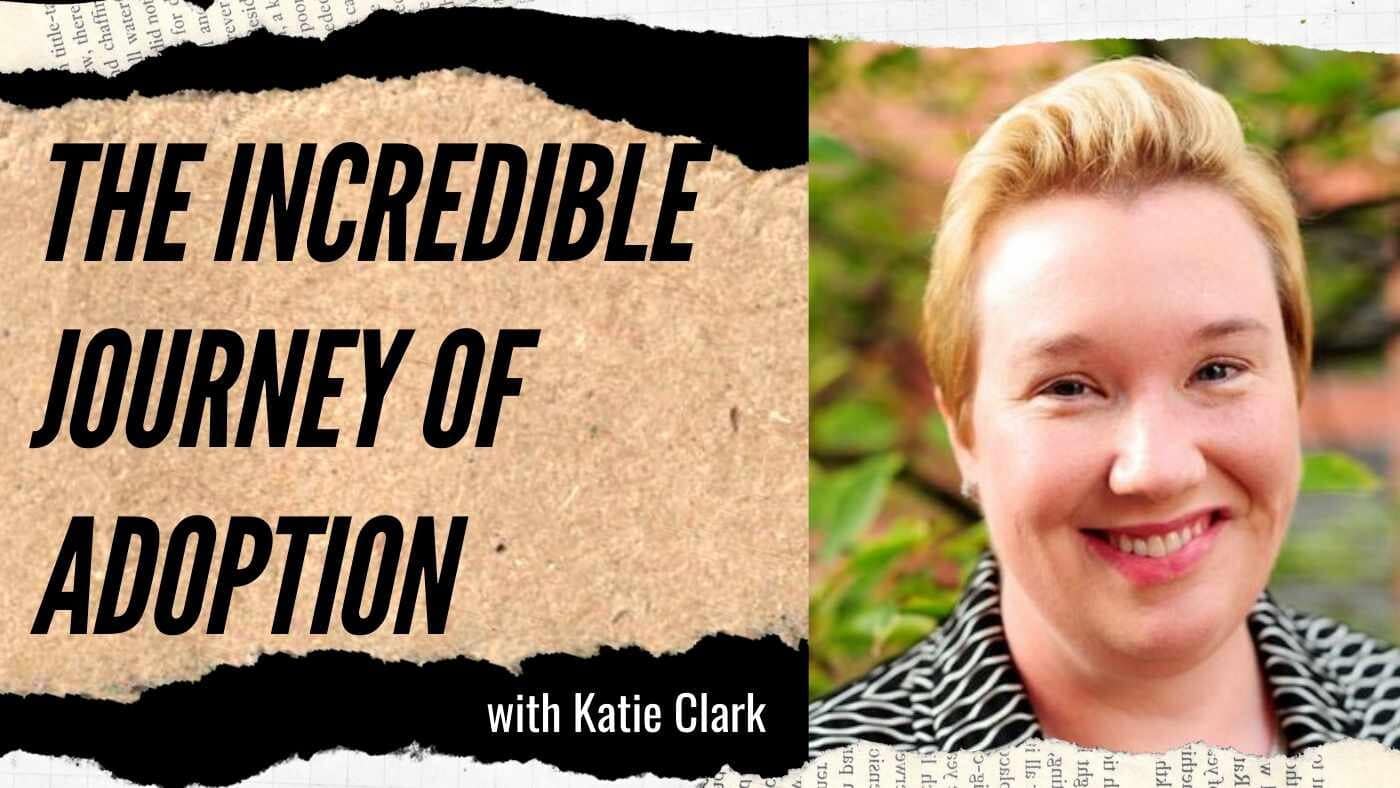
Our Guest Today: Katie Clark
Katie Clark (aka @InsightsGal on Twitter), is a hybrid market research manager, social media diva, project manager based in Portland, Maine. We first “met” on Twitter, when she shared details on why she enjoyed Feisworld Podcast. I thanked her and we began exchanging tweets, DMs, then emails. Within days we scheduled a phone call and discovered how many common interests we shared.
At the same time, Katie revealed that she was adopted, as well as several other family members. After finding out that Katie wasn’t going to have children of her own, she began pursuing adoption. The journey of adopting a child was no straight line. It is also complicated and incredibly expensive with no guarantee. To embrace all the twists and turns, Katie, the uber connector and project manager, tracked every lesson learned and captured in this very Google Spreadsheet.
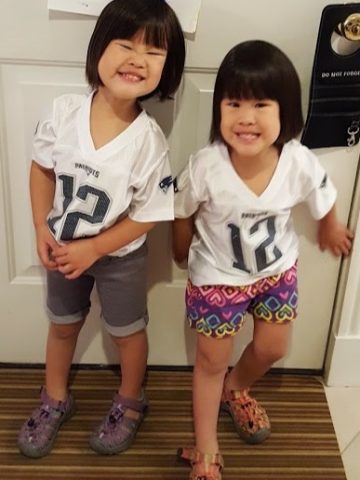
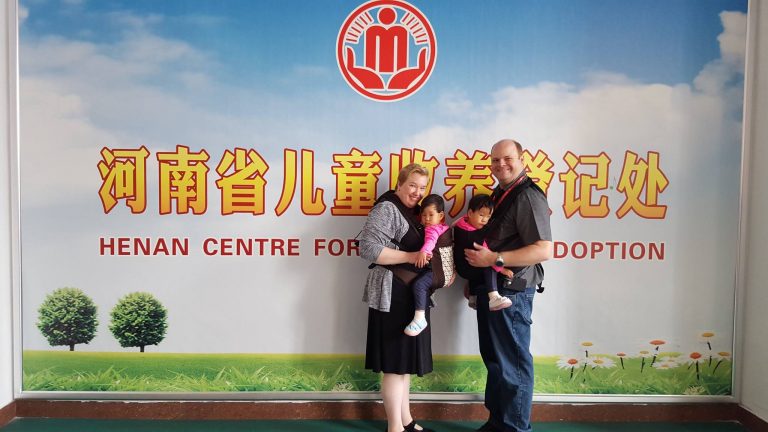
In this episode, Katie explains the trial and error she had experienced even before finding the right agency to work with. Her two identical twin girls are no short of a miracle. Before they became candidates for adoption, the twins made headline in the news in Beijing in 2013 (Here’s one of many articles). Two Chinese celebrities were involved in donating to the twins’ medical needs and making their surgery possible.
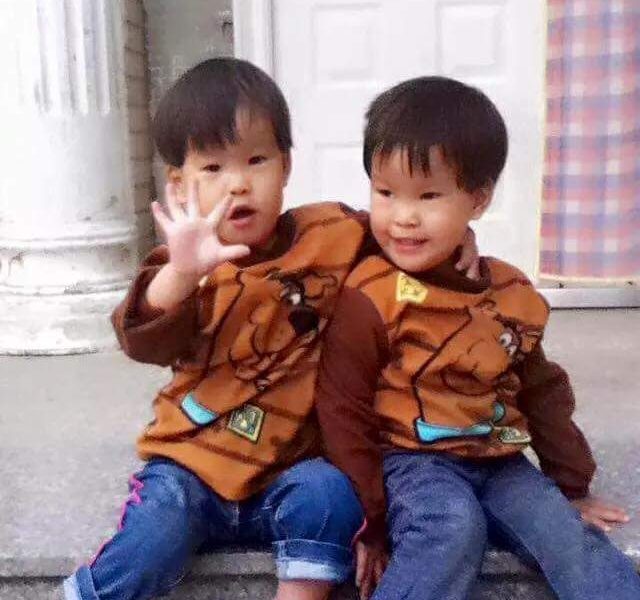
Being a mom and an entrepreneur keep Katie’s hands full, yet she finds tremendous joy in building and sustaining a better community for women. She was recently elected president for Junior League of Portland, Maine, one of more than 290 Junior Leagues worldwide. Since 1922 the Junior League of Portland, Maine has identified underserved needs in the community, developed solutions, and created positive change. A number of their past programs continue to operate as self-standing entities, including the Children’s Museum and Theater of Maine, the Kids First Center, and the Center for Grieving Children.
Hope you enjoy this conversation of two women, and share real stories of their families, careers and social services. We’d love to hear from you and feel free to leave a comment on the blog!
Katie Clark – Show Notes
- [06:30] Can you tell us who you are, where you live and what you’ve been up to?
- [10:00] Why did you move to Portland, Maine (from Boston, MA)?
- [14:30] What types of clients do you usually work with? What are your services and offerings at InsightsGal?
- [18:00] How do people find out about you and your services?
- [19:30] Can you share a few common mistakes people make when they are new in your field?
- [23:00] Can you give the listeners some advice about how to differentiate themselves from their peers in the work environment?
- [29:00] When did you decide to adopt a child and why?
- [33:00] How does the adoption process work? How complicated/easy is it?
- [40:00] Did you discuss with your husband about some of the difficulties, such as adopting a child from a different ethnical background?
- [42:00] Please tell us the story about your twin girls!
- [48:00] What type of surgery did the twin girls need? Who funded their medical needs (way before you came into the picture)?
- [51:30] How was the return flight from China to the US?
- [53:00] Can you tell us about your role at the Junior League of Portland (JLP) Maine?
- [56:00] How can people join JLP and participate as a member or volunteer?
Favorite Quotes
- [23:30] ‘The piece that employers are gonna pick up on is HOW YOU ARE UNIQUE, how you differentiate yourself from others…’
- [25:30] ‘I really enjoy helping [interns to improve] on how they speak about themselves in interviews.’
- [29:30] ‘When you are an adopted kid, that’s in the fabric of your being. It’s part of your identity and who you are’
- [30:00] ‘And because (adoption) is not often talked about, it is a very lonesome feeling
- [35:00] ‘Me being this organized person that I am, I love to, in my life and in my work, create efficiencies’
- [36:00] ‘[You need to decide] which are the medical conditions we don’t feel comfortable with. And it’s such a personal and hard discussion to have, because there are so many children in the world that need homes…’
- [39:00] ‘When you adopt a child from overseas, you are also committing to bringing their culture into your family.’
Transcript
Transcript
Fei Wu: Welcome to the Feisworld Podcast, engaging conversations that cross the boundaries between business, art and the digital world. When you are an adopted kid, that's sort of in the fabric of your being, it's part of your identity and who you are, and because it's not very talked about in the wide world. It's such a hard discussion to have because you know that there are so many children in the world who need home. When you adopt a child from overseas, you are also committing to bringing their culture into your family. I wanted to make sure that we could be a sponge and get as much culture and information and everything that we could for our experience there because we were doing that on behalf of our daughters. Hey, everybody. Fay w and I'm your host for the Phase World podcast. I have a bit of a cold right now, but hopefully, uh, that's not showing through my mic so, so much. I'm excited to be introducing a new guest here on Phase World. Her name is Katie Clark, aka Insights gal on Twitter. Katie is a hybrid market research manager slash social media diva slash project manager based in Portland, Maine. Katie and I, believe it or not, met on Twitter when she shared details of why she enjoyed Phase World Podcast. So I thanked her and we began exchanging tweets, um, direct messages, then emails, and within days we scheduled a phone call and discovered just how much we have in common from our connections in Boston and in Maine to social media and digital marketing. We both. Think that it would be amazing to share our conversation live on our podcast. Furthermore, Katie revealed that she was also adopted as well as several other family members. That's fascinating. I thought after discovering Katie wasn't going to have children of her own, she began pursuing adoption with the twists and turns. Katie, the Uber project manager, tracked ever lesson learned, and were sharing that with a larger audience via my blog on phase world.com. We're talking spreadsheets and so much more. If you're like me, imagining adoption to be fairly straightforward of a process, think again. Katie explains the trials and errors she had to experience before even finding the right agency to work with. Her. Two identical twin girls are no short of a miracle. They made headline in the news in Beijing in 2013. Two celebrities. By the way, were heavily involved in contributing to their medical needs besides motherhood, Katie is a working mom and a freelancer like me. She is a uber connected, intensely curious, early adopter, fascinated with how people and brands connect and interact digitally. Being a mom and a freelancer is plenty of work already. Yet Katie finds time and energy to build a better community for women. She was recently elected president for Junior League of Portland, Maine, one of more than 290 junior leagues worldwide. Since 1922, the Junior League of Portland, Maine has identified underserved needs in the community, developed solutions, and created positive change. A number of their past programs continue to operate as self-standing entities, including the Children's Museum and Theater of Maine, the Kids First Center, and the Center for Grieving. Hope you enjoyed this conversation between two women who decided to share real stories of their families, careers, and social services. We would love to hear from you and feel free to leave a comment on the blog. Quick announcement. By the way, I produced a series of freelances live videos on our Facebook page. You can find via searching for phase world F E I S W O R L D. By the time you're listening to this, the entire series of 10 videos will be concluded, in which I shared tips and tricks on freelancing from setting yourself up for financial success, to finding new clients, spotting bad ones, frequently asked questions and concerns associated with Lance. Without further ado, please welcome Katie Clark to the Phase World Podcast. Katie, welcome to Phase World. I'm so glad that you can join me today.
Katie Clark: Thank you so much. I'm so honored to be here and I'm a, I'm a abi listener of the podcast, so it's, it's really interesting and fun to be sort of on the other side of that.
Fei Wu: I am, I'm really glad to, to hear that. Um, so Katie, it's, it's hard to imagine that you and I connected just about a week and a half ago via Twitter, and I really appreciate you, uh, sharing very specific feedback as to the episode that you listened to that resonated with you with, um, which was with Helen Sean, a woman you know, who talked about postpartum depression, uh, being a mom to three young children while running her business. And since then, you know, we talked on the phone less than a week ago, and I'm inviting you. Perhaps the first listener, uh, to be interviewed on Face World. So, so glad you can be here. And I wonder if you could, uh, kind of introduce yourself, um, briefly to my listeners as to who you are, where you live, and uh, what you've been up
Katie Clark: to. Absolutely. And, and to speak to what you just said too, I was so drawn in by that interview with Helen. It really resonated so much with me. I'll definitely tell you a little bit about, more about myself and my family, but that's what really first connected us. And then of course, the magic of Twitter, which I've been on since the infancy of Twitter. So I feel like even though I'm a Gen X or I'm a digital native, so my name is Katie Clark. I live in Portland, Maine, which is a beautiful place to live. I used to live in Boston, which I know is where you are. I am a market researcher by trade, but a historian by academic, uh, training. I have two kids. I'm sure we'll talk a little bit about them, but we have two identical twin girls and they are three. And I will tell you they are going through their three major stage right now. , I heard about it now I. See it, um, when we brought the kids home, so we adopted the girls from China. And so when we brought those girls home, uh, last year, right around the same time my job changed. I had been in a very stable corporate environment, uh, running a market research department for a while, and with that adoption came upheaval in what I did because they, of course, needed pretty much all my attention as we brought them home. They didn't speak English. Uh, they were coming into a new family. My focus needed to shift there. But all of the while I have been a, um, social media, personal branding and market research consultant, I do, uh, speeches and coaching sessions on all three of those things. And my big role this year is that I am the president of the Junior League of Portland in up here in Maine. There's me in a nutshell.
Fei Wu: Wow, wonderful. I think your story in a way that perhaps among, you know, gen X millennials and, uh, there's a trend, there's a shift happening to our careers where people in their thirties and forties raising young children are reconsidering the career path that they have chosen. And, you know, instead of working for corporate America, kind of continue to climb that ladder. They wanna define their own freedom. And you know what, today, surprisingly, when I was on Facebook, I discovered, um, Luisa Joe and I realized you also follow her page.
Katie Clark: I do,
Fei Wu: yes. Are you, do you happen to be a, a client or just kind of like me just kind of reading upon some of her teaching and materials?
Katie Clark: Yep. So same as you just a, a fan and, uh, digesting and, and, and looking at her materials and her story.
Fei Wu: Yeah, it is really compelling and she's only 26 years old, which I found out today. Kind of blew my mind. Yeah. And, um, this is something I definitely want to touch upon and you had mentioned, you had told me a story of where you used to work. Um, give us a sense of when was that kind of, uh, pivotal moment for you to wanna switch over, spend more time with your family? You know, perhaps a better story would be why did you move to Portland, Maine, ?
Katie Clark: Sure, of course. So Portland had been on our tourist itinerary for a while, so we had been up here a couple times as tourists up to LL Bean and seeing the foliage in the fall, LL boots and yay, LL bean and bean boots, So true. Now it's delightful that it's probably a 30 minute drive for me to go up to Ella Bean and they're open 24 hours a day, 365 days a year. So if you ever have a shopping need at three in the morning, , you drive up to beans, no problem. . Wow, I didn't know that. Yeah, that's one of their claims to fame and it's lovely. It's a beautiful place. So we had been visiting up here, uh, having been based in Boston and I had a wonderful job at a company called Communa Space, and I'm happy to name them because I wanna give them a shout out. Uh, they're now called C Space, but it's the same company. And I was working with market research online communities as part of what I did at that job. My husband is a geotechnical engineer and his company is based in the Boston area, and his company actually opened up an office up here in Portland and it got us thinking, Should we consider a move to Portland? He would come up here and help this office with a couple different things every once in a while and they would try to lure him up here saying, you know, if you worked up here, this would be your desk , which got him thinking a little bit more. I talked to my company and I was going to be the first remote worker that they would have. So we had a very serious conversation about whether that would work for the company, whether that would work for me. And they were so very gracious and decided to give that a trial run. And I had wonderful clients and a wonderful team that I worked with. The team was based in Boston. My clients were all around the country and we moved up to Portland. I will say the housing prices are cheaper in Portland, so it made that very palatable coming from the Boston area. And it's a wonderful, uh, place to raise kids. This was before we had kids and just a great community. So moving up here made great good sense to us, and I'm so happy to say that the company commun space that I worked for, it was such a seamless transition. The working with my team in Boston because of technology nowadays, it was almost like we were sitting in the same room. And my clients felt the same way. They said, gosh, we really kind of forget that you're in a different location because the teams work so well together. And of course we worked with our clients by phone most of the time anyway, and when we needed to go visit the clients, we would just all fly to the client location together. So I left that company after a while just to seek new adventures up here in Portland. Uh, but that was the genesis of our life here. How long
Fei Wu: has that been since you left Sea Space?
Katie Clark: Oh gosh, I think it was 2007 or eight. I think it was 2007. Wow.
Fei Wu: Yeah. So you've been freelancing and living in Portland, Maine for quite some
Katie Clark: time. So I've been freelancing on the side. So I found a great company up here called Diversified Communications. They're a one another wonderful company. I managed to land in these great places. I'm so. And I worked with them from 2007 until last year, uh, working on market research and, uh, working to sort of grow and expand what that company was doing with market research. They managed large trade shows and conferences and some digital properties and some magazines. And kind of taking that into the digital age with email surveys and then expanding that past just surveys to really figure out how else can you reach your customer and get that voice of the customer, uh, to then infuse your products.
Fei Wu: Mm. Is it interesting there's that interplay between C Space and Diversified, as you mentioned. Mm-hmm. , and it feels to me, which, you know, you're still a new friend. I don't know all the ins and outs, but it sounds to me like a lot of the skills you picked up from these previous two jobs, uh, have really enabled you to kind of build service offerings for what you're doing for your clients. Is that correct?
Katie Clark: Absolutely. 100% correct. Yes.
Fei Wu: Could you give us like maybe. I am so eager to talk about your twins, but business first and I, I wonder, you know, could you kind of give me a few examples of what you have done for your clients? You know, I know you're a busy mom, by the way. You're not necessarily working 40, 60 hours a week mm-hmm. but, you know, what are some of the examples of the client work that you picked up?
Katie Clark: Sure. So I will say that the, the wonderful training that I received at both companies, both on the job and as formal training within the companies is within the sphere of market research. Really honing that, the best ways to listen to your customers. That, in essence is what you do in market research. It's not so many people say to me, oh, you're those people standing on the, you know, standing in the mall with a clipboard. No, not really. . When I talk to them about the depth and the breadth of what you can do as a researcher, they really get excited cuz it's all about why people do what they do. Why do you buy the brand of fabric softener that you do? You know, why do you buy certain things at the grocery store? Why do you listen to certain podcasts? It's all about those different things. So getting that, like really learning how to listen and really learning how to, I would say, get into people's heads, that does help too, uh, really has informed what I have done going forward. So a couple examples are, um, I'm gonna call it a seminar, kind of a working session for some younger workers in the Portland area. Their companies hire me to come in and speak with their either new hires or their intern classes to talk about personal branding. And that's everything from how to optimize your LinkedIn profile to really how to be a good, I'm gonna say corporate citizen in this day and age when you are a digital native. Coming from that sort of senior position of kind of here's what to do and what not to do is one of the things that I do, another thing that I do that I really, really love to do is because I'm such a digital native and I grew up with social media on the platforms from their infancy, from when Twitter started, from when Facebook was still colleges, I say to people, for me, social media is kind of like breathing. It's very natural to me. I realize now that that's a special skill and I can take that and work with clients who kind of are very panicky about social media and who are really not sure how to get started and ease that transition. So breaking down those walls, easing the fears. I sometimes say, you know, we go into those sessions and one of their first questions is, what is a hashtag? You know, it's, it's, it's basic and easy as that. And when they learn those skills, you know how to use management platforms like Hootsuite, when they learn those things, they feel so much more empowered. To then utilize that for their business. And not in a very corporate rudimentary way, but in almost that market research way of this is a great way to listen to your customers.
Fei Wu: That's interesting. So actually goes back to some of the things, you know, like Rammi Sati and a t and Louise Joe, some of these folks are talking about, which is. If you go to, you know, search Reddit uh.com or Google, that doesn't matter what you think, you know, could be kind of completely intuitive. Like you said, you're a digital uh, native, but your skills can be leveraged and actually appear to be very foreign to a lot of these small to even medium sized companies. And here's a question, I guess, how do they discover you? Is it typically through Twitter? How do they find out about your service offerings and kind of get in touch with you?
Katie Clark: Sure. So I think it's a combination of different things. One, is it, sometimes it's through my website. I heard from a couple people that they Googled, you know, Twitter main and consulting and found me or Speaker Main in consulting too. Cause I do a lot of public speaking. So I think some of it's that, some of it is for sure word of mouth. Because once I work with one person, they, you know, tell their friends, hooray, Harray, I will give a ton of props to Twitter because the community I've built my, I'm gonna say following, and I always hate to use that word cuz I, I feel like it's my community over time and I continuously publish content that's hopefully good and people like to read and I like to connect people with other people. And sort of within that sphere, those conversations start where I might do a little bit of, of help with someone to say, oh, it's, you know, yeah. It's easy to do that, you know, use this platform or Sure. You know, when you, here's a kind of a tip and trick to do that. And then they wanna know more and then they ask more and then they eventually say, you know, do you do sessions on. Can you do training? Yes.
Fei Wu: I love that. So quick shout out to insights gal.com, which I will include in the blog post as well. And, uh, before we move on, another question that kind of came to my mind is when you mentioned personal branding for mm-hmm. Young Workers, uh, do you recall maybe a few common mistakes that people.
Katie Clark: Yes, and I love using this example, but it's so funny because in so many presentations that I give, especially when I was with Diversified and with C Space, they're, you know, they're very client focused and very polished. When I talk to these younger workers about personal branding, I always revel in the fact that I can, I can, I will say this, talk about drunk bikini pictures. So here is the example. So when I work with these folks, oftentimes I get, uh, especially if it's an intern class, I get their resumes so I can look them up and I can sort of, you know, see how they already brand themselves so that I can provide better consulting. And suffice it to say there was one whose profile was not super locked down, and there was a lot of stuff on there that a hiring manager really wouldn't wanna see. And we'll just say, you know, pictures at a, you know, at a bonfire in a bikini drunk with red cups. And if that's your friend, that's great. If you're applying for jobs that are in the corporate sector, or even let's say in the healthcare sector and hiring managers. Look at all the social media now. We'll Google you. We'll check your Facebook account. We'll look at LinkedIn. We'll see what we can see, just to know who it is that we're hiring, and if that is front and center, if that is your profile picture when you're out looking for jobs. That's something that I advise. Mm-hmm. , that might wanna be behind your privacy settings.
Fei Wu: Absolutely. I feel like as I know, as obvious as this sounds to us, I do see people, I think using profile pictures, that type of profile pictures is definitely a, a big no-no, but mm-hmm. , you know, also a little bit deeper at the album or even just regular, you know, other levels, deeper level of your photos. I still think it's, could be a bad idea to use something that could offend others or kind of, you know, have other people misinterpret of who you are. Even your capability, your competency. So, you know, another question I guess it comes up for me, I'm glad you brought it up, is I've always been very eager to coach people who are younger than I am. And, uh, you know, I love internship programs. I've kind of designed one kind of creative one on my own, uh, years ago, and I'm still friends with these students, which is amazing. I'm actually going to speak at New North High School next Tuesday to talk about user experience, personal branding, and. I guess one of the questions that came up to me, which I believe at the time was that this, um, young Asian woman who said that she's working really hard, she went to Bentley and uh, she was really nervous upon graduation. She said she felt like everybody, more or less, uh, looked the same and had the same level of experience, and she didn't know exactly how to stand out. Do you recall, uh, some advice or feedback in terms of how to kind of differentiate kind of yourself from your peers?
Katie Clark: Absolutely. And one of the things that I do say when I do this coaching is, don't you, you don't have to basically sanitize your entire life story. The, the piece that employers and hiring managers are gonna pick up on is, How you are unique, how you differentiate yourself from others. So, uh, one of the slides that I use is, um, if you can all visualize, this is headshots, right? Your corporate headshot, the headshot that you might put online as your profile picture or if you have a digital resume. And for the slide, I have about 12 different headshots and every single one of them is drastically different. They really showcase the personality of this person. So no one is in a suit against a white background and looking very stiff. It's all about, you know, a gentleman in a, a very hipster bow tie with a beard standing against a brick wall. So very, you know, that, that showcases his personality. A beautiful woman with dreadlocks in an art studio. Mm-hmm. . These different head shots. When you know that visually, that's often your first impact, uh, that's like the impact that you make with someone meeting you for the first time. That tells a story. And I know that when I give that session to, um, present that session to those interns, that tells a visual story that you do not have to be cookie cutter. You absolutely do want to be unique, and that carries through into your resume and how you interview. It's finding those unique sort of nuggets of insight and personal stories that really differentiate yourself from others. And I know this woman that you're talking about. And again, it might just be a coaching conversation with her to find out about her personal story and how she is different and unique and help her then draw that out and say, well, those are the stories that you tell, you know, you are unique because you went to Bentley and studied a certain thing that really lit your fire. Why did it light your fire? Because you really like to work on this subject. Well, why? It's kind of digging into those why pieces for those students and interns and young folks, and then helping them weave that. Why. Into how they speak about themselves in interviews. I come,
Fei Wu: yeah, this is really interesting. Uh, at my first job you reminded me at Sapien we always had a supervisor and a separate person as a mentor. Yes. And I thought that dynamic, you know, was really interesting at times that both people can be very busy and not reachable, which kind of, uh, contradicts the, what the model is about. But I have to say that for women and men, there's tremendous, uh, there's tremendous value of what you're describing. I think ideally in this case, someone who isn't necessarily a peer but a mentor with. Let's just say little bit more of an industry experience or just experience in general and be able to provide that feedback to, uh, the person in need. And I think recently I had a client who was kind of questioning what his story should be, even that he is absolutely incredible, so talented. And so I gave him this homework, which is because I was also getting to know him, so I couldn't possibly give him like a five or six star review. I asked him to simply get on the phone or send an email to his friends and colleagues and say, what is it about him that makes them tick and make them love him or remember him or really value him? And then, He did the homework, he sent me back all these phenomenal feedback and I was looking it through. I even created a word cloud out of it and it was just blown away. So, and he was really surprised to find that out as well. So I think the idea of perhaps having you as a coach, you know, for some of the folks out there could be very
Katie Clark: helpful. Yeah. So I think one of the things too, which is a great exercise for everyone to do is ask your friends, cuz this is easy to do in a social setting or in a quick email would be, what are the three words that you would use to describe me? Mm-hmm. , pick three words that can't be sentences, , but what are those three words? And find out what those are. And those tend to lead to a conversation. Um, that is actually an interview question that I use when I'm hiring people.
Fei Wu: Mm. So what are the three words that people often describe you? Katie . Oh,
Katie Clark: they often use curious. because I'm constantly curious about everything in the world and constantly, um, seeking. I would say they do use historians sometimes because I've, I've been trained in that academically and I have such a love for history and the past, and so that's often used and organized is the third one that I often hear.
Fei Wu: Awesome. So I think , given that, you know, you sound like a very busy person, that you're always going out and kind of learning new things and. When you mentioned organized mm-hmm. , and you're always curious that, that kind of intrigued me because, you know, instead of settling down into a kind of, you have a rhythm, you already had a rhythm to your life, but yet you're saying, okay, you are open up to adoption. Actually, could you, you know, maybe talk about. Perhaps why you thought about adoption, why it would be a good option to you and your family?
Katie Clark: Certainly. So I'm thinking back to . I'm thinking back to a couple years ago and, and the, the genesis of this story. So I myself am adopted and so as my sister and a number of people in my family, so it's something that's very familiar to me. So when, when you are an adopted kid that's sort of in the fabric of your being, it's part of your identity and who you are. Um, not so for everyone who, you know, who are biological children of families, um, that's not necessarily part of their identity unless they have a, a brother or a sister who has come into their family that way. So when my husband and I decided to, to think about having a family like so many people, and it's so not talked about and it should be, we had fertility issues. And it took a number of years to really figure out what was going on. And that of course, is really hard because you've sort of made this life decision to move forward and have a family. You're at that point in your life and you get really excited about it. And then to continually have sort of the universe keep on saying, Nope, stop . Nope, stop again, . That gets really frustrating and disheartening. And because it's not very talked about in the wide world, it's very, it's a very lonesome feeling. It's like, gosh, I feel like I'm going through this alone with my partner. Um, and I think for men especially, they don't talk about this either, so it's a very lonely place to be. So what ended up happening after a lot of tests and a lot of different questions going. It was finally diagnosed that I was going through menopause at like age 34, 35, which is really early in the midst of this. And I, I did joke with the doctor because I was, I was happy at that point to have an answer. So I was in a happier place because I had an answer. Um, and I did say to her, well, that explains the hot flashes . Now I know where those came from. . I wonder, I was so hot in those meetings. , it was funny. I was, and she was giggling that I was laughing. It was, it was, it was sad news to deliver. But at that point, after a number of years of going through this, it was actually nice to have an answer and an answer that basically said you, you kind of have no choice but to look at other options. And we did, as I had mentioned, I'm a researcher, I'm a historians. I'm used to a lot, a lot of research. So we looked at all of the different avenues that we could go down in terms of bringing a child or children into our family. And we finally got to the point where we decided to pursue adoption. And that's sort of how we landed on that.
Fei Wu: Wow. So let's talk about adoption agencies. It's when you brought it up, it kind of peaked my interest. I was born and raised in Beijing, China. I moved here when I was 17. So I have a, a lot of clarity in terms of where I am, where I come from, you know, and I am, I'm always gonna be Chinese at a heart. And I knew, and I still, you know, before talking to you, I knew very, very little next to nothing about the adoption process. Mm-hmm. how. Typically works and uh, what were some of the ups and downs that you had experienced? And some people may just assume you fail a piece of paper and the the kid is delivered to you within two weeks. It doesn't, doesn't work that way. ,
Katie Clark: if it worked like that, I think there would be a lot more adoptions happening. Yeah. I mean I would love to, in a way sort of demystify the process because I think that people sort of look upon the process and say, oh my God, it's terrifying and that's scary and I don't even wanna go down that road. There are a lot of different ways that adoption can work. There is international adoption, which is what we pursued, and there's also domestic adoption within the. There can be private adoptions facilitated by a lawyer. I'm trying to think of the other ones. You can do domestic adoptions through an agency. There's a lot of, and and of course through foster care, that was the one that I was forgetting. So there's a lot of ways in which you can adopt a child. And when you look at the international scope, there's a lot of different countries from which you can adopt a child. Each country has different regulat. And within our country, in the US there are different adoption agencies who then help you go through that process. So you asked about some up and ups and downs and we definitely experienced that. Oh my goodness. It, it's not that you fill out one sheet of paper and a baby is delivered because that would be awesome. I will tell you that I have a spreadsheet and I put it out to the world that if anyone ever wants to use that spreadsheet, they can. It's about 87 lines long in terms of all of the pieces of paper and or the processes or the documents that we needed to gather. That's to
Fei Wu: that. Go through the process, send the document over and we'll post it to the blog post.
Katie Clark: Okay. , I'll provide the template. So let me make a note so I can do that. Yes, I'm happy to because I think, you know, and me being this organized person that I am, I love to, in my life and in my work, create efficiencies. So people can follow a process more smoothly. So that's just something that I love to do. So we started with, um, Poland. Actually. We made the decision. We looked at all of the countries that were open and we made the decision to adopt through Poland, partially because I'm, I'm, um, biologically, ethnically polish, not a hundred percent, but some, and we figured that, you know, there's a connection there. Okay. That's a long process. That is a country where you need to. Two or three trips over other countries are not the same. It's a, it's a long process. It's a very expensive process. It's one of the more expensive countries. And we had a struggle. We had several struggles with some things. One of them was that apparently I'm very difficult to fingerprint. I have very light fingerprints. So every time I would go get fingerprinted, they would get rejected by the government. And it took a total, no joke, it took me 11 months total and about 17 different rounds of fingerprinting. For that to go through. That alone almost made us wanna stop the process because I was like, this is impossible. It was a lot of craziness. So that, you know, these little things that you never think might be an issue were an issue in that process. And with the Poland process, it dragged on and dragged on. One of the things that you do for any country internationally is you fill out a medical checklist. It's a really, I would say, like soul opening and sometimes heart crushing, um, process to go through this document because there are so many medical issues out there in the world and you're essentially saying, here is what I will take. Here is what I won't. Here are the children. We are, we would be okay bringing into our family. And these are the medical conditions we don't feel comfortable with. And it's such a personal discussion and it's such a, it's such a hard discussion to have because you know that there are so many children in the world who need homes, but you also need to be realistic about what works for you and for your family. So long, long, long story made, hopefully fairly short. With the Poland process and the agency with which we were working, we were always at odds about the medical checklist. We had a medical checklist that we were comfortable with, and we kept on getting referrals for children who did not match that whatsoever. And every time we had to turn down the referrals, it just broke our hearts because these are children that we are saying no to, and that we hope someday we'll find families, but we know that it won't be our family. But that's so, so hard. So after, if you think about it, after infertility for years and then going through this process, it can be, you know, it's, you need to be emotionally strong and to have a good partner and family support and friend support to go through this. So we ended up breaking ties with that agency because we were never coming to agreement. And at that point we really had to figure out what to do. You know, we had that hard discussion. Again, you know, we went through infertility, so we couldn't have children that way. Now we've gone through a process for almost two years, and that didn't work out. So what do we do? And we had a wonderful clinician, a doctor at the International Adoption Clinic in Minnesota, and her name is Dr. Judy Ley. And she is one who looks at files in the adoption process to help parents make a decision. And she doesn't, she doesn't promote a decision, she just shares what the medical conditions mean and how they're treated. And we reached back out to her and said, This Poland process did not work out. We're open to a lot. But in your estimation, having worked in this space for a long time, what do you think? And one of the countries that she suggested to us was China, yay . And to me, in my heart, my heart was singing. I was like, oh, this is so exciting. I love this because in my own personal life, I've always had a love of, I will say, both China and Japan culture and art. And that excited me from that perspective because I hope that all adoptive parents are this way. And I know that they aren't, but a lot of most of them are. When you adopt a child from overseas, you are also committing. Bringing their culture into your family. So when we were looking at Poland, we were looking at all kinds of cultural traditions. I was learning polish in order to make sure that these children will have some of their home culture because they won't have their birth family.
Fei Wu: And also what I was thinking is, you know, when I, I often thought about this, I've known international and also domestic adoptions and I noticed that maybe something you could kind of mention when you adopt a Caucasian child, for instance, for your family, when you go to the playground and. So oftentimes people don't even notice, won't even ask any questions. But when you adopt an Asian baby, you know, for instance, then that becomes obvious. Like what was that discussion like with your husband and kind of maybe with yourself?
Katie Clark: Absolutely. And it was, it was such a good and open discussion that we had. And as we started the process and then as we continued through the process and, and switching countries was at the beginning of the process because we were, we were so sort of raw from the, um, infertility journey that a child that looked like us, there was a comforting thought. Because you're right. If you go to the grocery store, if you have a child that looks like you, no one asks any questions. I will say as we went through the process, I, I'm an extrovert in all the ways and I am an advocate for so many different things that I'm passionate about, that I have no problem talking to anyone in the grocery store about anything. Right. So I think I'm much more in that comfortable space. My husband is much more of an introvert, and that's one of the reasons we work so well together and. I wasn't sure that he wanted to be ready to be thrust into the advocacy role in the produce section . Yep. But you know, as we, as we went through and we were switching countries and he was very open in saying, you know, I think that, you know, this is something we, we could do and this is something we can look into. I feel like we, we know enough about adoption now, so yes, let's go forward with this.
Fei Wu: I think what, through our conversation, I noticed that there were even misconceptions with me thinking that adoptions from China, especially like a, a cute Chinese girl, was there are normal, or in a way I thought it was easy almost, you know? So I think what's really intriguing is not only that you had one girl, but two girls, and these two girls weren't just any twins from China. So tell us about the story that, uh, we've been building up
Katie Clark: to. Sure. So, and let me address some of those initial questions too with the boys and the girls and all of that cuz that leads into our girls. So we didn't know very much until we got into the process and I started researching about China and you hear in the news all of about China's girls and there's programs, I think it was CNN who even did China's Lost Girls, that there's this generation of girls, um, that that's in orphanages, et cetera. So we were so attuned to it's probably gonna be a girl. And what we found out was there's sometimes more boys than girls in the orphanages. And I don't know, and I would love to at some point sort of academically study this, and I'm sure some people already are, but I would say within the adoption community, sometimes girls are seen as safer because every child. Who comes to a family through adoption, goes through some sort of trauma. They've, you know, they've lost their birth family. They may have been moved from their hometown, so they've had some sort of trauma, which as adoptive parents, we, we need to know that going in and we need to look for that throughout their lives. And sometimes trauma can manifest different in children. Right. And I think sometimes people do see boys when they are growing up as inherently a little bit more rambunctious and violent and couple that with some trauma issues like that can be scarier for parents to think about. And what we found out from some of the agencies that we talk to are often when a girl comes up for adoption, there's a waiting list that parents always want. The girls and these boys are languishing in these orphanages for sometimes medical issues, so minor as like an extra toe. So, so very minor. And yet a girl who may need like a, like a liver transplant is going to be chosen. Instead of a boy because someone wants a girl. So that opened our eyes and when we talked to, um, some of the social workers and we said, yes, we're open to either gender, they were so excited to hear that. And they say, expect that it's probably going to be a boy and that it's going to be one boy because of the way in which China adoption works. So did you
Fei Wu: then specify when you went through the process, did you have to go through the same spreadsheet again to kind of inform them what's acceptable, what.
Katie Clark: Yes, absolutely. And it was a very long form. Mm-hmm. , but it was very comprehensive and a lot of stuff we really had to start Googling to say, well, what is, what is this? What is this? ? Correctable by surgery, you think about things that are correctable by surgery. You think about things that are chronic issues. So those are the things you think about. What do we wanna handle long term? What could be correctable by surgery or in one of the best places in the country for surgery in the east coast with Boston having the highest concentration of the surgeons in the country. Well, this is perfect . So we went through that medical checklist and uh, felt very comfortable with what we were willing to take and what we were not willing to take. However, when we got the call, it was not something that was on our list at all, . So again, we were expecting a boy and when we got the call, which is called a referral call, you know, they say, are you busy? And you ready? You know, we, we've got a referral for you. And this is the phone call that all adoptive parents are so excited about, cuz that's, that's what you've been waiting for. And our wonderful adoption agency, which has called cca, I, and they're out of Colorado and said, we have a referral for you. Are you ready? They verbally tell you first, and for us they said maybe minor scoliosis and maybe minor clubfoot. And both of those are so handleable and they still hadn't said gender. So they, you know, they said that and they said, well, it's a girl. Wow. That's surprising. Well, there's more than one of them. . Mm-hmm. the
Fei Wu: twins. That's, well,
Katie Clark: that's unusual for China.
Fei Wu: It's your lucky day,
Katie Clark: Katie. I was, I was so surprised that it was such a minor need cuz we were very prepared for much more significant needs than that. And that I said, is that all? She said, well, they used to be conjoined twins. And I said, oh, there it is. There's the medical issue. And she had said they had been separated in China and the surgery went really well. And it had been about a year prior to to that. Um, how old
Fei Wu: were the kids when they were, I guess, abandoned in this case? And then when did the surgery happen? Timeline.
Katie Clark: Yes. And I think I misspoke with a year prior. So let me think about the timeline. So they were born in 2013. Mm-hmm. in August, and they had the surgery July of
Fei Wu: 2014. So almost when they were just about a year old. Yes.
Katie Clark: Yeah. And we, we understand that that is because they need time for the organs to develop Yeah. And for enough skin to grow to cover the surgical incision. So that's something that's not on any medical checklist because it's such a rare condition.
Fei Wu: Right. It is. I think I looked it up. It's one in a thousand in the us. I mean, a thousand sounds like a lot, but think about the entire country. I mean, it's point, I need to do the math, but it's like a fraction
Katie Clark: really. Yeah. It's really rare. And what's what, and I of course started Googling as soon as I got off the phone, . Mm-hmm. and, and sort of to finish that call is what happens is you have 24 hours to indicate that you are interested. They hold that file in the system and they don't release it to any other families. They hold that file for 24 hours. And if you then say that you're interested, you have a week to make a firm commitment and say yes.
Fei Wu: So with that, join twins. It's very rare, I think, doesn't matter where you go. Uh, and, and I believe this surgery is incredibly expensive. You know, in your twins condition, they're healthy, happy babies today. Yes. And um, that was, that must have been a very brutal process, I believe, for the orphanage as well. You know, financially, how did they
Katie Clark: get the surgery? It's almost a magical story. I always have to think, is this real? Because it's, it's so amazing how the stars aligned every step of the way for these girls. So what happened, and I, I have some of the story. I have, I think I have most of the story, and I know there are more pieces to this puzzle because, uh, they were abandoned in, uh, a town called Ping Dhan in Heon Province, or Hi on province. I'm not pronouncing it correctly.
Fei Wu: Yeah, I will correct those. Don't worry. Oh, thank you. Gonna
Katie Clark: promise. Yeah, there we go. Um, they were moved to Beijing pretty quickly because of their significant medical condition and they ended up, The most amazing orphanage called Angel Home in Beijing, and it's a smaller orphanage about, I think it's about 40 children with the most amazing caretakers and director who provide such amazing care to these children. They were there from about a week after they were born, they went to Shanghai for surgery, but then they came back to Beijing to the same place, and they were there until we adopted them. And the fascinating part of this story is that there are some folks out of Oklahoma Kensit and his wife and a wonderful gentleman named Sean in China who were helping Angel home. And that process, finding the surgeon who would do this surgery because it's so complex and you need, of course, someone who's very much a specialist in this and. The cost of that surgery is so astronomical and so precise, and it just so happens that people volunteer at Angel Home and one of those volunteers happens to be, I will say, a rockstar in China, a literal rockstar I
Fei Wu: will include both of their names. Turns out I think they're married to each other. Uhhuh. Yeah.
Katie Clark: Yeah. So, um, Chen Yon, who's part of the, the Tuo, uh, Yon has volunteered at Angel Home, as has his wife, and her name is Bye ba. Hopefully I'm getting that crap. Mm-hmm. . Mm-hmm. . And she's a movie star. Amazing thing. we to each other and they have a boy of their own, and they met the girls and they ended up donating the bulk of the money for their surgery.
Fei Wu: That is, uh, that is so good to hear because before learning more about the story from you, I had the same feeling, uh, for celebrities in general. And I feel like they, many of them are irresponsible, you know, versus the very small fraction of them who actually do care about these social services. So I'm, I'm very glad to hear that. Yeah, that's incredible. You know, I say, thanks so much for sharing some of the pictures of your twins today. And to me it warms my heart to no end to realize just how much they are loved by the parents, and they're happy. They're healthy. And when you were bringing them, I know that you physically actually went to China to pick them up. Mm-hmm. , were you nervous kind of on the flight back, you know, that's some brutal flights of. You know, at least 13, 15 hours. Mm-hmm. to get back here. Were you nervous? Um, yes. . Okay. You're holding onto them and just, oh, being for the, I'm, I'm sure your husband was there too, to kinda help you.
Katie Clark: I will say we were, we were nervous for the whole trip. I wanted to make sure that we could. be a sponge and get as much culture and information and everything that we could for our experience there, because we were doing that on behalf of our daughters.
Fei Wu: Yeah, that's fascinating. I'm thinking that when they're old enough mm-hmm. . Um, and then when they're able to understand kind of this level of communication, perhaps they can come back to those podcasts and kind of listen to and realize just, you know, a year isn't a very long time to see, to realize that what their parents have gone through. Two more things we do wanna cover and for, for now, for the next, um, five to 10 minutes. I think it's worth kind of just switch topic real quick and for you to maybe briefly talk about, um, the Junior League. And it's so funny, I didn't know anything about the organization for in its existence over 90 years in the US And of course as soon as we finished talking earlier this week and I started talking to people and of course their mom, their sisters have all been involved. And so tell us a bit about your role in Portland. Uh, now for the junior.
Katie Clark: Sure. See we are everywhere. Yeah, when you, when you start hearing about it, we're everywhere. So yeah. My role this year is as president of the Junior League of Portland, Maine, and we appear in Portland. Our league is a group of about 250 women. And we have been in existence in Portland since 1922. Wow. I didn't realize
Fei Wu: that. That's a long time for Portland
Katie Clark: and in fact, the entire Junior league movement started in 1901, so not that long before 1922. In its essence, it's, it's a women's organization that's really focused on training and making an impact on your local community. You know, I
Fei Wu: must jump in and say there's mm-hmm. again, that parallel of the fact that you are raising two young girls and with their prior and medical condition that I have a feeling that just. Message of empowering other women and coming together. And somehow I'm, I'm, I think there is that parallel in the role that you're leading now. Sure.
Katie Clark: And I, I will also say, shout out to Smith College, cuz that's where I went to college. Smith College. Wow. Smith College. Woohoo. Amazing place. I would do it all over again. Um, I loved it so much and you know, really, you know, learned so much there in terms of how women can come together and make a change in the world. And I see some of my, you know, Smith sisters truly making huge changes in the world internationally and that it gives me so much hope for the future. So yeah, the Junior League is an amazing organization. I've been in the organization probably six or seven years when we moved up here. It's one of the reasons I joined the junior league is I didn't really know anyone in Portland outside of the folks that I worked with. I wanted to meet new people. But I knew that this was a way that was a very organized way in which to volunteer, and that's what really drew me in. And I've been there ever since and have held a lot of different positions within the organization, which has helped inform me and develop me as a leader, as I, um, moved into the position of president.
Fei Wu: So, As the President. And for those of my listeners who are listening, say, you know, they're in Portland and they too wanna benefit from this program. Especially because I see Portland as this ever growing city. And I have not monitor the population there, but I can imagine it kind of going up quite a bit in, in recent years. And I also know personally, you know, family members and close friends who have decided to kind of move their family, uh, to Portland, potentially retire there. And for women who want to get involved, what's the best way to kind of reach out to the Junior League or, uh, or maybe how to identify themselves as potential candidates for your organiz?
Katie Clark: Absolutely. So we have a website and it's j l P for Junior League, Portland. So jlp maine.org. And also if you just Google Junior League, Portland, Maine, you'll find us. And we have a comprehensive website that really shares what we do in the community currently, what our history is, and then how to get involved. Mm.
Fei Wu: Become a member. I'm right here looking at it. This is, this is great. And, um, to wrap up our podcast and Katie, what, what I wanna also talk about is, um, perhaps some of your feedback and. For listening to Phase World, what are some of the episodes that you enjoyed and why? I would appreciate that. Oh,
Katie Clark: good question. I love it. As you had mentioned, um, Helen Chung was amazing. I, I think that was the first podcast that I listened to and I clicked on that because of the description about balancing motherhood and business. And with all of these transitions that are happening in my life, going from not a mom to a mom, going from corporate world to freelance and all of that, I sort of didn't want to lose that part of my identity. That was a business person. and her podcast really spoke about that. Like, it's okay to, to still want that in your life, but it's okay to also note that it's hard, you know, it's hard to balance all those things or integrate those things. And that really spoke to me. I've listened to that one probably three or four times. Oh. Um, and I loved, uh, Krista Tippet. My God, I could listen to her, read the phone book and be happy
Fei Wu: her voice. It's funny. I would, I would agree with that.
Katie Clark: I feel like she's got such a fan base here where we're like, we love Krista. Um, I love her podcast, her episode, because I think, as you had mentioned in that episode, if you look her up, it's all her interviewing others. And we have such curiosity about how she came to do what she did, how she prepares to interview these luminaries in society and you know, kind of like what her brain process is. Uh, it was
Fei Wu: fascinating. It was kind of incredible as to kind of hear, I mean her early struggle. I'm not sure if you recall, cuz my podcasts tend to be fairly long and extensive, but she talks about kind of by herself in a studio after hours. Yes. You know, I, it blew my mind to realize that she too had gone through a point that the rest of us are going through and it just so hard to imagine that with Chris. A pivot .
Katie Clark: Right? Yeah. But you know, then I think everyone starts someplace. If you are really inspired by something. And you really wanna make something happen. You see that again and again with these people who end up being luminaries in our society. If you look at their backstory, they had those same struggles. They were there after
Fei Wu: hours. Absolutely. I'm so glad, Katie, that we connected. I'm so glad I could be. Part of your life even. We're not actively talking, but, um, we can hear each other's voices and, uh, know that, you know, we're only, we're only a few hours away, and then we can, uh, be there to support one another.
Katie Clark: Well, yes, and thank you Faye, for having me on. It's a, it's such an honor again as a listener to be speaking with you and to be able to tell some of my
Fei Wu: stories. Yeah, my pleasure as well. Thank you so much, Katie . Thank
Katie Clark: you guys.
Fei Wu: To listen to more episodes of the Phase World podcast, please subscribe on iTunes where visit phase world.com. That is F E I S W O R L D, where you can find show notes, links, other tools and resources. You can also follow me on Twitter at Face World. Until next time, thanks for listening.
Resources and Links
- Communispace now C Space: https://www.cspace.com/
- Diversified Communications: https://divcom.com/
- CCAI (our adoption agency): http://ccaifamily.org
- Find Katie everywhere on Social Media:
- LinkedIn: http://www.linkedin.com/in/katieeclark
- Twitter: http://twitter.com/insightsgal
- Instagram: https://instagram.com/insightsgal
- Pinterest: https://www.pinterest.com/InsightsGal
Learn more about Katie and Get In Touch!
Katie Clark, aka “InsightsGal”, is a self-described hybrid market researcher/project manager/social media diva. She works with companies large and small to help them tune in to the “Voice of the Customer” through research and social media to create actionable insights and brand stickiness to drive the business forward. Currently the VP of Content Marketing & Strategy at Research Rockstar, Katie has worked with and for a variety of different companies and industries, from software to seafood, from fragrance to finance, and more.
Katie is uber-connected and an intensely curious early adopter, fascinated with how people (and brands) connect and interact digitally. Katie is a social media influencer and has appeared on various ‘people to follow’ lists including 10 Great #MRX Tweeters Every Market Researcher Should Follow, Most Influential Client-Side Tweeters, and the Wearables 1k. She also blogs about market research, conference and tradeshows, social media, wearables and technology at InsightsGal.com. True to her early adopter ethos, Katie was thrilled to be selected as a Google Glass Explorer in 2013.
This year, Katie is serving as the President of the Junior League of Portland, Maine. A community fixture in Portland for 94 years, the League’s mission is to promote voluntarism, develop the potential of women, and improve the community through the effective action and leadership of trained volunteers.
Katie also speaks at meetings, conferences and online training sessions about technology, productivity tools, market research, social media, and personal branding.
Quick announcement:
Feisworld recently produced a series of #FreelanceLIVE videos on our Facebook page. In which, I shared tips and tricks on freelancing from setting yourself up for financial success, to finding new clients, spotting bad ones, FAQs and concerns associated with freelancing.

Written by
Fei WuFei Wu is the founder and CEO of Feisworld Media, a Massachusetts-based digital media company helping brands get discovered by people and by AI. An Adobe Global Ambassador and brand partner to ElevenLabs, Synthesia, and 50+ other tech and AI companies, she hosts the Feisworld Podcast (400+ episodes, 500K+ downloads — guests have included Seth Godin, Steve Wozniak, Chris Voss, and Arianna Huffington) and co-created the documentary Feisworld: Live Your Art on Amazon Prime. Fei writes for CNET, Lifehacker, and PCMag, and her work has been featured in Forbes, Harvard Business Review, and WIRED. She has been publishing on the internet since 2014 — long before AI discoverability had a name.
View all posts by Fei Wu→Stay updated
Weekly insights on content, AI, and digital media.
Keep Reading
Related Articles
Joanne Lipman on Mentors, Untapped Talent and Why Women Should Stop Waiting to Be Perfect
Marc Randolph on Curiosity, Messy Starts and Why “Nobody Knows Anything”