Kim Jimenez: Real Talk on Growing Your Business Through Online Marketing and Social Media (#93-94)
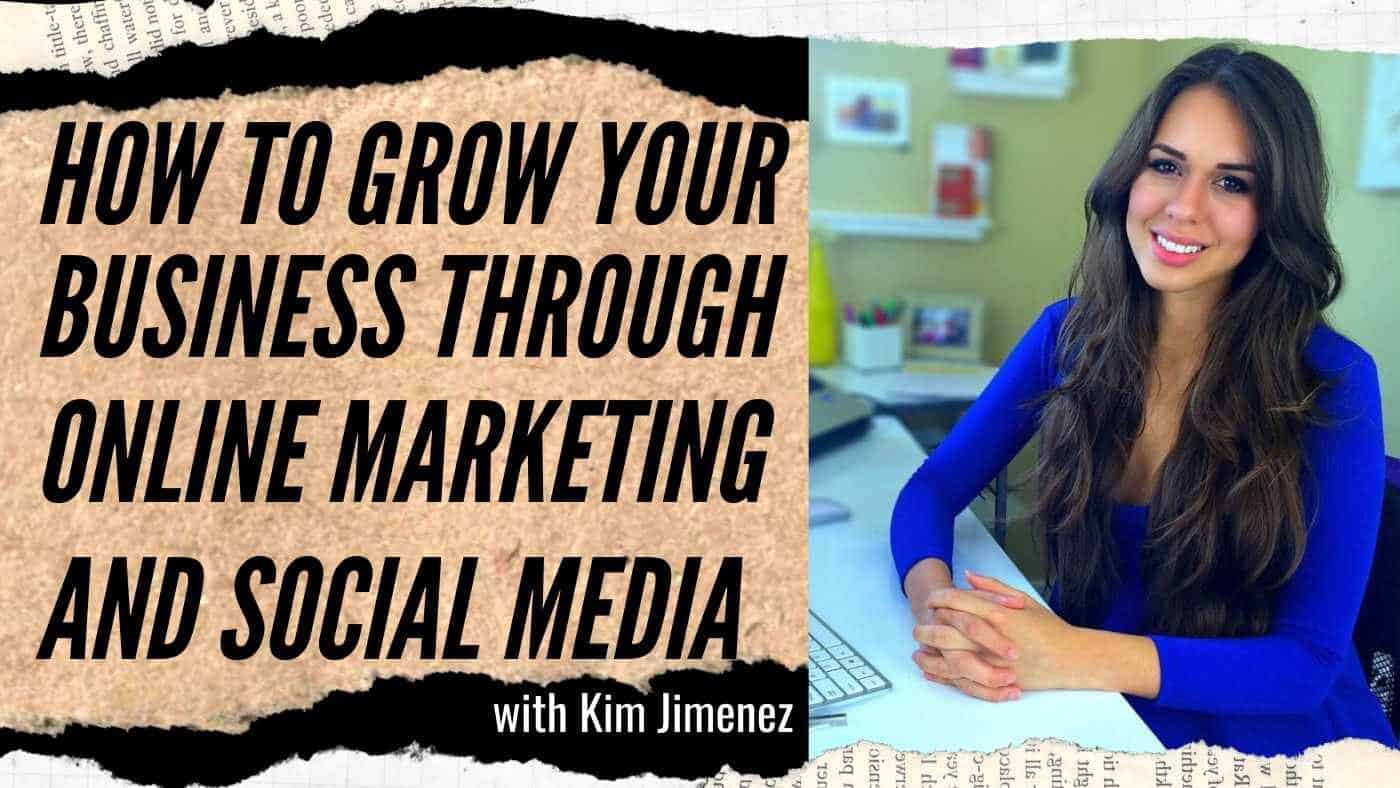
Our Guest Today: Kim Jimenez
Please welcome Kim Jimenez (@kimannjimenez) to the Feisworld Podcast.
This is a two-part conversation (“course” may be a better description) for Online Marketing, Social Media and Passive Income.
This was an incredible learning opportunity for me and for anyone who is interested in growing their business (of any kind). Kim piqued my interest so much that I had to extend the duration of the interview twice.
Who is Kim Jimenez? She is “a social media consultant with a ton of energy and a crazy passion for helping small businesses nurture relationships, gain more leads and attain real results with social media marketing.”
Born and raised a small-town islander (in Puerto Rico), Kim has an overwhelming passion for social media marketing. She LOVES what she does.
Her first business? It was a small startup for moving and relocation. One summer, she turned a simple Facebook ad to thousands of dollars worth of business.
Her business and life today? After the origin stories, first business, Kim and I dove into a nitty gritty of her business. It gets nerdy in Part 2. Kim peaked my interested by sharing exactly how she built her freedom business from generating more than 10,000 emails on her mailing list, to creating these “lead magnets” (i.e. free giveaways, courses, webinars, ebooks). She didn’t short of building an audience but (making sure) to “nurture” them through new learnings, courses, updates that will transform their businesses and their lives.
Media Links
Learn more about Kim by visiting her website, Facebook and Twitter.
Show Notes (Part 1)
- [10:00] Where did you grow up? Can you share a bit more about yourself?
- [12:30] What did you do after graduating?
- [18:00] Kim talking about their first business success
- [21:00] Can you share with us what kind of clients you had with in your ‘moving’ business? How many of them generated that revenue?
- [23:00] It took roughly about 10-12 months for your most recent business to take off, could you tell us about that process?
- [33:00] What is the concept behind the Business Lounge?
Show Notes (Part 2)
- [09:00] How did your audience change over the past three years? For example, the number of clients you have, and the type of clients as well.
- [13:00] How was your approach to attract the right people?
- [16:00] Kim and Fei contrasting their businesses
- [23:00] What are the four lead magnets you are currently using, and how is people organically finding you?
- [27:00] What are some of the intuitive vs counterintuitive learnings you had through this process?
- [33:00] How many people integrate the core of the Business Lounge?
- [37:00] Closing reflections
Favorite Quotes (Part 1)
- [11:30] My lively personality has everything to do with my roots. Puerto Ricans celebrate EVERYTHING.
- [36:00] What is my path? How do I figure that out? I think that is completely unique to every single business. You have to figure out your own, [and adapt] your own phases.
- [39:00] Am I ready? Is this the right time? Do I have the audience that I need to make this transition? Is this something that I’m passionate about and that I want to do?.
- [40:00] I think you have to get really honest with yourself, and think about: what do I want to accomplish, long term? And, Am I pursuing the work that I want to ultimately pursue?
- [42:00] No matter where you are, in your own business, laying down a path is a great idea, but also being flexible about it. Knowing that, life is going to happen, there are things that you can’t control.
Favorite Quotes (Part 2)
- [11:30] Instead of focusing on the numbers, my biggest advice would be: be intentional, but be intentional more importantly attracting the right people.
- [15:00] Play with it, and experiment and test it.That was our strategy, it was asking people, creating content and promoting that lead magnet within that content.
- [18:00] It’s about being intentional, solving problems, being helpful and being strategic about leveraging that content to build your own prospect list.
- [22:00] People are overwhelmed. That’s what I hear most often! So if you could create a solution to that problem […], it just makes life so much easier…
- [28:00] we have to learn how to think about our businesses from a fundamental, foundational perspective. First: do you have a product or service that is solving a real and tangible problem for your audience, for your ideal customer. Do you have that solution? And second: can you communicate that value, of your program, product or service, in a way that resonates with them?
Transcript
Part 1
Transcript
Fei Wu: Welcome to the Phase World Podcast, engaging conversations that cross the boundaries between business, art and the digital world. What is my path? How do I figure that out? And I think that's completely unique to every single business. You have to figure out your own path, your own phases. Am I. Is this the right time? Do I have the audience that I need in order to make this transition? Is this something that I'm passionate about and that I wanna do? I think you have to get really honest with yourself no matter where you are, kind of like in your business. Laying out an overall journey and an overall path is definitely a great idea, but also being flexible about it and knowing that. Going to happen. Okay. And there's things that you can't control is definitely, uh, something to keep in mind. Hi everybody, this is your host, Faye W and today I am inviting a very different kind of guest to talk about something we haven. Covered in the past, at least to this level of details on phase world that is online marketing and passive income. Unfortunately, I can't use smart passive income or SPI because that is Palin's signature move, though inevitably his name comes up quite a bit in this episode. Why phase world has been an experiment of mind for over two years now, unlike most other podcasts that are focused on niche or unique topic phase, world's theme is focused on the person or the people I'm interviewing. We believe that there's no set format, step by step instruction to guarantee. Therefore, we decided to interview interesting people from all walks of life. We're all in transitions, whether you admit it or you believed it or not, precisely why. I think it's important to not only talking to people in particular profession exclusively, or seeking out type A folks or people who are only successful. There is a pretty big variety on phase world today. If you visit phase world.com, midway down the page, you'll notice a choose your own adventure section where you can select the category of conversations you like. For example, agency and digital media, art and design, career advice, or you and Marshall Arts, music, travel, performing arts, social services, and te. As part of my new area of growth, I have personally been exploring the area of online marketing, specifically creating online courses. Just about a month ago in, uh, the timeframe, I guess would be October and November, 2016, I created a series of live video. I called Freelance Live on my Facebook channel, which is facebook.com/face World, and it was a wonderful exploration looking into my experience as a freelancer since the beginning of the. And also my current endeavor, which is to compile my knowledge working in digital production for the past 10 years to a series of courses. Turns out this project is much bigger and more sophisticated than I ever thought before. After following a few online Gus who sell courses in the thousand dollars range, and frankly, too much blabbing. A lovely listener, face World named Katie Clark, introduced me to a young woman named Kim. Jim. Kim and I connected right away and scheduled this very interview you're about to hear in two parts. I had taken so much of Kim's time over one and a half hours, largely because she was so fantastic and was willing to be an open book. It was so refreshing to learn from her. Firsthand on how she created a successful online business for the past two years. The origin story, or rather to say that pivotal moment for her was helping her, then boyfriends moving business, running a simple Facebook ad, turning to thousands of dollars worth of business. Hmm. Interesting. So who is Kim? Jim? She is a social media consultant with a ton of energy and a crazy passion for helping small businesses nurture relationships, gain more leads, and attain real results with social media marketing. She calls herself a fun small town islander from Puerto Rico to be exact, with a crazy overwhelming passion for social media marketing, who absolutely loves what she does. The first half of our conversation focuses on Kim's origin story. How did it all begin her childhood, then her first business venture and how she turned a simple Facebook ads $2,000 business. The second half of our interview gets. Nerdy, but you will learn exactly how Kim built her business, including generate more than 10,000 emails on her mailing list, which is in our world called lead Generation, and how she created those lead magnets, meaning free giveaways, courses, webinars, or eBooks, and how she continues to nurture her network, getting the customers who are best suited for her brand and her offering. The magic of this conversation is Kim's honesty and her spirit of not giving up easily. Path. Lynn from SPI calls it Hard work is magic When you hear other all online entrepreneurs creating something and have a day and sold for million dollars or watching some guy in the video on Facebook standing next to a Lamborghini and asking you if you want to know this secret. This isn't what Kim is offering to our conversation, and certainly isn't what she's teaching from launching several successful online courses after numerous tries and failures. Kim's new revenue driver. Oh, so the most sophisticated course she had offered yet is called the Business Lounge. From showing you how to run a smart Facebook ad, to creating a content calendar to a long line public and private forum to get you started and an opportunity for people to help one another, Kim leaves it all on the table for us. This conversation to me is priceless. Hope you enjoy this and please share with others. Subscribe to Phase World Podcast and an honest review on iTunes is incredibly helpful to spread the word of these song and unsung heroes. Our listeners tell us that these are some of the best stories they have never heard before. Without further ado, Please welcome Kim Jimenez to the Phase World Podcast.
Kim Jimenez: Thank you for inviting me. I seriously am very, very honored to be here.
Fei Wu: I'm, uh, honored to have you, Kim, because you have really established a, a brand and, um, as a creator, you know, as a business woman, I'm sure you know, just how important it is to get feedback from. People you enjoy, you know, who really benefited from your product, from your services on such a deepened level? You know, lately I've been so funny. I really like the style. Just having, you know, for us women having these like really real conversations about our struggles and what's truly important to us and why we do what we do. Essentially, I downloaded this book, uh, from Cal Newport called Deep Work. And, uh, he is the one who actually wrote the previous book. It was such a hit called So Good. They Can't Ignore You. And I just feel like what you are describing and really very much aligned with the way that you do your work, uh, you make it seem so simple. And I love, it's very lighthearted. It's so simple out there. And I don't mean to throw in, uh, some other names, but one of the reasons one of my listeners connected with me, I'm having to reveal her name. She's on your page as well. She's everywhere. So, uh, she's Katie Clark and Oh,
Kim Jimenez: she's amazing. I
Fei Wu: love Katie. I know. She loves your work and she was so enthusiastic to share your work with me and I got hooked right away because, um, we were throwing a few names around and we noticed exactly to your point, as someone saying, you know, you hate your night of five, you can accomplish so much more your life. Me, I mean, I agree with a lot of that messages partly. Of why I started, uh, phase world. But you know, at the same time you have this approach of saying, you know, it's, you're not saying anything, but I think just by pure presence, um, I think it's a good way for us to kind of, uh, segue into your work really, and your, your website and your social media strategist. And I love, uh, your business lounge, um, which is, let's see, make sure you know, the business lounge for online creator. You're making these modules of videos and even a video about how to use this forum and who's involved and just make it seem so accessible and not at all intimidating. So before we get right into that, I, I'm so curious that you're, you're young and, uh, you're lovely, and, uh, where did you grow up? Tell me a little bit more about yourself. That hasn't. You know, really come through yet on the website ?
Kim Jimenez: Sure, sure. So thank you, first of all for asking such a good question. I feel like this is one of the things that most people don't know about me, which is kind of cool. So, you know, I'm kind of your average Hispanic Islander. I was born and raised in the beautiful island of Puerto. and I'm 100% Puerto Rican. You know, my parents are Puerto Rican and, um, growing up in Puerto Rico was truly the most amazing blessing. You know, me and my brother, we got to go to the beach on a regular basis and we had the amazing rainforest and were able to grow, you know, coconuts and mangoes and lemons and pineapples right on our backyard. Oh, yes. So, Yes. It was amazing. It's one of the things I missed so much, you know? Now I go to the, I go to the, to the actual store and that I do my grocery shopping and I'm like, really? Mangoes are $2.
Fei Wu: Where are you right now? Where do you reside?
Kim Jimenez: Right now I live in Atlanta. Oh, got it. Georgia. Yeah, so I moved to the states uh, in 2010. So late 2010. It was the fall, uh, when I was 21 and I came here to go to school and finish my degree in dietetics. But yeah, I grew up in Puerto Rico and I think a lot of the aspects that attribute to kind of like my creativity and being able. Have more of like a bubbly and lively personality, has everything to do with my roots, you know, as a culture, Puerto Ricans, where we celebrate everything, right? So like everything, there's like these insane amounts of holidays and days that people take off. So yeah, I think that's part that kind of comes through in, in my work and just being more of like the bubbly kind of personality that, that I sometimes am. But yeah, that's, that's my background. That's
Fei Wu: where I grew. Mm. No, I think it, so it makes so much sense because you're, you're, uh, you know how bubbly you are, how positive you are, uh, comes through everything you do, the way that you constructed your website, love, sort of the light pink touch. Mm-hmm. . Um, you know, I was just, uh, I think I was just talking to someone recently about, you know, letting your true self come through and just be proud of it. And well not be overly masculine, you know, shouting out every, uh, tagline. But you know, like the way your language and I've been there. I get it. I've done that. Let me help you through, uh, what may be intimidating. Yeah, yeah. So I love that. I love that message. And so you've stayed since 2010 and after your degree, I don't think it has too much to do with what you're doing now. So what was that, ? So did you have a full-time job and what was that transition after graduation?
Kim Jimenez: Yeah, so I actually never completed my degree, so I have to, big disclaimer. I dropped out of college and I actually dropped outta college My. Senior year. So I was, uh, doing a five year degree. I actually have, um, less than like 15 hours to complete it. So I'm, it's one of the goals that I need to finish. I really need to finish my degree, but I was going to school for nutrition and dietetics and that was my passion since I've, honestly, since I've been like 14 years old. I loved nutrition, I loved learning about the body and, and health. Um, and so I came to school here after just crazy story, my parents. Very much encouraging me to move out to, you know, the states and actually pursue a career here. So I did, and I, you know, went through school my senior year in college. I was so overwhelmed with school and was just really honestly depressed. I was very depressed. I missed my friends back home. It was a huge culture shock for me to move to the states, even though I, I knew, you know, to speak the language. And I had visited here. I had my aunt was. But it was really, I was in a really, uh, kind of like dark place and I met my now husband Chris, and he is, uh, super entrepreneurial. I mean, the kind of person who's just like born an entrepreneur, right? And I never, ever, ever thought that I would start my own business. Like that wasn't even something that I considered as a possibility because I'm really shy and really introverted. And so my first big immersion into entrepreneurship came at really interesting time. So I was going to school to be a dietician, and when you're in dietetics, you really, you know, Have two career paths. You either become a clinical dietician and you work, you know, at some kind of hospital or facility, uh, helping clinical patients, right? Or you open up your own practice and you kind of become more of like the entrepreneur. So I was taking this course, uh, in school that was literally called the Entrepreneurial Nutritionist. And uh, it was really interesting and I thought it was like so cool. I was like, wow, I don't have to work at the hospital. You know, I don't have to have a boss. What would that look like? And at the same time, I was just dating my now husband and he was working in corporate America. About four weeks into our relationship, he decided to quit his job and, uh, pursue his side business, which was a moving and relocation service for students. So he'd started this gig, you know, back in college to kind of pay his way through school with his brother on during the summers, just moving his, his dorm, you know, friends. From one dorm to the other or like moving their furniture and installing furniture for companies, et cetera. . And so he decided to start that venture and I was, uh, not really spending a lot of time with him, right? So we were like dating long distance. It wasn't very long distance. We lived about two and a half hours away. And so on the weekends I would go up to see him or he would come down and he was. Always working right? He was like in those like startup stages where he is hustling and working really hard and I had to make a decision. I was like, okay, I'm either gonna get involved in this whole entrepreneurial thing with him, or we're not going to last very long. So I started learning a lot about marketing and a lot about business. I took a couple of business courses and. Fell in love with it, like completely fell in love with business and entrepreneurship and marketing. And I started, uh, helping him to, to market his business. And long story short, you know, we struggled or he struggled a lot with his business at the beginning stages where, you know, he wasn't taking a salary and we're just trying to get the word out there. And we tried all kinds of crazy things that didn't work. And finally, um, I started learning more. Social media, marketing and Facebook specifically. So one, like one day we were talking and I said, you know what? I really think we need to focus on this Facebook thing. And we started building his page with like inviting all of our friends and family, starting working with sororities and fraternities. And long story short, we invested about $400 in Facebook advertising. That was like all the money in the world we had, right? , we were literally as like broke a college per like college kid, me and him just starting a business. It was like all the money in the world we had. We literally like put it together, credit cards, part of like loan reimbursements, student loan reimbursement, and over a period of like four months, we spent a hundred dollars a month in Facebook ads and doing a lot of like organic stuff as well. And at the end of the summer, which was his busy season, cuz students are moving in and out right of, of their dorms at the beginning of the summer and then moving back in at at the end. We really. Note of every single customer and how they found us. And at the end we reviewed it and we found that $23,000 of our earnings came directly from Facebook targeting. Yeah,
Fei Wu: one minute. $23,000 over a period of how long?
Kim Jimenez: Just or so, so four months. Wow. It was. Incredible. Like we were just, I couldn't, literally couldn't believe it. We went back and like did the math 17 times. I was like, this is, this can't be real. It was crazy. And back then, Faye, you know, the ads weren't even in the newsfeed. they were just in the right hand column, but we were so, uh, we were so local, like we were so locally based that was very simple to find the right target audience, right? We just targeted like sororities and fraternities and got the word out there, and I don't think that, You know, realistically you can replicate similar results today. Mm-hmm. just because of the competition. Oh my God. But back then it was like this light bulb moment, right. Where I was like, this is real and we have to pursue this. This is incredible. And I just fell in love with social media in general and decided, you know, I want to get an internship doing some kind of marketing. I think that it can help me, you know, in my future career. And I ended up, um, getting an internship, a paid internship as a social media director for a local advertising and marketing firm. So I got my start there and I started really working with a lot of local businesses and just trying out stuff and I decided, you know what? I'm gonna take a lighter load this this quarter, cuz we went to school in quarters and I'm just gonna focus in on this social media thing cuz I'm so passionate about it. Like I felt so alive, it was just. This one thing where, um, I was in constant conflict cuz I was about to finish my career, but I had, I felt like I found my true passion in life and I was like, what? How is this possible? You know? For as long as I can remember, I've wanted to be a dietician and now this thing comes along that makes no sense, that could go away at any point in time. And I'm absolutely, you know, head over heels, uh, in love with it. And so I talked to my parents and they said, you know, Just explore the passion that you have for this. Uh, we see how happy you are and how fulfilled you are. Just explore it and see where it goes. I, sorry,
Fei Wu: I accumulated a few questions. I had no idea. We're gonna get into like, so many different interesting stories, like many moments. Uh, some are the really magnifying moments. I have a quick question about that $400 Facebook ad, if you don't mind, Totally. Um, first of all, I would love to hire you to do that and, uh, , as you said. There's a lot of competition out there, but $23,000 for a moving relocation service is really a lot. How many clients or customers generated that amount? Do you know where, like what is the average cost of a customer?
Kim Jimenez: Sure. So the average move for us was about 300 to $500. So we had a really high amount of customers and clients. I don't know the exact number. At the end of the summer, we had done, I mean, at least. 1500 moves. It was a lot. So we, uh, hired, we had an entire team and an entire crew, right? We didn't do the, the moves ourselves. We hired, uh, you know, students and friends and cousins, anyone who would, who would be willing to kind of, uh, take on. And, and we actually turned down a lot of jobs. I think there was a lot of word of mouth involved as well. But when we asked our customers and clients, where did you hear from us initial. All of them said, not all of them, but most of them said, oh, we found you on Facebook. You know, we found your page, or we saw the ad. Or um, you know, one of our friends referred us to your Facebook page, cuz we didn't even have a website at that point in time. So that was really the only way. Either you found us online or you call.
Fei Wu: Yeah, I mean, this is incredible. I just did a very quick math here. You know, it's anywhere around, you know, four to $10 on average, you're able to generate three, about 300 to $500 in revenue. That's like completely outta proportion. I mean, this is amazing. Wow. Well, thanks for sharing this. I mean, I could easily start asking about a business model there, but in this case, I mean, I, I wanna make sure that this episode is more focused on, on you, and it's very clear why you picked social media and. And I think, you know, based on what I've heard from some of the other guests, whether it's social media or something else, but people do fall love in, you know, some most unexpected moments and places, and they're able to kind of transform that experience into something, you know, in your case, more permanent. So from, I don't know what, which summer, was it 2012, 2013 or
Kim Jimenez: that was 2012. That was summer of 2000 and. All
Fei Wu: right, so you've been doing this, uh, your business here just about three years. So that to a quick math there is telling me that it took roughly about 12 months for your business to kind of take off and tell me about that. Process of like building a website, getting your first few clients, what was that like?
Kim Jimenez: Sure, sure. So, you know, I was really blessed because it kind of just happened organically. You know, I was telling you about the internship that I got, and so first of all, I was. Not confident that I could replicate results as, as amazing as we got, you know, that first summer. And, uh, to be super transparent, you know, it's, you have to have like the right timing and you have to be in the right business and at the right place and time and just everything kind of came together for us. It wasn't just like, oh, you know, we're gonna have this Facebook ad and it's just gonna be. Magical. We had no idea this would happen, but we had a really good product and we had very, very little competition at that point in time. And it just, we are blessed, honestly, it's just the only way I can explain it because there's no way that I can guarantee, you know, a 400, 600% return on every single Facebook a I've seen it before. Definitely happened and it, it's definitely real, but there's a lot of other variables in play. So I wanted to make sure that, uh, I knew how to do it because a lot of our family and friends, uh, and our entrepreneurial friends who had their own businesses were asking, how are you guys doing this? You know, how, how is it working? Can you help me? And, um, I really. Got my start doing this internship where I worked with, you know, eight or nine different business owners implementing marketing campaigns and marketing strategies specifically with inbound marketing, and had really amazing success with that. And then it just kind of grew organically. I decided that I wanted to pitch my first client and it was, um, The local, uh, cardiologist. So I started just taking on anyone who I thought, you know, would, would kind of be helpful. And I ended up working that first couple of months I worked with about 10 small businesses, um, trying to just. You know, get a better idea of, of how that would work. But I actually got an opportunity to work as, uh, the social media coordinator for a large corporation in town. So I went through the summer, right? It's 2013, early 2013, about January I get the internship, and then March of 2013, I get a Facebook message, a couple of Facebook messages from. Company, uh, basically saying, Hey, you know, we wanna build our social media department from the ground up, and we think you're gonna be a great candidate at this point in time, I had already started blogging about social media. I'd kind of documenting what we had been learning through our own business, but it wasn't anything major, right? Like I wasn't being intentional about getting clients. I didn't even think that this was gonna be a real thing for me or that it was gonna be a business. It was just me kind of pursuing my passion for social media. And, uh, they basically said, Hey, we've looked at your blog. We really like what you're doing. We see that you have experience in social media marketing, and I think, you know, we think that you would be the, the perfect fit. And so they offered me the job, uh, basically their student housing, uh, development and management company with over 14 different properties across, uh, the scc. And my job was to build their mar their social media marketing department from the ground up. And so, you know, I was tasked with, uh, creating all of their. And hiring, uh, their entire virtual team and, uh, managing over 6 63 social media accounts at the same time, which was crazy cuz I did not feel qualified at that time. But, um, you know, I didn't have any like, formal education and like marketing or communication, but it worked out amazingly well. And, um, this company had a multi seven figure marketing budget, so we did some incredible things, uh, you know, Their campaigns at a really high level that I had never experienced before. Right. Cause I was working with small business owners who had very limited budgets like, like we did when we first started with Chris's company. So, uh, working with this corporation full time, I still kept. Some of my clients, I kept about three of my clients on the side that just came about through my website, through my videos, um, kind of contacted me some more local others were, you know, Canada and Puerto Rico and Mexico. But I was working about 60 hours a week, Faye, and burning the cannel at both ends, coming home, uh, and working on my clients and on my own website till two in the morning, you know, waking up the next day, uh, and doing it again. And I burnt out so quickly, so
Fei Wu: fast. You know, I can totally relate to that. I mean, I, for me to kind of start a two, two years ago in my podcast and a full-time job also working in digital agencies, I was standing in front of the computer, two, three in the morning. Yeah, please continue. I completely relate to
Kim Jimenez: that . Well, that's, it's good to hear. It's awesome to hear, uh, that kind, you understand what it's like. So, you know, I took the job, I put school on hold and I was working 60 hours a week and I was like totally exhausted. It really was more like 80 hours a week because I was working with my clients and kind of doing my own thing, and I remember being so exhausted. The perfect dream job, like I felt like the luckiest person in the world, right? I was working very flexible, kind of, uh, company culture. An amazing company, really great people, people that understood the work that I was doing that gave me, you know, the space to be innovative and creative at 22 years old, almost 23, where they should have never trusted me with that big of a marketing budget and that much of, of kind of you. A department to kind of run. But it was amazing and I, I loved the people that I was working with, but I felt dead inside. It was so stressful to wake up in the morning and go to work and come back home and do the work that I thought that I was meant to do in the world. And I remember talking to, to Chris and him telling me, you know what? You've wanted to start a. Before, like you've, you've been thinking about it, but I really think that this is the right time. And I was like, what? Are you crazy? Like I just started this and I haven't even finished my degree and now you want me to start a business? I don't know. The first thing about starting a business, you know, I'm not entrepreneurial. My parents are college professors. I grew up around academia my whole life and so. I was just really torn. And I remember talking, uh, sitting down for lunch with my, uh, father-in-law and asking him, he had gone through similar situations in, in his career where he had, you know, switched companies a couple of times, and I was asking him, you know, do you think this is the right decision? I feel so guilty and ungrateful because so many of my friends are unemployed, right? And they have degrees. And here I am with my dream job. I'm just not alive. Like I don't feel happy. And, um, he, he told me this one kind of phrase that has always stuck with me. He basically said, Kim, you should never feel guilty about moving from a good place in your life to a better place. And I felt like in that moment, he gave me permiss. To really just pursue my passion and really make the decisions that I needed to make in order to build the life that I wanted, not just the business that I wanted, but also the life that I wanted. And, um, yeah, that, that week I turned in my resignation and a couple hours later I got a, a phone call from the president of the company saying, let's talk about this in the morning. I think that you should kind of sleep on it and let's talk about it in the morning. And I. And he was basically telling me like, is it the money? You know, is it the hours? What's going on? And I was just like, look, I just love working here. I love working with you guys, but I feel like my calling is to work with small business owners. I love. Keeping my clients on the side. I love doing that. And I just don't think that this is what I'm supposed to do. And he was like, okay, I completely understand that. But how about you, uh, actually, you know, launch your business and then we become your first corporate client. That's awesome. And yeah, and I was like, what? I could not believe it. And uh, yeah, so I did that for a year and a half and kind of build my audience, you know, in the meantime and, uh, build my website and started posting a lot of YouTube videos and just via content marketing was. How to answer your question. Very long story. Um, to answer your question, that's how I got my, my first couple of clients. Oh, that's
Fei Wu: incredible. I love the journey in such details because, you know, I, I feel like your website is very clean and you have a lot of great content, and at the same time, I really haven't read, uh, yet, like all the stories you were able to share with me and I think. I don't think I would be surprised that many of your followers, you know, thousands and thousands of them on Facebook and Twitter and YouTube have really experienced, uh, your life in such a way. Because I look forward to this conversation because I feel like so many people out there in your positions, uh, around your age, maybe a little bit older, are trying exclusively to teach people how to be a coach. And that's it in a way. It bothers me a bit, uh, in terms of just how single dimensional that is, but also the way they made it sound like a step by step instruction, like 1, 2, 3, and you're there and you know, and then you're talking about eight figure, and I just laugh. It's like seven figures, no longer a viable . What is that goal? People are seeking for, and it's always eight figure, it's always, um, some guy driving a Lamborghini. But there's something really intimate about the way you share your journey. And so people know that, look, you are young, and if people don't start, uh, when there were 22, 23, it's gonna take them just as long, two, three years to really tip their toes. So I, I love that process. With that said, I, I'm hearing, you know, that was a story from three years ago. So since you're open book, I'm really interested in learning more about your business model. Now, what is, uh, basically the breakdown of how you, uh, spend your time? You know, how many clients are agency, corporate clients? Do you have, do you work with people one on one, like individual clients? And you also have a business lounge, which is the ultimate, I mean, this is a smart passive income, like a revenue generator. So tell me a bit more about that.
Kim Jimenez: Sure, sure. So, you know, when I started my business, I had a really clear, for whatever reason, I'm not quite sure why I, I just did a lot of research on different business models and what would be, you know, the ideal kind of journey or the evolution of my business. And I kinda broke it down into three phases, right? So, The first phase I was going to learn the ropes and do as much of the work as I possibly could, right? I wanted to be in the trenches. I wanted to really work with clients one-on-one and manage their social media, uh, accounts, manage their marketing, um, and then get really, really into, you know, the details of specifics. I wanted to be able to calculate roi. Send in the reports, you know, and manage the team. And that's what I did for the first year, year and a half in, in the business. And so the second phase was pretty much doing consulting and then transitioning from, you know, kind of doing the actual content creation, uh, to more of the oversight. And, um, consulting really just came into play. Just as a very natural transition, people were asking, uh, my customers, my clients were asking, uh, for more of, of a path where I could go in and analyze their overall marketing messages and kind of bridge the gap between online marketing, the online marketing that they were doing, and also the offline marketing that they were doing. You know, their. Traditional businesses who are very much in line with kind of old school marketing tactics. So, um, I did a lot of consulting in that second phase, and I kept a couple of management clients and eventually phased most of them out and started doing. Mostly all consulting and I was, uh, working with online business owners, you know, uh, the roofing company down the street. I was working with a hospital, you know, a thousand miles away and all kinds of different models. From that point on, uh, last year, you know, the third kind of phase was moving into teaching and, uh, doing that through information products, right. You know, courses and memberships and programs like that. So right now I'm kind of like, in that last transition, I still have about three core consulting clients. One of. Corporate client and two of them are just, there's a realtor and uh, an author and I work with them one on one. They're very exclusive clients that I, uh, have worked with for, you know, over a year and I really, really enjoy working with them. But mostly I'm focused on the business lounge and opening up that membership as well as the rest of, of my kind of one off courses.
Fei Wu: Nice. I mean, this is really amazing and I love how you, uh, broke it down into phases. And by the way, that's the way you articulated that. I am also in transition. I am not in step phase three right now. And uh, it's interesting. I guess I'm still in phase one. That's so fascinating the way you broke it down because this is the information that's often, that's often missing. Perhaps this could be your, one of your new mini courses. You know, and there's something really honest and transparent about podcasting. If you, especially if the guest is willing to, and you just get so much more out of it. And thank you for kind of thinking it through clearly. You definitely spent some time articulating and kind of in your own mind and set down and say, what exactly did I do in the past three years? And you know, each one of the phases may. A year may take a little less, some, maybe a little longer, but it's very helpful to me. And I'm sure at this point my listener's like, yes, somebody's breaking it down piece by piece, you
Kim Jimenez: know? Absolutely. I'm glad that, that you pointed that out and I'm glad that it was helpful. But also, keep in mind, um, first of all, this is one of the questions that I get asked. Really frequently, right? From online business owners, like, what is my path? How do I figure that out? And I think that's completely unique to every single business, right? You have to figure out your own path, your own phases, and your phases might be longer or much shorter than mine, right? It doesn't mean that you have to transition every year, kind of like, hi, have. It's just been a natural transition for me where I've gauged am I. You know, is this the right time? Uh, am I, do I have the audience that I need in order to make this transition? Is this something that I'm passionate about and that I wanna do? You know, I, I see so many businesses, uh, that are really successful in phase one, and they wanna stay in phase one, right? They want to be the technician. They want to actually be in the trenches and provide the service, and, uh, They're happy in that phase and they thrive and their customers and clients love it, right? And that's totally okay. Like I'm there cheering you on. I think you have to get really honest with yourself and think about what do I wanna accomplish long term? And, um, am I pursuing the work that I want to ultimately pursue? And am I ready, you know, to take that next step, uh, emotionally, mentally, and, and also financially. And so I think. No matter where you are, kind of like in your business, laying out an overall journey and an overall path is definitely a great idea, but also being flexible about it and knowing that life is going to happen, okay, and there's things that you can't control is definitely, uh, something to keep in mind.
Fei Wu: You are just a, there's so much maturity in the way that not only you're talking about business, but also life and, uh, you know, I notice so much so in the past couple of years that I am purposely seeking out people like yourself across different age ranges, and you get to learn so much more because once you. Peel yourself away from the traditional corporate America, and you're actively thinking about these things and you know, jumping through hurdles, working through your own struggles. There is that level of, like you said, there's like the level of zen, you know, it's a, you're kind of in this like, not. You're never constantly balanced, but you know, kinda how to balance back and just be more resilient. I love some of the language is so funny like that you're using like, you know, my courses are four, you know, creators, coaches, entrepreneurs, podcasters, but my courses are not for, I love negative Nancy's complainers, Get Get Rich quickie. I love that because, Truly that, just very mindful in terms of how you approach your business. Hey, it's Faye. I am back for a few words at the end of the show. I hope you enjoy what you heard. You can visit us online@faceworld.com, where social channels such as Facebook, Twitter, and Instagram, also under Face World. To keep things simple, I personally review and respond to all the messages. Love to hear. Thank you and lots of hugs. See you next week.
Part 2
Transcript (Part 2)
Fei Wu: Welcome to the Phase World Podcast, engaging conversations that cross the boundaries between business, art and the digital world. Be intentional about it, but be intentional. More importantly, about attracting the right people. Play with it and test it and experiment. That's really just our strategy was asking people, creating. and promoting that people are overwhelmed. That's literally the thing that I hear most often. And so if you can create a solution to that problem where they're able to breathe a little bit better and sleep a little bit better at night, cuz they know that they're not gonna forget to tweet, you know, after the morning meeting or, uh, they're not gonna forget, uh, to talk about their promotion, uh, over the weekend because all of it is planned out and scheduled in. It just makes life so much easier. I think that we have to learn how to think about our business from a foundational, fundamental perspective. Hi everybody. This is your host, Faye W, and today I am inviting a very different kind of guest to talk about something we haven't yet covered in the past, at least to this level of details on pH's World. That is online marketing and passive income. Unfortunately, I can't use smart passive income or SPI because that is Path Flynn's signature move, though inevitably his name comes up quite a bit in this episode. Why phase world has been an experiment of mind for over two years now, unlike most other podcasts that are focused on niche or unique topic phase, world's theme is focused on the person or the people I'm interviewing. We believe that there's no set format, step by step instruction to guarantee. Therefore, we decided to interview interesting people from all walks of life. We're all in transitions, whether you admit it or you believe it or not, precisely why. I think it's important to not only talking to people in particular profession exclusively, or seeking out type A folks or people who are only successful. There is a pretty big variety on phase world today. If you visit phase world.com, midway down the page, you'll notice a choose your own adventure section where you can select the category of conversations you like. For example, agency and digital media, art and design, career advice, or you and Marshall Arts, music, travel, performing arts, social services, and te. As part of my new area of growth, I have personally been exploring the area of online marketing, specifically creating online courses. Just about a month ago in, uh, the timeframe, I guess would be October and November, 2016, I created a series of live video. I called Freelance Live on my Facebook channel, which is facebook.com/face World, and it was a wonderful exploration looking into my experience as a freelancer since the beginning of the. And also my current endeavor, which is to compile my knowledge working in digital production for the past 10 years to a series of courses. Turns out this project is much bigger and more sophisticated than I ever thought before. After following a few online Gus who sell courses in the thousand dollars range, and frankly, too much blabbing. A lovely listener, face World named Katie Clark, introduced me to a young woman named Kim. Jim. Kim and I connected right away and scheduled this very interview you're about to hear in two parts. I had taken so much of Kim's time over one and a half hours, largely because she was so fantastic and was willing to be an open book. It was so refreshing to learn from her firsthand on how she created a successful online business for the past two years. The origin story, or rather to say that pivotal moment for her was helping her. Then boyfriends moving business running a simple Facebook ad turned into thousands of dollars worth of. Hmm, interesting. So who is Kim Jimenez? She's a social media consultant with a ton of energy and a crazy passion for helping small businesses nurture relationships, gain more leads, and attain real results with social media marketing. She calls herself a fun small town islander from Puerto Rico to be exact, with a crazy overwhelming passion for social media marketing, who absolutely loves what she does. The first half of our conversation focuses on Kim's origin story. How did it all begin her childhood, then her first business venture and how she turned a simple Facebook ads $2,000 business. The second half of our interview gets. Nerdy, but you will learn exactly how Kim built her business, including January more than 10,000 emails on her mailing list, which is in our world called Lead Generation, and how she created those lead magnets, meaning free giveaways, courses, webinars, or eBooks, and how she continues to nurture her network, getting the customers who are best suited for her brand and her offering. The magic of this conversation is Kim's honesty and her spirit of not giving up easily. Path. Lynn from SPI calls it Hard work is magic When you hear other all online entrepreneurs creating something and have a day and sold for million dollars or watching some guy in the video on Facebook standing next to a Lamborghini and asking you if you want to know this secret. This isn't what Kim is offering to our conversation, and certainly isn't what she's teaching from launching several successful online courses after numerous tries and failures. Kim's new revenue driver. Oh, so the most sophisticated course she had offered yet is called the Business Lounge. From showing you how to run a smart Facebook ad, to creating a content calendar to a long line public and private forum to get you started and an opportunity for people to help one another, Kim leaves it all on the table for us. This conversation to me is priceless. Hope you enjoy this and please share with others. Subscribe to Phase World Podcast and an honest review on iTunes is incredibly helpful to spread the word of these song and unsung heroes. Our listeners tell us that these are some of the best stories they have never heard before. Without further ado, Please welcome Kim Jimenez to the Phase World Podcast. Do you mind, you know, sharing with us, you know, the rough, roughly, what your audience looks like and how many of them are like engaging die hard? You're true. A thousand true. You know, how well, how did a number kind of change over the past three years before you realize you have an audience and now you can have an online product?
Kim Jimenez: Yeah, sure. That's a great question. I'm really glad you asked it. So, to be really transparent and honest, and this is something that I tell, uh, my, my members all the time, is that, you know, I've made. So many mistakes along the way. So many mistakes, but I mean, it's crazy. But when I first started, I really wasn't being as intentional about building an audience and building an email list and building a following as I should have. And I was actually on a Facebook Live. Uh, The week before last talking about this, but when you are, specifically, when you're kind of in the service industry where you're the solo, uh, you know, solo entrepreneur, and you are the one who's rendering the service or you're the one who's creating, uh, the product, it's really easy to get really, really bogged down by servicing other people, right? And so, For the first, uh, I would say two years, honestly, it hasn't been more than than about a year and in a couple months since I've taken my audience seriously. But for the first two years I was so completely, uh, you know, just involved in my clients' businesses and growing their businesses that I forgot to grow my own and I completely neglected, uh, my consistency. I was still putting out content, but not. Well, and as consistent, uh, as I should have been, um, I really wasn't nurturing my audience the way that I should have. I wasn't gathering as much feedback as, as I should have. And, um, that really set me back. I truly believe that, you know, because launching and switching business models is, is really hard. At least it was for me. Yeah. Kind of going from. The service provider to teaching and packaging your, your products and marketing them and, uh, making sure that they're top notch and updating them and then servicing your members. It's a lot. And so once I, um, decided that it was time to kind of launch my product, I had about. Only like a thousand people on my email list. And it just had been one of those things where you know you should be doing it, but you kind of do it but not wholeheartedly or you don't really follow through. . And so, you know, I really only had about a thousand people. I think I had, I had a good following on Facebook. I think I had about 3000 people on my Facebook page. And then less than a thousand on Twitter, less than a thousand on Instagram. I think all combined, I might have like 6,000 people, um, that were my fans and followers, and then about a thousand people on my email list. So, Once I switched over to product creation mode and I realized how important it really was, uh, to start taking it seriously, it just changed and I started being really intentional about my content. And so for, I think the first. I don't really have a specific timeframe, but I know that the past year we've grown kind of like the email list to about 13,000 people, which still isn't like the largest, you know, email list ever. No, you don't need to be Ann exactly's. So, you know, it's about, it's about the quality, honestly. So instead of focusing on the numbers per. My biggest advice to your listeners would be be intentional about it, but be intentional, more importantly about attracting the right people. Right? You just talked about kind of like the language on my sales page about, you know, who my products are for and who they're not for, and that's just something that I've learned, you know, through your trial and error of attracting the right people versus the wrong people. So you wanna be really intentional about attracting a quality. Audience, uh, you know, both to your social media pages, but more importantly to your email list because those are the people who are going to do business with you ultimately. Mm,
Fei Wu: I love that. And, uh, you know, going from, uh, if we're just focusing on one, because I think the others, even though the tactics may be a little bit different, but the, like you said, the intention is actually the same. Going from a thousand emails to 14,000, you know, 13, 14,000 is a pretty big jump. Especially if you believe that, you know, say majority of you know all the emails, that people are someone who are absolutely the right fit for your product. So quickly on this, you know, how did you go about attracting the right people? Was it a combination of giveaways on your site, social media, where maybe some ads in conjunction. What was that like?
Kim Jimenez: Sure. So, um, the first thing that we kind of set out to do, and I wish I could give you like, you know, step one, two, and three, but it, it's never as that pretty right? It's never that mm-hmm. logical and calculated as, as we'd like for it to, to sound like that. I was starting out, you know, with just a thousand people like you said, and um, yeah, for the first couple of months we ran ads and before we ran ads we actually went. Started looking through our blog post and the videos that I had created, what were the most popular themes, right? So what did people really want to learn about? I sent out surveys. I pulled my Facebook audience, I pulled my YouTube audience. Um, and I was really, really gung-ho about creating some kind of lead magnet, some kind of freebie that resonated with folks, and it ended up being just around content and creating content calendar. And that first lead magnet, you know, I created so many before that kind of were like hit and miss. You know, some of them were really good. Others were just like, uh, no one's really downloading them. But once we created that content calendar, lead magnet, I ran ads to it. And for the first time, I just noticed my conversion rate was incredibly high and the cost was really low. You know, we didn't spend that much money. I spent about $200 a. And was getting conversions for about 35 cents, and that was really, really low, which was really great, but I wasn't still sure, you know, are these the right people? And through time, just thinking of what are those core topics and what do people actually want to learn more about? And constantly being in conversation with my audience, with my existing customers, you know, with my email list, what do you guys want to learn more about? It just kind of happened organically where we were being really intentional about building a list. So every time we put out content, we thought of. Which lead magnet can we promote? You know, with this piece of content, what's really gonna get people results? What are they gonna be? What's gonna blow their minds, right? And how can we create it in a way that's simple and easy to consume? Because a lot of times when I talk to my online, uh, you know, business owners, they're thinking I have to create this amazing, you know, 10 part video series. It's gonna take me a whole month to produce and edit and put out into the world, and it's gonna be so valuable and everyone's going to sign. That's expect. And um, that's not always the case, right? So you have to go with things that are gonna be. Easy to consume. You have to know, first of all, your audience. You get to know them. You have to ask questions. You have to know what you know, kind of phase they're in. And those were the questions that we asked, you know, what are you trying to accomplish in your business? You know, what phase in your business are you in? What are those pain points and challenges? And, um, it wasn't the, you know, 90 minute. Free class that I put out that actually got the most amount of conversions. It was actually the very simple content calendar template. You know, something quick and easy that they could implement. Um, but by the same token, you also wanna think about, am I attracting the right audience with this lead magnet? You know, sometimes numbers again, are not the most important thing, so you have to always gauge. Maybe you're not gonna grow your email list, you know, by, I don't know. A hundred percent every month. Uh, but you're going to get the right prospects, right? You're gonna get the people who are actually gonna buy from you, and you have to just play with it and test it and experiment. Um, that's really just our strategy was asking people, creating content. And promoting that, that lead magnet within that content. Right now, uh, we've gotten to the point where we just have, uh, organic traffic and I rarely have to run advertising to grow my email list. So we get anywhere from, you know, 50 to a hundred organic leads every single day. Wow. Just free. But that's because I. Spent an entire year producing content and videos and being really intentional, um, about touching on topics that were pain points for my audience. And that's really what it's about. It's about being intentional, solving problems, being helpful, and then being strategic about using and leveraging that content to build your own, uh, prospect. I
Fei Wu: love this conversation in case you, you haven't noticed . Thank you. It's so refreshing and it's, I love how, just how right to the point you are. I'm currently in the process of building several lead magnets and then this, when you say content calendar, it just puts a permanent smile on my face because I worked in digital agencies for 10 years and. Left my job at the beginning of this year and they were all big agencies, big clients. And one of the things that I always did, and which I was as smart as you were, is I was the one as the producer and project manager, always did content calendars and creating, um, maybe mine that looks like. Somewhat overly complicated, sophisticated song. You know,
Kim Jimenez: it's the pro
Fei Wu: version, it's aver. That's funny. And, but it's like they really needed that. And I think some listeners may be a little bit foreign to this, but it's just so helpful for a brand, you know, for instance, such as Reebok, to have all these. New shoes being released, and then on a daily basis, then they, they still have to post, uh, all the events, the charities, just everything, all encompassing. And if you don't have a calendar to stay ahead of that, and you have to figure that out on a daily basis, not only it's so much work, it's, it's actually, you're never gonna target the right audience and you're. Always gonna be running behind. And then, you know, weeks, months go by, you take a step back, you realize what a hot mess. I mean, it just, the whole thing is illogical, you know?
Kim Jimenez: Yeah. You've, I feel like you've hit on the point. First of all, congrats on leaving your job and doing your own thing. That's a huge step. I'm so excited for you. That's awesome. Thank you. Yeah. And second of all, I feel like you described it so perfectly. Everything is a hot mess. That that's totally relatable. And I feel like one of your listeners, you know, they're online business owners, they, they understand the overwhelm right? At the core of most, uh, pain points and most challenges is, at least in my industry, it's just people are overwhelmed. That's literally the thing that I hear most often. And so if you can create a solution to that problem where they're able to breathe a little bit better and sleep a little bit better at night, cuz they know that they're not gonna forget to tweet, you know, after the morning meeting or, uh, they're not gonna forget, uh, to talk about their promotion, uh, over the weekend because all of it is planned out and scheduled in advance. It just makes life so much easier. I couldn't keep up with it, you know, and I do social media for a living. I could not live without my content calendar. I mean, I don't know what I would do, honestly.
Fei Wu: Just you have your own. That's so important. It's not about creating something out of thin air and just because it looks pretty or because it sounds amazing, but the fact that you are using it day in, day out to grow your business, there's nothing more convincing and more grounded than that, you know, as a lead uh, magnet. I love that. And. Ask a very, like you said, you're being so honest about this and the number of lead magnets that people ended up practicing and testing out such an iterative process, you know, before you just nail that one, how many lead magnets would you say you've created, and, uh, out of that, how many were successful and then you're putting ads and we're running, you know, against
Kim Jimenez: That's a great question. You know, Faye, I live. The 80 20 rule. And I feel like that's so true in most everything. You experiment with so many online business owners and in just business owners in general, they think that it's just this like one process, right? That you're going to, uh, purchase this course and this course is gonna teach you how to create a lead magnet, and then you're gonna be able to explode that lead magnet. You're gonna get a hundred thousand people on your email list, and life is gonna be great, and you're gonna become this millionaire. No. Mm-hmm. , it doesn't happen that way. I wish it was that easy. Uh, if it was, we'd all be rich, right? And retired, uh, somewhere in Fiji. But the truth is it takes a lot of work. So, you know, when I created my, my first, you know, quote unquote successful lead magnet, it took at least 10 tries. Before then, you know, I had about 10 lead magnets that I had already created on completely different topics, you know, from branding to, uh, social media swipe files. There were a lot of different lead magnets, uh, in the mix, and I still create a bunch of lead magnets that fail. You know, it, it's, you can't always do the research and think that you're gonna nail it right outta the gate, right? It's gonna take some time to evolve and, and adapt to it. But if you do the research and you gauge the response, you're easily gonna be able to fail quickly, right. And learn. And then move on and adapt and course correct. And so yeah, at least 10 lead magnets that did not work. That one worked. And now we have about four, four lead magnets that are core lead magnets that work really, really well and, and people, you know, just organically sign up for. But all in all, I probably have at least 25. I mean, there's so many of them that I've had to archive, you know, and kind of take away. I was like, this is not working. Mm-hmm. , um, major epic fail. Let's just take it down and replace it with something that's better and more enticing for people. And honestly, when you kind of hit the nail in the head, people are gonna tell you. That has been my experience where people email me and they're like, I can't believe you're giving away this thing for free. And most of the time it's something that literally took me, you know? 15, 20 minutes to create because I had already been using it in my business and it worked really well for us. So whether that the Trello board, you know, or an actual compilation of, uh, branding tools, it comes down to utility and just. Testing and experimenting. You have to become a serial tester and a serial experimenter. Absolutely.
Fei Wu: So what are the four lead magnets you have right now and how are people organically discovering them? Like through Google search, or what are some of the channels there?
Kim Jimenez: So the first one is our content calendar template. That one, uh, just is like, is the most popular one. It has been for a year and I thought it would die out, but it seems to be really, really popular. Then the second one is a post planner. It's a social media post planner. So you go in and you kind of organize your social media post. You can kind of think through, you know, what are the goals and what is it that we wanna promote this week, and how are we going to measure. And then the third one is a blog content bank. Uh, it's just literally a Trello board, um, that they get to download kind of copy off, off of my own board. So it's our team board and they, they copy it and they can just use it for their own account. And it's just a way to come up with up to 60 blog ideas in, in one setting just by organizing your content. Uh, that. And then the fourth one is a blogging class. And that one's like a, a recorded, it's not a webinar, it's, it's just like a video recording, but it really is a class. And so those are our four core lead magnets that are pretty popular. There's kind of a fifth one that's trending upwards right now, and it's just a, a design toolkit where, um, I put together a list of all the tools that we've used or explored around branding, um, specifically for social design and, and online. the majority of our traffic comes from social media, and part of it does come from organic SEO as well. So we've done, we do seo, you know, just basic SEO for our blogs, but really the majority of our traffic comes from Pinterest, Facebook, YouTube, and Twitter. Oh, wow. And so, you know, we, we take a look at those analytics a lot, but it's just grown organically, right? First, I didn't get anyone viewing my blog other than like my mom and my cousins. And then it just grew over time. So right now, Primarily people are finding it via the blog. So they come to, uh, you know, our blog via Pinterest, or they come to the blog via Facebook or YouTube, and then they read the content. The lead magnets are either popups on the blog or they're embedded opt-ins on the actual, so they're content upgrades, right? On the actual blog and, uh, yeah, they sign up. So if they're reading the content and then they sign up for it. So it's based on consumption.
Fei Wu: Wow. I mean, I, I feel like you let me into this candy store as a little kid, and I, I don't think I'm ever gonna leave and, uh, It's so sweet. I know you're No, you're, you're incredible. You're so kind to be able to share a lot of this, and to me, this one hour is so much more meaningful, honestly, than a lot of these courses are floating around. And this is not to, uh, discredit your course. And in fact, I find for $49 a month and with the option to try it out, and there's no obligation that people can sign up. And I, I would definitely make sure to include if I can find all the lead. To make sure I include those, uh, on my blog post and also your, uh, courses so people can access and try it out and see for themselves. And, you know, I guess I, I feel like I can talk to you forever and I, my last couple of questions I guess is people, you know, are coming to you with a lot of, uh, questions, how to run a, a successful online business. You had mentioned that some of the more counterintuitive learnings already, but if you were to kinda look at the landscape of coaches out there and the courses out there and uh, what are some of the counterintuitive learning that you had that really led you to the success today and really make you stand out?
Kim Jimenez: That's a great question. You know, I don't necessarily think. Maybe counterintuitive, but I do think it's core elements that maybe are not as shiny and as exciting for most entrepreneurs to hear. I think that we have to learn how to think about our business from a foundational, fundamental kind of perspective. I think one of the things that I've learned, uh, kind of. Making this mistake over and over again is that you really have to stop going for kind of like the shiny ninja strategies and hacks. And um, I know that might sound a little counterintuitive because I do teach the strategies that I've been able to implement, but at the core of business, When you really look at it, there's, I think, uh, Peter, Peter Drucker said something like this. He said, uh, there are only two things in business that'll make you money. It's innovation and marketing. Everything else is cost. and it's so true. I read this, you know, back when I was in college and in my business class, and I remember thinking, huh, how interesting, you know, innovation and marketing, and I really think that the foundational aspects of business really come down to two core components or two basic things. Do you have a product, a program, you know, or a service? That is actually solving a real and tangible problem or a pain point for your audience, for your ideal customer. Like, do you have that solution? And number two is, can you actually communicate, you know, kind of like that value proposition, uh, the value of your product or the value of your program, or the value of your service in a way that resonates with them and gets them to buy. Because I had this problem when I first started, you know, I wasn't really sure what, what was that pain point? What was that problem that I was solving and I wasn't really clear on how to communicate it effectively. You know, we can talk all day long about building email lists and, uh, having huge social media audiences at the end of the day, you can. All of that and not make any money at all, right? You're gonna have a hobby business, not a real business if you can't actually create a product that solves a problem, um, in a way that's effective, and more importantly, the second aspect. Can you communicate the value of that product in a way that resonates with your ideal client so much so that you entice them to purchase from you? You're not gonna have a successful business, right? So for a lot of us, So enamored and I did this, oh my gosh, I did this the first time I put out my first product, and it was an epic failure. We fall in love with our products and our programs and our services, right? We get into like the creative zone and we're such artists, right? Such, such, uh, innovators that we forget about the other part, which is communicating that specific product in a way that resonates with your audience, that hits on the pain points, that really communicates the challenges that you're gonna be. Solve. And those two components I think are really the foundation of any type of business. Um, because think about it, right? If you have this amazing product that you've put all of your heart into, and you've worked so hard to create in the world, but you can't get anyone to buy it. You don't have a business, right? You're gonna get frustrated and overwhelmed and you're gonna go out of business. And that's literally the two foundational aspects that I feel like most people don't really talk about as much because they're the basics, right? It's like the foundational aspects of building a business. And if you can get really, really good at creating amazing products and really, really good at communicating the value of those products, you will. Be in business no matter, you know, how bad the economy is, no matter how, uh, you know, kind of like the trends change, you will always be in business because business is about not just creating amazing products and services, uh, but then also being able to deliver them in a way that, uh, Creates that action, right? That that really just commands people to act and purchase from you. So you have to balance both of those out. And I think the majority of business owners are too much on the creation aspect. , and I've been guilty of this so many times where just fall in love with our product and our product is amazing, but it's like, have you validated your product, right? Have you talked to your existing customer? Have you really gotten deep into their challenges and their pain points and their struggles in order to position your product as the perfect solution? For them, and I would go as far as to say that you have a responsibility to stay in business. It's your responsibility to not just create these amazing solutions in the world, but also be able to communicate the value of those solutions so that you can help more people, so that you can make a bigger impact in the world.
Fei Wu: A Absolutely. And then once you make the communication so clear and, uh, e easy, they have to be easy to understand and therefore your customers become advocates and so that they can share the same message, they can help other people or better they could, you know, bring new customers to you because they're able to, you know, convey the same message you have established, which is, I feel like there's that really interesting circle. Uh, and the loop going on, which is the language we're using are precise. What pains them. You know that, that mm-hmm. , you are using their pain points instead of using some shiny dictionary, you know, impressive word. You know, the corporate talk that is so opposite, like real life is so opposite of that. And then I, I appreciate you, uh, for kind of really dissecting to this level. This is amazing. My last question as I promise will be, you know, you've been building this online product Yeah. For the past 12 to 14 months roughly. Um, you probably can't even keep track at this point, but roughly how many people do you think are sort of the, the true fans of the courses or who are actively engaging and participating in business Lounge from where you can see?
Kim Jimenez: Sure. Sure. So right now we have, um, about 120 members. The business lounge itself launched two months and a half ago, so we launched in September 1st. Oh, wow. So it's still baby product. Yeah. Um, my core signature program is those to social, and then we have other programs like Zero to branding and create a cookbook content calendar. But the Business Lounge now is really just the main focus and it's, it's a baby. Still working on it, um, and making it better. But right now we have, uh, 120, 119, I should say, active members and we're growing really fast, which is really exciting. Um, our goal was to get our first 50 members and, um, we've kind of doubled. That's. So we're really excited about that. And yeah, so it's really just for online creators, you know, so we're talking about bloggers and authors and coaches and consultants who offer and deliver their, uh, services, their products, uh, their programs online. So it's. Fully focused on the online, uh, community. Whereas my other training programs have kind of been for anyone who's in business, which is not always the best strategy. Uh, I do think that nicheing down is important, but for this specific core group of people, we've designed the business lounge to be more of like, A pathway to, to really helping them completely remove overwhelm, you know, from their everyday life and, and guide them through the process of building a successful online business, whether they're in the idea stage, right? So they're just thinking about the possibility of starting their own business, uh, or they're doing it, you know, on the side or they're fully transitioned and kind of, you know, very successful in, in their relative industries. It's been so much fun and you know, for the first, almost the first year of my business, I just did one off products, right? And so you didn't really have that community aspect. Um, and it was a lot more challenging to get feedback and to understand where in the journey, uh, you know, the learning journey. Cuz anyone can really create products, right? We can all create online training, but it's about our, our students getting in the. Are they actually implementing it in the real world and are they growing their businesses as a result? And this has been a transformational experience, uh, both for myself and my team. Um, we've been able to really have those conversations, you know, they just happen organically, uh, whether it's in the Facebook group or in our community forum. Um, and really get deep with our members and talk about their struggles and their challenges, and have a place where it's safe to. Have a great day to share the, the actual pain points and the struggles and the obstacles that they're going through, and, um, being able to be there for them and encourage them and cheer them on along the way when things are not always as they expect them to be. As it happens, you know, with all of us in this entrepreneurial journey is really, I. Think the most valuable aspect of the business lounge? Sure. We have a bunch of training products and they're amazing. I think , I'm totally biased and we do put out new courses every single month. It's really that connection and being able to, uh, you know, get direct access to myself and my team. That's, Honestly the, the core value proposition of, of the training program. And
Fei Wu: then you are being very generous. I, I have my eyes on the business lounge, you know, I'm looking at the ultimate design toolkit, and then you're giving away so much of this information, this knowledge completely for free. This is amazing. So is it fair to say maybe the business lounge is the only, is it the. Paying product that you have right now, or do you have multiple products running in
Kim Jimenez: parallel? Yeah, we have multiple products. So we have Zsu Social, which is our core signature program, but that one is open, uh, only two times a year, so it we're about to open it actually. Uh oh. That's why I don't see it. Yes. Yeah, it's closed. So we have that one, and then we have zero to branding, which is also available. And then we have a tiny little course that's created kit book, content calendar, which is like an introductory course. But right now, yes, the business launch is definitely our main focus, although we do have other programs available throughout the season. The core program that's social to social. My signature program is closed right now, but the business lounge is really where, uh, we're focused in on kind of having that evergreen, open enrollment sort of, uh, product. This
Fei Wu: is really cool. I, I, uh, if I have any questions, I'll certainly follow up with you because, uh, I'm on your website right now. Was trying to find all the courses. I don't see a full list because some, I guess actually not open for enrollment right now. I would love to be maybe get, maybe there are notifications that people can kind of sign up so that they can stay to this courses and everything you do can stay more top of mind. Um, that would be
Kim Jimenez: great. Sure, sure. Yeah, we're actually getting ready to have, uh, kind of what we call holiday extravaganza. We're gonna have, we're gonna open our programs, we're gonna have amazing, uh, bundles for, uh, different types of businesses available every week leading up to Christmas. So that's gonna be really exciting to have. Wow.
Fei Wu: How do people kind of sign up for that? What are some of the business that you have in mind?
Kim Jimenez: Sure. So we're actually opening up the v i p list to get access to the bundles. Um, and I'll give you the link, Faye, for sure. If you wanna share it with, with your listeners. It's just gonna be kimberly and jimenez.com/holiday. It's not available right now, but it will be, uh, starting tomorrow. And, uh, yeah, just the bundles, you know, we're going to, we don't sell any of our business launch courses separat. But for a limited amount of time, we're actually gonna be opening up a couple of the courses so people can bundle them together. Um, we're gonna be offering things like a 90 day trial to SamCart and including bundles, like Zillow to social, zero to branding, and a couple of free months to the business lounge. And you get to pick and choose which bundle you want.
Fei Wu: Oh, that is so smart. Oh my goodness. I just remember even just, you know, Victoria's Secret, like you can have your. For, you know, 20, 40, a hundred dollars. You can just pick a combination of a products that kind of create your own, almost a toolkit, but in a way it is like basically creating your own toolkit that's most relevant for your business. That is super brilliant. Wow. There's a lot of really awesome information, cuz right now you're, I feel like you're, You're over many of the hurdles and, uh, design phases, but I, I'm so intrigued by where you're going next, especially kind of through the holiday and into 2017. I would love, love
Kim Jimenez: to learn more. Sure. That would be amazing. I'd be honored, uh, to kind of come back. It's been such a pleasure. Failure. So easy to kind of talk to and, and you're fun and vibrant. I, I've just really enjoyed, uh, our conversation
Fei Wu: today. No, uh, likewise. Absolutely. Um, Kim, thanks so much. I mean, this is such a treat for me. I mean, I've been talking for over an hour, but yet I just feel super energetic and . I'm. Ready. I think that's when people watch your video. That's the kind of the same feeling. But I think there's something really unique about just so zoomed in on just your voices and without any distractions or you know, trying to follow a manual or anything. But definitely you're very special and that's why I think what you create ended up resonating with so many. People, you know, without intimidation, and it just makes me smile. Yeah. And
Kim Jimenez: you're so sweet. Thank you. I'm really honored to ha to to hear you say that. I'm, I, seriously, I'm so humbled and so honored that I get to the work that I do. Um, literally I feel like the luckiest, uh, human being alive, and I don't mean that lightly. I'm, I'm so blessed. So incredibly happy to be able to do what I do and I do not take, uh, any of it for granted. So thank you so much for, for your kind
Fei Wu: words. Oh, thank you. Have a wonderful day.
Kim Jimenez: You too. Take care, Fay. You too. Thanks.
Fei Wu: Bye. Hope you enjoy this episode of the Phase World Podcast. My team and I will be thrilled if you choose to write as a review on iTunes. It really helps to get the word out. Simply search for a phase world podcast in your iTunes app under podcast, click on readings and reviews tab and then write a review. Does star review takes seconds or a brief text review will be fantastic too. Thank you on behalf of me and my team from Face World.

Written by
Fei WuFei Wu is the founder and CEO of Feisworld Media, a Massachusetts-based digital media company helping brands get discovered by people and by AI. An Adobe Global Ambassador and brand partner to ElevenLabs, Synthesia, and 50+ other tech and AI companies, she hosts the Feisworld Podcast (400+ episodes, 500K+ downloads — guests have included Seth Godin, Steve Wozniak, Chris Voss, and Arianna Huffington) and co-created the documentary Feisworld: Live Your Art on Amazon Prime. Fei writes for CNET, Lifehacker, and PCMag, and her work has been featured in Forbes, Harvard Business Review, and WIRED. She has been publishing on the internet since 2014 — long before AI discoverability had a name.
View all posts by Fei Wu→Stay updated
Weekly insights on content, AI, and digital media.
Keep Reading
Related Articles
Joanne Lipman on Mentors, Untapped Talent and Why Women Should Stop Waiting to Be Perfect
Marc Randolph on Curiosity, Messy Starts and Why “Nobody Knows Anything”