YouTube Research Tab – How to Use Search Insights to Fill Content Gaps

Long story short: In this video I’ll show you how to use the YouTube Research Tab (aka built-in research tool for YouTube) to create more relevant content that your viewers are searching for.
What Is YouTube Research Tab?
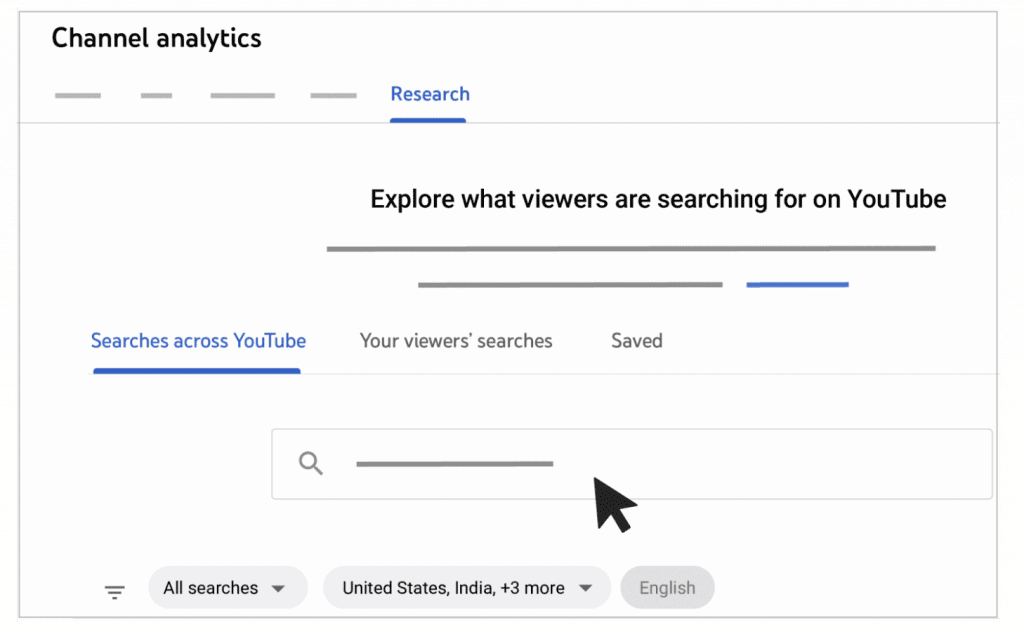
You can use the Research tab in YouTube Analytics to explore what your audience, and viewers across YouTube, are searching. This can help you discover content gaps and is a starting point for research to create new videos that viewers are interested in.
Why You Should Use the Research Tab as a YouTube Creator
You can explore what your audience and viewers are searching for without paying for another service such as TubeBuddy or vidIQ. It’s a great starting point to help you discover content gaps as part of your planning process.
Limitations With the YouTube Research Tab
For experienced YouTube creators, the Research Tab seems to provide more meaningful information because there’s more data around your content.
However, for newer YouTube creators and those who are less consistent with content creation on YouTube, the Research Tab isn’t as useful. This is based on analyzing channels I have seen with fewer than a few hundred subscribers.
In which case I recommend tools such as TubeBuddy and vidIQ.
You might also enjoy…
- How to use TubeBuddy to grow your YouTube channel in 2022 (3 easy steps)
- Create better YouTube thumbnails with TubeBuddy A/B Testing – TUTORIAL
- 17 Tips for Growing Your YouTube Channel That WORKS IN 2022
Ready to start and grow your own YouTube channel?

Written by
Fei WuFei Wu is the founder and CEO of Feisworld Media, a Massachusetts-based digital media company helping brands get discovered by people and by AI. An Adobe Global Ambassador and brand partner to ElevenLabs, Synthesia, and 50+ other tech and AI companies, she hosts the Feisworld Podcast (400+ episodes, 500K+ downloads — guests have included Seth Godin, Steve Wozniak, Chris Voss, and Arianna Huffington) and co-created the documentary Feisworld: Live Your Art on Amazon Prime. Fei writes for CNET, Lifehacker, and PCMag, and her work has been featured in Forbes, Harvard Business Review, and WIRED. She has been publishing on the internet since 2014 — long before AI discoverability had a name.
View all posts by Fei Wu→Stay updated
Weekly insights on content, AI, and digital media.
Keep Reading
Related Articles

Ecamm Review 2026: Dual Mode Changed How I Create Video (Here’s How)
The Ultimate Guide to Adobe Firefly Video Generation: Choosing the Right Model for Your Project (2026)