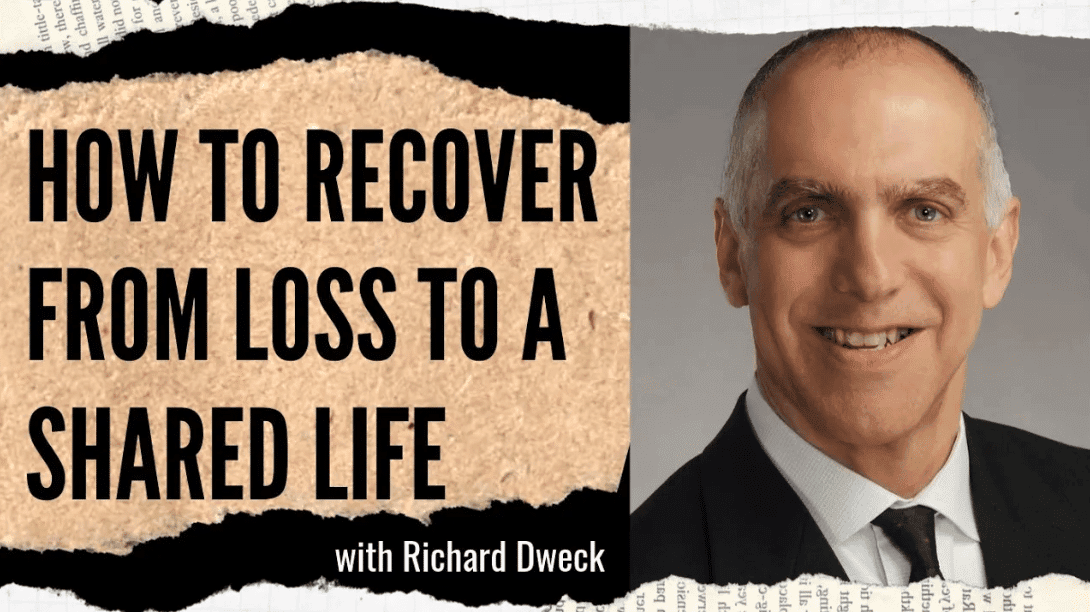
Our Guest Today: Richard Dweck
I met Richard Dweck 15 years ago. Though we didn’t spend a lot of time together, I always remember him as a business driven, caring and curious person. He founded his own company, and worked as a technology consultant for years. He had two children and he was incredibly proud of both of them. I still remember when he sat in the passenger seat while Adam (our associate producer) and I drove to have dinner one night some 8 or 9 years ago. Richard turned around and told us about his daughter Samantha, who had recently been accepted to Brown University in Rhode Island.
On January 25th, 2015, I came home from work and found out that Samantha had passed away in a kayaking accident. She was 24 years old. I remember sitting in the dark, for a long time, not being able to process what had happened. I still can’t.
Not long before we lost Samantha, I had just attended another friend’s funeral, a young woman I had known for years. I was struggling with grief, doubts and confusion.
Fast forward 2.5 years later, Richard reached out to me. It was an important moment for our friendship. He offered to share his journey as a grieving father who has gone a long way since I last saw him at Samantha’s service. Today, he’s a Pilates instructor and a photographer – these are the things Samantha enjoyed and now they are crucial elements of Richard’s new life.
It took an extraordinary amount of courage to share his stories on the show. Richard has gone through counseling himself and is now offering his helping hands to others who have lived through the pain of losing their children.
I want to dedicate this episode to Samantha Dweck and her family. If you are so lucky to have met her, please share this story, and your stories about Samantha.
To meet Richard and his work as a photographer, please visit his website: http://www.rdweck.com/.
To learn more about Samantha and her life, I welcome you to read her obituary here. , also read by me at the end of the episode.
Show Notes
- [06:00] Richard on how Grief Counseling helped him in the past 2.5 years
- [08:00] Richard on how and why he decided to start teaching Pilate.
- [15:00] What are some of the photos you are working on right now, after your travels? What are some of the collections you are thinking to produce?
- [17:00] Richard on how traveling helped him with his healing journey. Places, experiences, photos.
- [20:00] How did you decide to become a resource to other people, to help others going through the same experience?
- [23:00] Out of the people that you meet at Grief Counseling workshops/retreats, what did you learn from their experiences? Can you relate to them?
- [24:00] Richard on what Grief Counseling is.
- [27:00] Richard, who was Samantha? Tell us about her.
- [30:00] What was Samantha like? What did she do and enjoyed the most in life?
- [38:00] Richard sharing some stories about his trips with Samantha — Barcelona and Europe.
- [41:00] How people should approach you about Samantha and in general?
- [43:00] Fei reflecting on a personal experience and how it relates to Richard’s journey.
Quotes
[9:00] “Four months after she died, I was killing myself in this Pilate class and I thought ‘why am I doing this’? I looked down at Samantha’s mat and I realized she was a gymnast. That was the first sign that my life could not only be mine, but could be ours.”
[10:00] “When Samantha died, my life ended. When you lose a child, the life you know is over. I could actually feel the air blowing through my heart. I couldn’t even breathe. I had to rebuild my life. I just couldn’t do any of what I was doing anymore at all. I had to start from scratch and rebuild a life, and I wanted to build a life that had meaning and that had purpose. Now I realize, I am living OUR life.”
[24:00] “Grief Counseling is doing nothing but just being there to listen for people. Just to hear what they have to say, what they want to express. Not try to help them or change them or teach them or guide them. Someone who… can listen…”
[41:00] “Almost nobody talks about Samantha now, because they don’t want to bring me down. However, it is not talking about Samantha what brings me down. It makes her present and alive…”
Transcript
Transcript
Fei Wu: Welcome to the Feisworld Podcast, engaging conversations that cross the boundaries between business, art and the digital world.
Richard Dweck: And so that was like the first sign that my life could not only be mine, but could be ours. When you lose a child, it's like the life, you know, is over. My heart was, had a huge hole in it. I could actually feel the air blowing through my heart. I I just couldn't do any of whatever I was doing anymore at all. So I had to kind of start from scratch really, and rebuild the life. And I wanted to rebuild a life that had meaning and that had purpose. And, but now I. I am living our
Fei Wu: life.
Richard Dweck: What so grief Counseling is doing nothing but being there to listen for people, just to hear what they have to say, what they want to express, what they're feeling, you know, not trying to help them or change them, or teach them or guide them. It's. being there. Someone who can listen to whatever they have to say. You know, the thing I would change in the day to day now is almost nobody talks about Samantha. Now. It's like people don't wanna make me feel bad, so they don't wanna bring her up, but it's the not bringing her up that makes me feel bad. I love to talk about Samantha. It makes her. You know, present and alive and you know, part of life.
Fei Wu: Hi, you are listening to Phase World Podcast and this is your host, FA w. I'm met Richard Dweck 15 years ago that we didn't spend a lot of time together. I always remember him as a business driven, caring, and curious. He founded his own company and worked as a technology consultant for years. He had two children and he was incredibly proud of both of them. I see. Remember when he sat down in the passenger seat while Adam, our associate producer, and I drove to have dinner one night, some eight or nine years ago, Richard Turnaround and told us about his daughter Samantha, who had recently been accepted to Brown University in Rhode Island. On January 25th, 2015, I came home from work and found out that Samantha had passed away in a kayaking accident. She was 24 years old. I remember sitting in the dark for a long time now, being able to process what had just happened, I still can't, not long before we lost. I had just attended another friend's funeral, a young woman had known for years. I was struggling with grief, doubts and confusion. Fast forward two and a half years later, Richard reached out to me. It was an important moment for our friendship. He offered to share his journey as a grieving father who had gone a long way since I last saw him as Samantha's service. Today, he's a Pilate instructor and a photographer. These are the things Samantha enjoyed very much, and now there are crucial elements of Richard's new life. It took an extraordinary amount of courage to share his stories on the show. Richard had gone through counseling himself and is now offering his help to others who have lived through the pain of losing their. I want to dedicate this episode to Samantha Dweck and her family. If you're so lucky to have met her, please share the story and your stories about Samantha. Without further ado, please welcome. Richard Dweck to the Face World Podcast.
Richard Dweck: So why I wanted to talk to you, I thought, you know, there might be something for other people. I could kind of help other people, um, through my journey that I've taken from, uh, really the depths, the, the deepest depth of despair and not really wanting to be alive anymore to, uh, you know, kind of rebuilding another life and like kind of how I did that. you know how I'm seeing my life. Immediately. Well, within a month or two after Samantha died, I, I, uh, or maybe three months after I sought out grief counseling. So I left on the internet and I found there was a place right nearby, uh, in Palo Alto, a grief center, you know, grief counseling center. Nonprofit free, uh, you know, donation based. And, and, uh, I went and they had a group, they were trying to form the next group for parents who had lost adult children. So I said, that's perfect. But then they, the group didn't come together. They didn't get enough people and thank God. And then, uh, you know, so I said, okay, I need some help. So they gave me an individual counselor and he was, And I stuck with him for like nine months. Uh, but I also then after three months, the groups did start and I was in that group for six months. But his counseling showed me, that was the first thing that showed me that someone could survive us. He had lost. Someone in his life, you know, a number of years before, and he was somehow functioning and he was, you know, out there in the world enough to help me. So I realized a, you know, it was great and it was like he was saving me, and B, that was something I wanted to be able to do eventually for other people. So I went through that and then, uh, after. , oh, I don't know, I guess nine months later. So there was a teacher, a peer counselor training, but they wouldn't let me get into it until I had been out of, uh, counseling for a year. So I actually ended counseling probably prematurely cuz I knew the next step for me was helping others. That was the next step in my healing.
Fei Wu: Wow. So you wanted to do what Steve? For you to other people?
Richard Dweck: He did. Yeah. He did. Yeah. And, uh, so I, I wanted to, I felt it was like the next step and it was something, you know, Samantha would've wanted me to do. And so that, which brings me, so that's one layer. But that brings me to the theme of my life, which is, and we'll circle back to Pilates. I was on the map, you know, taking a class. This was. , maybe four months after she died, you know, three months or four months after she died. And I was in this class and I was killing myself, and I'm like, you know, why am I doing this? I could be home eating breakfast, like why am I here at whatever it was, nine 30 or 10 30 in the morning, you know, killing myself. Like, I'm working harder than. I looked down and I'm on Samantha's meth that I had inherited from her, and I thought, oh my God. You know, she was a gymnast and she was all about core strength and here I am, you know, making my core like amazingly strong. And so that was like the first sign that. my life could be, um, could not only be mine, but could be ours. And I could, uh, you know, do the things that. I'd always wanted to do, I'd always wanted to be a yoga teacher, but I never have time for it. When I was doing my business third Millennium and, you know, I was working eight hours a week and I just never had time for, to go and do the yoga teacher training, but I, I thought, you know, like, now I could do the things that I want to do. Um, you, you know, using her energy as well as mine, whatever resistance I have. Okay. I have all her energy and it kind of moves me forward, you know, so I could do the things I want to do. I could do the things she wanted to do. She had a lot of things she wanted to do, so I could do those things, you know, for us. And then I could do the things that would make her proud of me. You know, if she's, if there, you know, is an afterlife and she's looking down and I don't know what I believe in anymore. You know, if Samantha could die, I don't know what I believe in anymore, but, uh, you know, so I could do the things that would make her really proud of me. And so I started living. You know, a better life, you know, than I, what I had, I, I had to remake my life. My life was over. So when Samantha died, My life ended. I have Jake and I love him. I love him just as much as I ever love Samantha. But when you lose a child, it's like the life you know is over. My heart was, had a huge hole in it. I could actually feel the air blowing through my heart. You know, I could just walk around and I couldn't breathe. And even as I talk about it right now, I could feel my breath. Constricting. So I couldn't even breathe for the longest time and I could feel the air coming, like just blowing right through my heart. And um, so it's like, okay, I can't really. Rebuild that heart. I can't close that heart. I can't rebuild my life. There was nothing to build on top of anymore. You know, nothing I did or was doing was anymore. I, I just couldn't do any of whatever I was doing anymore at all. So I had to kind of start from scratch really, and rebuild a life. And I wanted to rebuild a life that had meaning and that had purpose. And, and I wanted to, you know, kind of rebuild. In essence evolved. I wasn't saying this a year ago, but now I realize. I am living our life. I'm living my life in sonata's life. The other day I got a vision of a grapefruit. You know, take the grapefruit, cut it in half, take out all the, you know, the pulp and, uh, you have the two shells and you put one side, one and the other. And that's how I'm living. I look like Richard, but inside is a layer of Samantha, like right under my skin. So I'm living our life and I'm, I'm trying to live the best life I can for both of us. Yeah. So, you know, so I'm doing the Pilates and, you know, that's the greatest. And then she was creative and, you know, I, and you know, I was sitting on a couch, I was at my favorite coffee shop, uh, with this friend of mine. So I have a, I have friends of all ages. My friends range from 23 years old to a hundred years old now. And, uh, my 23 year old friend, she's an artist. And, uh, she does drawing and we're sitting at this coffee shop talking about the future, and I'm trying to get her to go back to school. And she says, well, what, you know, we talk about it. And she says, well, what are you gonna do? And I said, I don't know. You know, I'd like to actually, you know, sitting here looking at the art on the walls, I'd like to have my. Photography up somewhere. I'd like to have, I'd like to be able to exhibit my photography somewhere. She said, what about here? She looks behind us and there's like a bare wall. I said, you mean here? She said, yeah, go ask them. So I went and I asked them and, and they said, sure, bring it in, talk to the all nurse and see what they say. So I. I went home and I didn't, you know, drag my feet a little bit. I was like, oh my God, I'm not really a photographer. I had just done like travel photography and, you know, on my own, but not like as a serious photographer. But I put a portfolio together. I went into my walls. I took all, everything that was on my walls. I went in there, it took me about two weeks, and I went in there and I showed 'em all my work and they said, oh, we love it. Go ahead, take that wall. And you know, for the next year, that wall was mine. And I, you know, Photography up there and, and then I thought, okay, you know, this is a start. Like what do I do next? And so then I decided to study photography and I found the workshop. And last year I went. You know, once a month do a workshop. And I met with a teacher in between, in between, you know, in between sessions. And, and I, uh, started, you know, I had a show, I had a really nice, nicely received show in San Francisco. I have a one man show, and then I had a gallery that I accepted my work for sale. So they sell, have one gallery that's selling my work on an ongoing basis. And you know, this year I, I saw that another teacher. I got some things from that. I, I really, it brought me out of my dark period. I was in a very dark period. All my photos were dark, you know, cause it was so sad. But he sort of brought me outta my dark period. And, but he wasn't the right teacher for me. And I, you know, just recently. You know, through kind of intention. I, I was talking with my sister and she said, you know, where I said I need another teacher? And she said, well, how about a mentor? I said, oh, that's a good idea. So she said, yeah, find some photographer that you admire and go and, you know, see a film. He or she will mentor you. So I said, okay. So that was like on, on a Monday, about two weeks ago and, and then Tuesday morning the next morning. Teaching. Oh, I'm going to a Pilates class. And afterwards I come out and the student, uh, who's one of my students, uh, introduced me to the woman. She said, oh, do you know this woman jam? And I said, no, no. And I talked to her and my students. I know Richard's a great Pilates teacher, but he is also a, a photographer. And she said, oh, that's so funny. My husband's a photographer. And so I said, tell me about it. And she told me about him. I said, oh, I'm looking for a mentor. She said, oh, he would love. So I bought, you know, I was like, just the intention was, you know, Monday night was like, find a mentor Tuesday morning, bam. I had a mentor and, and I met with them Friday and they loved what I was doing and the direction I was going and some of my photos. It was great cuz he's a very, very accomplished photographer and he probably loved like seven to nine photos. Like he loved
Fei Wu: them. What are some of the photos about, do you remember What was the theme for that collection versus what in
Richard Dweck: particular? Collections and that was part of the thing we worked on. So we, at our first section session last week, we worked on the idea of collections and kind of pulling stuff together. Yeah. So I went to Taiwan and um, these are like golden wooly flowers that they use for cooking.
Fei Wu: When were you in Taiwan? In April. Oh, wow. Fairly
Richard Dweck: recent. Yeah, so I was just in Taiwan in April. I went to Japan. I started, I started traveling for photography. So I went to Japan in November. I went to India two years ago, but I wasn't into photography then, though. I wish I was then. I have to go back now, uh, because, so what's happening now is my eyes are changing. What I. I see things now that I don't think most people would see or, or anybody. And sometimes like I can see, I could find things and see things. I'll, I'll show you an example. So like one, I was in Japan and I, there was nothing, there was nothing to see. I, I went to, it took me two days to get to this one. Town and there was absolutely nothing there. There was nothing to photograph. And I had gotten at that when before I got off the bus, I said to the bus driver, it took me two days to get there. Really more or less. Cause I couldn't find the bus the first day. No, everybody directed me to another place. Or another place. There was no bus to this in, in Japan. In Japan. I was in Kaza on the west coast and I wanted to go out to the port. And so that whole afternoon, nothing. So I gave up and then the next day I said, I'm gonna try it again. And finally I went to the bus station. I said, no, not here, but if you walk, you know, a couple miles there, a stop. And I waited to the stop and it was like finally a bus came. And the driver, I was the last person off the bus. When he got to the final stop, I. He didn't speak any English, but I said, more or less, how do I get back? He pointed across the street and there was a schedule on a pole. I said, thank you. And he drove away and I went to the schedule and the last bus had already left for going back. So I was like stuck there and I figured, okay, well don't worry about it now. There's no way to get back, you know, but don't worry about it now. Just go photograph. So I walked around for hours and there was nothing. It was, it was just, it was nothing. But then I remember the teacher had said to, Look small or look large. I said, all right, I'm gonna look small. And I took like two steps after I said that, and I had to lay two short little slow step. And I looked down on the ground and, and there was this, and this is just a, this is only a, probably a one foot diameter circle. And it's this plant that's been blown by the wind. You know, different days, different directions, and it's created a zen-like thing. So it was like, and there's another one in the upper left
Fei Wu: corner. Oh, wow. It's not even artificial. It's all,
Richard Dweck: no, this is all made by nature, you know? So I started looking at life much more closely and, um, it's really, I, I've found some amazing things and, and, uh, you know, so I'm, I'm trying to get there, but it's, it's very hard. That's, That's an area that's gonna take me a long time to work on and to bring to the point where people can see what I see. Like there's a lot of things I see now in nature. A lot of human forms, a lot of animal forms, and when I point them out to you, you can see them. But, but the, it's not a good photograph if I have to point it out. So I'm working, you know, I'm working on my photography to the point, to get to the point where some of these things are more obvious and I'll give you. Example, I was walking by a wall in Kyoto. And there's, you know, Nefertiti or a King Tut or whatever. If you see the face, it's like, but this is just moss on a wall. You know? That's just a space where the moss isn't growing.
Fei Wu: Mm. Oh, I can see the face. Wow. That's,
Richard Dweck: but it's not a great photo because people would just see a moss on a wall. No, I can
Fei Wu: see like the, the person wearing hat, the head dress a hat, and then the eyes and the nose bridge, and it's almost like, Exactly. Yeah. I wanna orient because I am, you know, familiar with you and with your story and I didn't get a chance to meet Samantha and. Regret it for that opportunity that, you know, I didn't have. And um, so, um, how long has it been since Samantha left us? Two and
Richard Dweck: a half years.
Fei Wu: Wow. Time really flies, you know, and. Yes. So two and a half years, you made a lot of progress and the stories you shared with us being the training, you know, going through counseling, uh, training in Pilate, teaching in Pilate and all these, yeah. You can't wait to be helpful because I, I just imagine that. So many people don't want to talk about it. But then it becomes, in a way, a superpower because then other people can relate to you. It's very hard to talk to someone who has never gone through this before. Yeah. And, um, therefore you become a, a really a resource. So,
Richard Dweck: yeah, I'll tell you a story about that. So I went to. A retreat, a men's retreat for men who have lost children of any age. Uh, on Samantha's the first birthday where she wasn't here. So the first year she died, you know, on October 25th. So there was, I looked, I saw a circular on the table of the grief center. They said men's weekend retreat, you know, October 23rd, 24th and 25th. And I said, oh man, it's perfect. It's just like, You know, like, what are, you know, that was gonna be the hardest day of my life. You know, another, not the hardest day of my life, but the next hardest day was gonna be her birthday. And here I would be with other men. Uh, but then as we got closer to it, I started feeling like I didn't really want to go to it. Cause I, it was gonna be worse for me cuz it was gonna be her birthday. And, and finally I told this man who I was gonna go drive up there with, I said, I'm not going. I decided not to go. He said, no. You're going. He said, I'm gonna come. I'm gonna get you. I'm gonna take you and, and everything will be alright. So I went up there. There were seven men and two other men. Their daughters were that day, their birthday was that day. Three out of the seven, one was alive and one had died. So, you know, and he had another, one of his children had died, but three out of our seven had daughters with birthdays on that day. It was crazy. So they, the people who, you know, kind of facilitated the work. Brought in three cakes and we had a birthday party for them and, and the daughter who was alive called in and was part of it and was amazing. Wow. Anyway, that workshop was great and then they had another workshop this year for men and, and I volunteered to be one of the people behind the scenes assisting, but then the, there were two other volunteers, but they weren't parents who had taken the. And the facilitator said, you know, Richard, why don't you become part of the course? Why don't you take the course? Why don't you participate? You could do your, I said, right. I'll still do my work on the side, and in between sessions I'll still help them, but I'll be part of the course. And being part of the course was amazing for me, so I got to do it again. And you know, there's little d. Uh, workshops you do, and it really helps you kind of express yourself and get your emotions out and, and, you know, kind of make realizations. But it was very, very, very helpful to the other men in the course because they saw where I had come to in. Two years and they couldn't imagine, you know, they were, they were still a month away, two months away, three months away, or six months away from, you know, their loss. And they said it, it was so helpful to us, which is exactly what you said. It was so helpful to us to see you. Having been in our seat, you know, two years before and now to be where you are now in your life, you know, it gives us hope. And each man said that individually to me, you know, toward, at some point during the weekend. So I realized there was a lot of power in, in being able to just model, you know, whole life, you know, for others who can feel like, you know, who feel like their life is.
Fei Wu: You know, I, I don't know if you got to some of the details and it's hard to meet someone for the first time and, you know, start asking questions rather, you know, there's an opportunity to connect at any level that's meaningful. Um, do you know if out of. You know, the people that you met and um, maybe these seven men in particular, did you find out under what circumstance did they lose their children? Was it to a illness?
Richard Dweck: I know about everything. I know everything. So through the grief counseling. Uh, so what grief counseling is, is doing nothing but being there to. For people just to hear what they have to say, what they wanna express, what they're feeling, you know, not trying to help them or change them or teach them or guide them. It's just being there. Someone who. Can listen. They're, you know, they're just there with them, you know, and you feel what they feel, and you've been through, you know, something similar so you can understand what they're doing, you know, what, what's going on for them. But just allowing them and creating a space where they can express whatever, whatever their grief is, like everybody's grief is completely different. You know, there's no one way to grieve and. Essentially you just shut up. And you listen, you know, I mean, it's really about just listening and just, you know, like some, you know, everybody has people in their lives, but all those people have their own, you know, they've, they've also experienced that death or they're, their, we're coworkers and they don't know how to relate to them. And you know, it's like there's all these people in their life that have some sort of relat. That in a way can cloud them just expressing themselves fully and let them feel listened to.
Fei Wu: I found out about this almost immediately after I started the podcast. I feel that most people walking around in this world are desperate to share their stories, their experiences, and many of them, many of my guests, everybody's trying to be off service and. The listeners to learn something from that experience. And I found out that so many people from age 17 to 80 never had the chance to actually do that. 87, let me be exact, is the age gap of my guests on the show. I found that to be so fascinating. So I try to walk through my own life observing to see what is that special sauce and then and turn out to. Just that, you know, that you sit there and listen, like what we had today, just the four of us, and people want to be heard, you know? Um, it's really interesting and I think there's so much of what, what you going through, it's, you know, this moment and this process is so healthy for people, not only for the grieving process, but also for their own lives and how they impact the people around them. On a daily basis, you know? Yeah,
Richard Dweck: it's true,
Fei Wu: it's true. Um, I also thought, you know, maybe difficult, but part of me that have learned so much about Samantha through, you know, this very, very painful experience and I have seen so many people write about her, talked about her, you know, at the service. I thought this may be an opportunity to. You know, for some of my listeners to learn, um, maybe a little bit about her. I don't think it's fair to say, you know, you know, this is who she is, you know, because I think it's important to be, uh, in a fuller experience. But if we could just give them a sliver of what I had experienced, I thought it was quite powerful. So,
Richard Dweck: you know, you know, we got five page long letters from people who had never met her. Telling us how they, she had changed their. You know, just hearing about her and her life and her death just completely changed her lives. And they were about to go in like a whole new direction. And it was all because of Samantha. You know, it was just like, so the outpouring was so amazing. You know, the November project, you know, they, uh, You know that Wednesday after she died, you know, a thousand people all over the world turned their hats backwards and wore it the way she wore it. In Boston. They, it was, there was snow and they went down on their hands and knees and they cleared a path so they could run back and forth with their hats backwards. It was just amazing. I mean, it was just like, you know, people all over the world were like celebrating Samantha, you know, in her life. It's like, wow. I knew she was the. Being, you know, one of the greatest beings that ever walked this earth. I knew that, but uh, you know, you know, I didn't know so many people knew, but yeah, affair, the parents of people, parents of our friends called and rode and it was just amazing. You know, I mean, 200 people that day, I went to the November project work on the Wednesday after she died. She died on a Sunday, and 200 people embraced me. I mean, 200 people hugged me and cried with me and you know, just, I told stories about her, you know, it's like, you know, it was amazing. You know, so it was. And, uh, that was really important and that group has helped me, you know, through the years, they've really done as an actual run the fastest Sam run every year. I don't know if you've seen the thing on that, but there's a say they run one guy a sooner, um, made a Ruth through San Francisco that when you run it, it spells the word fast as Sam. Yeah, so it's pretty cool. So we do it every year. So we've had three runs so far.
Fei Wu: So Samantha was, um, a very special person. I learned who she was and very accomplished gymnast. Is it possible for you to share? You know, I don't wanna just say accomplishment, but some of her, um, passions and things, I really interested her that
Richard Dweck: yeah, she was, so, she did everything really, like more than a hundred percent. So she went to Montessori school for preschool and it, it probably set her life in, in a direction. Monte Circuit preschool, they'll polish an apple for half an hour to get a perfectly polished apple. So she, her whole education. We've never, ever had to look at our homework or anything or say, have you done this? Have you done that? She was on autopilot and she was doing everything to her own level of satisfaction, which was super high. Uh, when she was in fourth grade, we went to parents night after like a month, you know, it's like, so test school starts in September, it was October. We go to meet with her teacher, you know, in October, and he says, He said, I immediately realized that I had nothing I could teach her, but the best way for her to learn was to be my student teacher. So now she's teaching everybody. She tutors all the kids in the class and they all accept her. They love her and they accept her. So she was like, you know, right away, right away he saw what, what she was, and then she went back after. Uh, when she was in middle school, she started helping him and then when she was in high school, she started, she'd go back and to, you know, to his class and I think he might have changed the sixth grade and she would tutor kids and they all just, you know, really accepted her tutoring and really learned from her. And she loved it and she loved doing that. So she was like, you know, she was that way. And then, you know, she found gymnastics and she started
Fei Wu: when she was really young. Right. And then,
Richard Dweck: Yeah, young, but not quite young enough. She started when she was like seven and five would've been a little better, but it was okay. And, and she did great. I know it's crazy, but that's how it, that's how it is because she actually became too tall. She grew too much and, um, but she had a, a amazing year. So she started, I don't know, there was B, c, D and then level 1, 2, 3, 4, and all the way up to 10. And she made it up to. Uh, but in level four, one year, it was really interesting. We went to the first meet and she did pretty well. And then after the meet, they gave awards and so they, in each, each of the four events. So she won a second and a fifth, and a third and a seventh, and they, then they called the all around winner, you know, Atine, and it was Samantha, and we're like, you're kidding. Really? And then, so that year she went to 12 meets and she took first or second place in every meet. So she had like a whole bureau full of huge trophies. And then she went to the state championships and she took fourth place. She really, she, at that point she was probably. 11, maybe 11 or 12. Yeah, 11 or 12. And then, um, and then she got too tall when she was like about 14. She was too tall and she kept breaking her hands on the balance team. When she flipped over her, her arms were too long and
Fei Wu: I said, how, how tall is too tall for
Richard Dweck: gymnastics? Five eight. She was five eight. Oh, wow. She was five feet. They're five feet tall. Five two and you're pushing it. So she was about five eight. Five
Fei Wu: eight at. Yeah. Wow. Um, I see that you flip through some images and as I'm looking at these images, I, I had still a couple of questions that, um, you know, as you know, I, you know, lost, I lost my dad when I was 26, and I, you know, it's been, I couldn't believe it's been eight years. I told someone today and. I dream, I think of him, I dream of him, um, very often. And I notice that the certain stories as I'm sitting somewhere and just thinking about him, certain stories, bits and pieces of our, the most authentic real parts of our lives come back. They're not the most extravagant or necessarily accomplishments, but that just, they seem so in. when I think about them. So I wonder, um, what are some of the stories that you kind of float in your mind? Like the story you just told, like she didn't leave her coach. What are some of the other things that, that you remember so vividly when you think of her?
Richard Dweck: You know, she had a really biting sense of humor, and, uh, you know, she was just so brilliant with her humor, you know, and, and. I always remember this story about, uh, so she was, I had a bicycle and had it had a bike. You know, one a little thing you attach to the back, it has its own wheel and pedals. And she was on that and Jake was on his own bike. He was two years older and we were like, um, down in Rhode Island along the. It was a nice trail, uh, rail trail down there, and it was nice and cool, and Massachusetts was hot. So we went down there and we're riding along and, and I said, all right, Jake, let's race to this next sign. Let's have a race. And, and we raced and we beat him by a little bit, but he, he said, no, no. It was a tie. It was a tie. And, and he said, Jake, no it wasn't. He said, yes, it was. So he dropped it and. . Later on in the day we're going, I said, let's have another race. We raced and Jake like really beat us. And then when we went by, Samantha turned to him and she said, Ty . And she just like got his goat, you know? But it was just like, that was like Samantha. Well,
Fei Wu: how old were the kids at the time? Oh,
Richard Dweck: she must have been. Four or
Fei Wu: five maybe. I assume very young at the time. Yeah,
Richard Dweck: very young. Yeah. . Yeah. My favorite story, I think I probably, I might have told the memorial service, but this is my all time, maybe I didn't, maybe I did, I can't remember, was we went to Barcelona. Not that I went to Barcelona. We just spent endless amounts of time together. We got along so well and, and every day we would, we got into a routine. We'd go to this. This amazing market and we get all this stuff for breakfast and lunch, and then we walk down Los Ramas, the kind of the walkway in the main part of town where everybody's walking and street performance. And we'd go to the beach. You could just walk right out to the beach and we'd sit down, you know, we'd find the spot and we'd spend the whole morning, you know, on the beach morning and like through lunch and, and then we'd go and we'd walk around the rest of the day, but, The one thing that was a little uncomfortable the first day were about half the women were semi-nude, and it was a little uncomfortable being with your, you know, she was in college, so she was like, 20 or something and a little uncomfortable. We got kind of comfortable with it and, you know, no problem. And, and then the last day, uh, we go to the beach and I said, how about here? You know, I pick a spot. And she said, no way. And I said, why is that? And she said, well, look over there. And I looked over and there was this young woman who was laying on her back and her breasts were just, Like you're jetting up to the sky says if we lay here, you know you're never gonna hear a word. I say, . So she said, follow me. So we, I follow her down the beach and we're walking, it's hot. And I'm like, how about here? How about here? How about here? No, no, no. And finally she says, okay, here we're like three quarters of a mile down the beach. And she says Here. And I say, why here? She says, look over there. And I look over and there's three old women who are sitting. Topless and their breasts are hanging down almost into the sand. She said, this is perfect. So that was, that was Samantha's humor. just had a great time. It was just a wonderful trip.
Fei Wu: I really like the stories that you shared, um, you know of her, and it's just so interesting. , you had the time to, to process and to heal. And, and I like, I love where you're going with this next, which is to connect with many others, um, to let them know that, you know, it is also her wish for you to carry on. And I, I remember, you know, for the time I didn't, I didn't even know how much I love my dad until, until he was sick, to be honest. Yeah. And it hit me, you know, and I was so. Paralyzed, um, after the surgery, after that, I was just, I just felt that, you know, with my mom, we had the same feeling. All of a sudden we lost a meaning to our lives, and I never thought I would feel that way, and it was very, very hard. And I just remember the difference of observing. I mean, his family loved him very, very much, but I remember. Were there and everybody else was eating. And for days, for days, I just couldn't eat. I mean, literally by looking at food makes made me feel like vomiting. And my mom was the same thing. I couldn't drink, I couldn't, just couldn't. I couldn't even be in my body after that experience started, not just to look at work and such differently, but I started looking at people differently. Everyone has suffered, if not everyone, Suffer. I've become the person of now many friends. Approaching me to ask me questions and after they've suffer their great loss. Um, and I felt empowered and I couldn't. Um, I've been to several homes, uh, you know, very recently. This past two years have been very difficult on many of my friends. Um, so like you said, the, the gift of giving forward and comforting others, um, even just be there. Like you said, we don't have to, we just bring dinner and just be with each other.
Richard Dweck: It's important, you know, people need that. People, people, you know, need to feel what they, you know, what's your, to come out of them and they need to feel safe to do it, and they need people, you know? I mean, that's the, that's the biggest thing. That's the, I mean, I, I reflect on this every day, the, the biggest. Not upset, but the thing I would change if I could, you know, obviously I would change, I'd never come back, but if I could, you know, the thing I would change in the day to day now is almost nobody talks about Samantha now. You know, it's like, you know, it's like she's, you know, It's like, people don't wanna make me feel bad, so they don't wanna bring her up, but it's the not bringing her up that makes me feel bad. I love to talk about Simone. It makes her still, you know, present and alive and, you know, part of life. And, uh, you know, so it's, it's really hard. People don't wanna bring me down, you
Fei Wu: know? So I think a lot of people, You brought up an interesting point of when, how people should approach you with the right questions. Again, everybody may be different, but I've spoken with a number of guests on the show and I always ask the question, wh. And the same to you as well. How do you, how do you prefer people to maybe act around you? Because there are assumptions maybe incorrect, right? Yeah.
Richard Dweck: Most of the assumptions are incorrect, but I just like to talk about Samantha so they could ask me anything if they have, if they newer, you know, like the people who, who got this, eventually I had to tell everyone cuz nobody got, you know, got it. And everybody was trying to tiptoe around me to. Make me feel upset or not bring up the memory cuz it'd make me sad. Well, it's the exact opposite. And you know, one, the people who got it now when I talked to 'em I said, oh, you know, I've just thought another story about Samantha. You remember the time, blah, blah, blah. You know, we get to like revel in it, you know, revel in her memory and how wonderful she was. You know, instead of avoiding, you should, you know, kind of share your memory or ask a question, you know, Hey, you know, I don't, I didn't know that much about Samantha. Can you tell me more about her? You know, that's, that's great. You know, you know, or it's been, you know, I know it's been two and a half years. You know how, you know, you know, how are you doing with it? You know what? How you feeling and just opening up the subject so that you know, a person can talk and express themselves, but really there's nothing better than somebody bringing up Samantha to me. No, that's, that's the best thing.
Fei Wu: I, you know, in general, parents love to talk about their kids and it, it's so, um, important for me to hear that. And now many more people will learn about this. Yeah. You know, if you're unsure, at least ask, right? Yeah. And. I think that part is so important. I never, you know, sometime I felt almost distanced from my dad to, you know, we weren't very close and it's now I encourage, I remember sharing a, a piece of calligraphy of his on Facebook just on the back on the background, and I didn't realize how many people start to engage with that. And many are American, you know, they couldn't quite read a character. But I also find myself really interested in sharing who he was, and he is still so much. You know, a part of me, I mean, we look like each other. We're genetically so much more similar. I am so much more similar to him than I am to my mom. And I feel the same way about Samantha to you, and that's very natural. I think just that D and how DNA works in general look wise and skin, everything, you know? And um, wow, I just learned so much about. You know, what you've been going through, and I'm so glad to be able to kind of share this story out with, you know, so many other people, you know, Samantha's friends who are, I'm sure they're thinking, they're thinking about all of you and wanted to know how you're doing and, and also so many people who still are going through the process. Yeah. Thank you so much for. Chatting with me about your experience, your recovery, Samantha, and I think it's all coming together and we'll do much love. Okay,
Richard Dweck: same
Fei Wu: here. Bye bye. Hi, um, it's Faye again and I wanna thank you all for listening to this very special episode and, uh, before we. I have asked, um, Bri's permission to read Samantha Dweck's obituary. And, um, I would love to share this moment with you, Samantha. Elizabeth Dweck, 1990 to 2015, passed away on January 25th as a result of a kayaking accident. Born in Boston, Massachusetts. And raised in Carlisle, Massachusetts. Samantha will be remembered for her many accomplishments, her deep engagement with life, her passions, and the vital spirit to which she brought her her life endeavors. Her love of learning was evident from her early years in the elementary. She often invited friends over to play school in her room, equipped with blackboard paper, colorful pencils, and her little jar of treasures that she used as a rewards for the students in her class. She graduated from Carlisle Public School in 2005 and carried her love of learning onto conquered Carlisle High School, where she expanded her teaching career as a volunteer. And in community service projects, she made a return to Bill Gale's middle school classroom where she happily tutored students in math. Throughout her education, Samantha supplemented her academic interests with her passion for sports, which served as another venue for challenging herself. She proved to be a determined goal-oriented athlete for many years. She was a dedicated and accomplished gymnast, enjoying the physicality and competition of the sport. Not only balancing herself on the beam, she created balance in her life, which allowed her to succeed at the highest levels in high school. In ninth grade, she turned the disappointment of a gymnastic sports injury into an opportunity to try track and field, moving from triple jump to hurdles, and finally focusing on pole vaulting. In typical style, she went full steam ahead, winning many state medals and the Boston. All Scholastic Award in PO Vault in 2008. Samantha was an honor student who took on many leadership roles, including class vice president and the president of National Honor Society. She graduated from Concord Carlisle High School in 2009 and continued her education at Brown University. At Brown, Samantha struggled with the challenge of determining the direction of her energies. She did not see her many achievements as an end in themselves, but as the springboard for utilizing her skills to give back to her community in the wider world. She augmented her academic and athletic pursuits with contributions to the campus and surrounding community. She coordinated distributions at a food cooperative, taught culinary classes to food subsidy recipients, and worked at Brown's College Resource Center. She also enjoyed escaping the campus bubble, becoming a barista at a local coffee shop. There she meant many new. The added unique richness to her life. Wanting time to contemplate her future goals. She courageously chose to step off the scripted path, spending a semester volunteering through the W O O F Worldwide Organization of Organic Farms Program. During this time, she traveled to Italy. Worked on organic farms, taught herself Italian. This experience fit Samantha's passion for healthy living and led to her BS degree in biology at Brown, graduating in 2013. After college, Samantha moved to San Francisco, a good match for her interest in organic food and sustainable local food systems and her love of nature and recreation. She worked for credible. A company that provides capital for small food enterprises. She joined the fitness group called the November Project with her cadre of new friends. She hiked bite, camped and raised her way through the beautiful California countryside. She built her life in California with the same drive zest and enthusiasm over early years, her November project, friends honored her. With many fast as Sam tributes accumulating in a memorial race with runners wearing their hats backwards, as this was Samantha's typical practice. During her NP workouts, Samantha enriched the lives of her family, friends, and the world community. With her drive and determination, her compassion, her joyful and generous spirit, her faithfulness to her ideals, her. Her encouragement and her infectious love of life. Samantha is survived by her mother, Shelly Grand Dweck of Carlisle, Massachusetts. Her father, Richard Dennis Dweck of Mountain View, California, and her brother Jacob Winston Dweck of New York City, New York. She also leaves behind many loving aunts, uncles, and cousins. Published in the Concord Journal from March 5th to March 12th, 2000.
Celebrating Samantha Dweck’s Life
- Sam’s favorite food: Kale
- Sam was a big part of Brown Market Shares Program
- #fastasSam on San Francisco, CA – November Project
- Sam’s favorite coffee spot: Pinhole Coffee

Written by
Fei WuFei Wu is the founder and CEO of Feisworld Media, a Massachusetts-based digital media company helping brands get discovered by people and by AI. An Adobe Global Ambassador and brand partner to ElevenLabs, Synthesia, and 50+ other tech and AI companies, she hosts the Feisworld Podcast (400+ episodes, 500K+ downloads — guests have included Seth Godin, Steve Wozniak, Chris Voss, and Arianna Huffington) and co-created the documentary Feisworld: Live Your Art on Amazon Prime. Fei writes for CNET, Lifehacker, and PCMag, and her work has been featured in Forbes, Harvard Business Review, and WIRED. She has been publishing on the internet since 2014 — long before AI discoverability had a name.
View all posts by Fei Wu→Stay updated
Weekly insights on content, AI, and digital media.
Keep Reading
Related Articles
Joanne Lipman on Mentors, Untapped Talent and Why Women Should Stop Waiting to Be Perfect
Marc Randolph on Curiosity, Messy Starts and Why “Nobody Knows Anything”